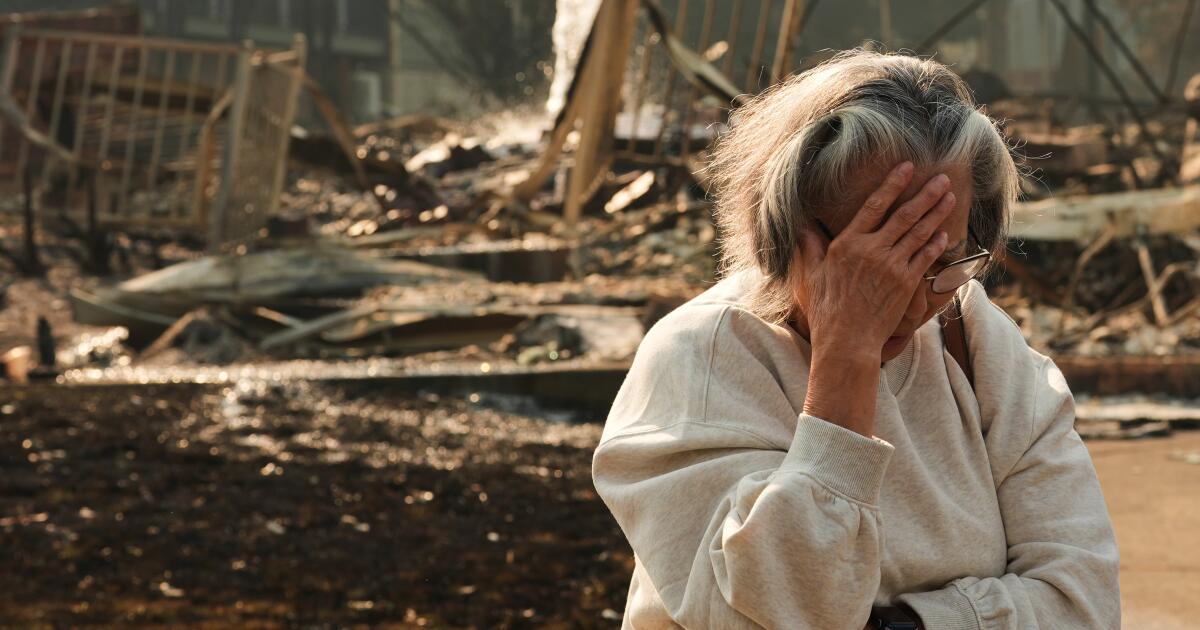
California firefighters are currently deployed to Washington state to assist in battling wildfires near Spokane, where officials report patterns of destruction that mirror previous high-intensity blazes in the Palisades and Eaton areas. The mobilization of hundreds of California personnel underscores a growing trend of interstate resource sharing as the Pacific Northwest faces increasingly volatile fire seasons.
The deployment follows a request for mutual aid as Washington crews struggle to contain rapidly spreading flames fueled by dry vegetation and erratic wind patterns. According to the National Interagency Fire Center, the use of interstate compacts allows for the rapid movement of specialized strike teams and air tankers across state lines when local resources are overwhelmed.
The parallels to the Palisades and Eaton fires are primarily seen in the “wildland-urban interface” (WUI) impact, where fires jump from natural brush into residential neighborhoods with extreme speed. Fire officials note that the speed of the Spokane fires has created a similar crisis of evacuation and structural loss seen in the Southern California events, where homes were lost in minutes due to ember casts and high wind speeds.
Interstate Resource Mobilization and Firefighting Strategy
The arrival of California crews brings specialized experience in “urban interface” firefighting, a strategy honed during the devastating fires in the Palisades and Eaton canyons. According to CAL FIRE, the agency responsible for California’s state fire protection, these teams utilize a combination of aggressive initial attacks and strategic perimeter containment to prevent fires from leaping into densely populated residential zones.
In Spokane, these teams are working alongside the Washington Department of Natural Resources (DNR) and local municipal fire departments. The strategy focuses on creating defensible space and utilizing “back-burning” techniques to starve the main fire front of fuel. This approach is critical in the Spokane region, where the mixture of coniferous forests and suburban sprawl creates a high-risk environment for rapid fire spread.
The coordination of these resources is managed through the Emergency Management Assistance Compact (EMAC), a nationally recognized mutual aid agreement. This framework ensures that the cost of deploying California firefighters is tracked and reimbursed, allowing states to share the financial burden of catastrophic wildfires while ensuring that the most experienced crews are on the front lines.
Comparing the Spokane Fires to Palisades and Eaton Events
The comparison to the Palisades and Eaton fires is not merely based on the scale of the flames, but on the specific behavior of the fire. In the Palisades fire, extreme wind gusts drove embers miles ahead of the main fire front, igniting “spot fires” that trapped residents and firefighters. Similar behavior has been reported in the Spokane area, where wind-driven embers have bypassed containment lines to strike homes deep within evacuation zones.
Furthermore, the Eaton fire demonstrated the danger of “chimney effects” in steep terrain, where fire accelerates as it moves up a slope. While Spokane’s geography differs from the California canyons, the proximity of heavy fuel loads to residential structures has created a similar acceleration of fire spread. According to fire behavior analysts, the “fuel moisture” levels in both regions were critically low leading up to these events, creating a tinder-box effect that allows small ignitions to explode into major conflagrations.
The devastation in these areas often leads to a similar pattern of loss: a small number of high-value structures are spared while entire blocks of homes are leveled. This “randomness” of destruction is a hallmark of WUI fires and is currently being witnessed in the outskirts of Spokane, mirroring the tragic outcomes of the California blazes.
Economic Impact and Infrastructure Risk
The financial toll of these fires extends beyond immediate property loss. In the Palisades and Eaton events, insurance premiums in affected zip codes surged, and some providers ceased offering new policies in high-risk zones. Economic analysts suggest that the Spokane region may face similar pressures as the frequency of these “mega-fires” increases. According to data from the Insurance Information Institute, the rising cost of wildfire claims is forcing a re-evaluation of how homes are insured in the wildland-urban interface.
Infrastructure vulnerability is another critical parallel. Power lines and utility poles often act as both ignition sources and conduits for fire spread. In California, the role of electrical infrastructure in starting fires led to significant legal settlements and mandates for “public safety power shutoffs.” Washington officials are currently monitoring the impact of the fires on local power grids to prevent secondary ignitions and ensure that critical communication lines remain open for emergency services.
The cost of the current mobilization is substantial. While EMAC handles the logistics, the long-term economic impact involves the loss of timber revenue and the cost of post-fire soil stabilization to prevent mudslides—a secondary disaster that frequently follows the Palisades and Eaton fires when winter rains hit charred slopes.
Public Safety and Evacuation Protocols
The urgency of evacuations in Spokane has mirrored the “immediate action” orders seen in California. Officials have implemented a tiered evacuation system—Level 1 (Ready), Level 2 (Set), and Level 3 (Go)—to manage the flow of residents out of danger zones. This system is designed to prevent the traffic congestion that hampered evacuations during previous California disasters, where narrow canyon roads became bottlenecks.
Public safety alerts are being disseminated via wireless emergency alerts (WEA) and local sirens. According to the Federal Emergency Management Agency (FEMA), the effectiveness of these alerts depends on the speed of the “trigger” decision by incident commanders. In the Spokane fires, the decision to move to Level 3 evacuations was accelerated based on the observed rate of spread, a lesson learned from the rapid escalation of the Eaton fire.

Residents are urged to follow the official guidance provided by the Spokane County Emergency Management office. This includes maintaining “Go Bags” and ensuring that all family members are aware of primary and secondary evacuation routes. The use of social media for real-time updates has become a primary tool, though officials warn against relying on unverified reports during the peak of a fire event.
The next official update on containment percentages and resource allocation is expected during the morning briefing from the Incident Management Team. Residents are encouraged to monitor official government channels for the latest evacuation maps and shelter locations.
Do you have information on the current evacuation zones or the status of local shelters? Share this article and join the conversation in the comments below to help keep the community informed.