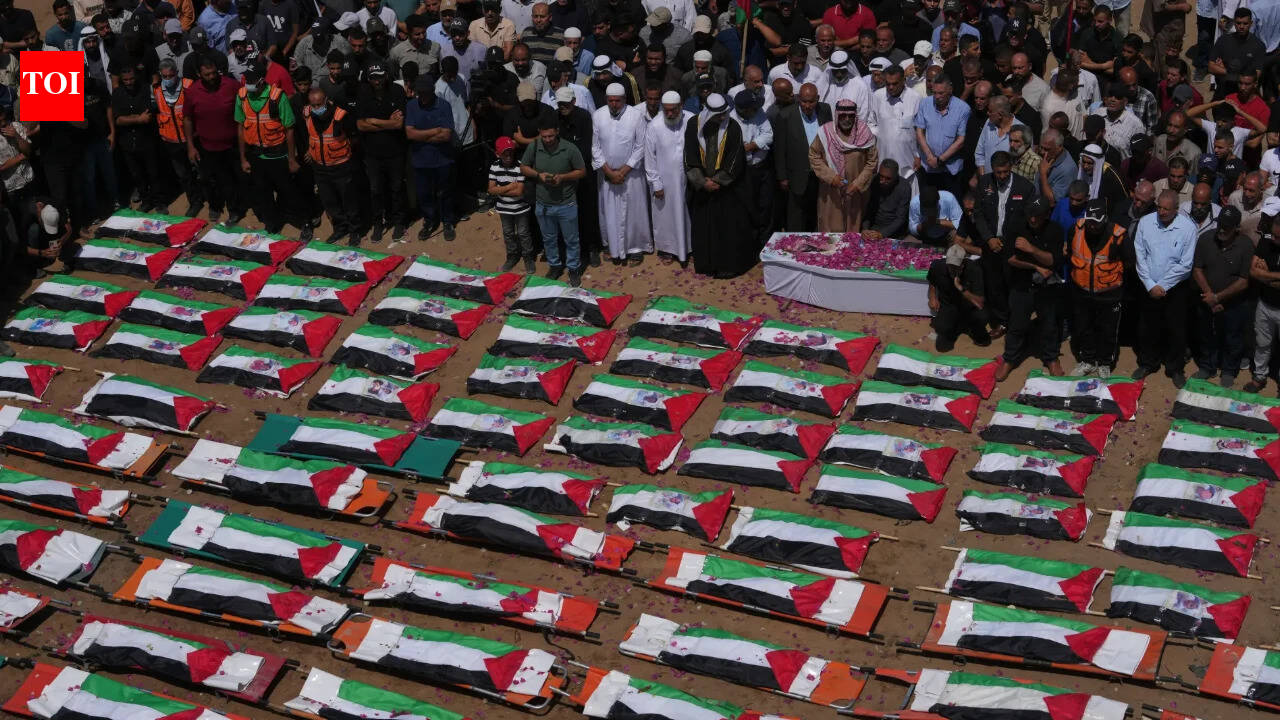
Families in the Gaza Strip gathered to bury 112 Palestinians whose bodies were recovered after being held or detained following Israeli military strikes during the ongoing conflict, according to local health officials and humanitarian reports. The mass funeral, held as remains were returned through coordinated channels, included the bodies of dozens of children, highlighting the mounting civilian toll of the war that began in October 2023.
The return of the deceased individuals underscores the ongoing humanitarian crisis in the enclave, where infrastructure collapse and restricted access have severely complicated the identification and burial of victims. Local authorities and humanitarian organizations documented the process as families sought closure for missing relatives whose whereabouts had remained unknown for months.
International agencies and human rights monitors continue to track the mounting casualties and the logistical challenges facing medical personnel in Gaza. The latest solemn procession reflects the broader humanitarian emergency as local hospitals and municipal workers struggle to manage recovered remains amid ongoing hostilities and resource shortages.
Recovery and Identification of Remains
According to local officials in Gaza, the 112 bodies returned to the enclave had been recovered from various locations following earlier military operations and strikes. Medical examiners and civil defense teams worked under difficult conditions to document the remains, many of which were transported in containers provided through international coordination.
Human rights organizations have repeatedly emphasized the necessity of proper documentation and dignified burials for all victims of the conflict. The process of identifying individuals remains a formidable task for local forensic teams, who face severe shortages of equipment, electricity, and specialized personnel.
Impact on Families and Communities
The mass burial brought grief-stricken relatives to designated cemeteries, where community members gathered to perform funeral prayers. Many families had spent months searching for missing loved ones, checking lists provided by hospitals and detention monitoring groups.
Local community leaders and aid workers noted that the psychological toll on survivors, particularly parents mourning young children, remains profound. Mental health professionals operating in the region report an overwhelming demand for support services, though their capacity is heavily constrained by the ongoing conflict and blockade conditions.
Next Steps and Official Monitoring
International bodies and humanitarian monitors are expected to continue documenting the handling of human remains and civilian casualties in Gaza, pressing for transparency and adherence to international humanitarian law. Local health authorities will maintain records of the returned individuals to assist families still searching for missing relatives as conditions permit.