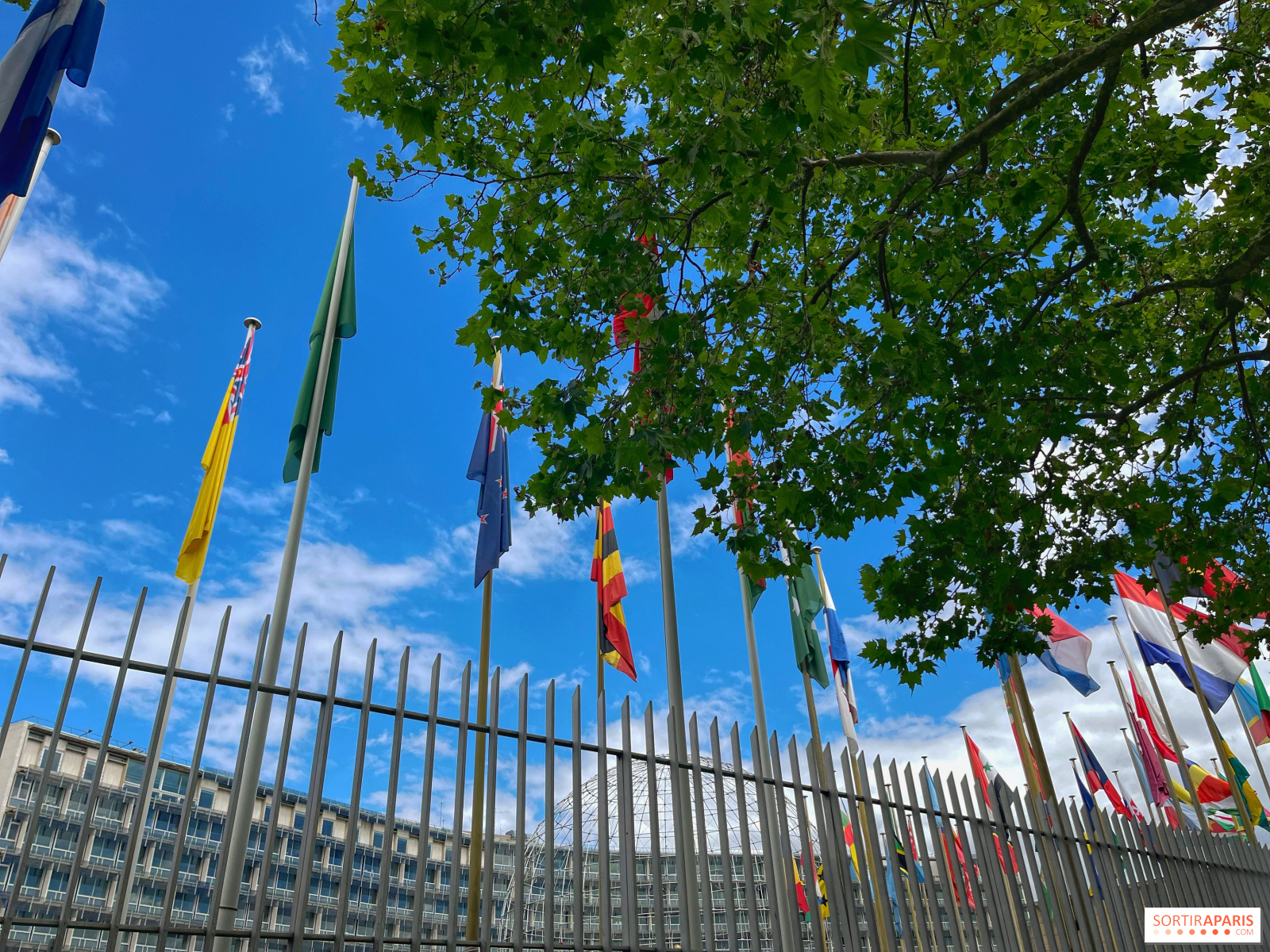
Visitors seeking to explore Paris architectural landmarks can tour the UNESCO Headquarters, a striking modernist complex located in the 7th arrondissement featuring a unique three-pronged star design. According to official cultural heritage guides, the site serves as the permanent seat of the United Nations Educational, Scientific and Cultural Organization and houses an extensive collection of twentieth-century art alongside distinct landscape architecture, including a Japanese garden designed by Isamu Noguchi.
Opened in 1958, the compound was designed by an international committee of renowned architects, including Marcel Breuer of the United States, Pier Luigi Nervi of Italy, and Bernard Zehrfuss of France, with guidance from an aesthetic committee that included Walter Gropius and Le Corbusier. The complex stands as a milestone of postwar modernist architecture, integrating innovative structural engineering with international diplomacy.
Public access to the headquarters is coordinated through guided tours and designated cultural exhibitions. Visitors interested in touring the grounds and viewing the interior art collection can book reservations directly through the official UNESCO visitor portal. Security protocols require advance registration and valid government-issued identification for all attendees.
Architecture and Design of the Paris Headquarters
The primary administrative building, often referred to as the Secretariat building, is shaped like a three-pointed star resting on pilotis—concrete stilts that elevate the structure above ground level. This geometric layout allowed the architects to maximize natural light for office spaces while creating an expansive open plaza facing the Place de Fontenoy.
Adjacent structures include the conference hall, characterized by its prominent accordion-folded concrete roof, and the “accordion” building designed for permanent delegations. According to architectural documentation from the UNESCO World Heritage Centre, the project reflects the collaborative ethos of post-World War II internationalism, bringing together avant-garde design principles from across North America and Europe.
The site’s integration of structural concrete and expansive glass curtain walls established new standards for institutional civic architecture in mid-century Europe. Preservation efforts led by French heritage authorities ensure that the original geometric lines and exterior finishes remain maintained according to the architects’ specifications.
Art Collections and the Japanese Garden
Beyond its structural significance, the UNESCO compound functions as a museum housing works by some of the most celebrated artists of the twentieth century. The permanent collection includes monumental murals, sculptures, and installations by Pablo Picasso, Joan Miró, Henry Moore, Alexander Calder, and Roberto Matta.
One of the most notable landscape features within the compound is the Japanese garden created by artist and landscape architect Isamu Noguchi in 1958. Restored in recent decades, the contemplative garden combines traditional Japanese landscaping techniques, including meticulously placed stones, water features, and carefully selected flora, with modernist spatial composition.
Art historians and cultural institutions frequently collaborate with the organization to host temporary exhibitions highlighting global heritage preservation, contemporary artistic expression, and international cultural exchange within the main foyer galleries.
Planning a Visit: Practical Information
Visitors planning a trip to the headquarters should review current access guidelines and reservation schedules on the official UNESCO official website. Guided tours are typically offered in multiple languages, providing detailed context on both the architectural history and the diplomatic mission of the organization.
- Location: 7 Place de Fontenoy, 75007 Paris, France.
- Access: Accessible via Paris Métro lines 6, 8, and 10 (nearest stations include Cambronne, Segur, and École Militaire).
- Reservations: Mandatory advance booking online; walk-up ticketing is generally not available due to security regulations.
- Identification: All visitors must present a valid passport or national identity card matching their registration details upon entry.
For updates regarding temporary closures, special exhibitions, or ministerial events that may affect public visiting hours, check the official visitor notifications published on the organization’s portal before arriving at the Place de Fontenoy entrance.
Related reading