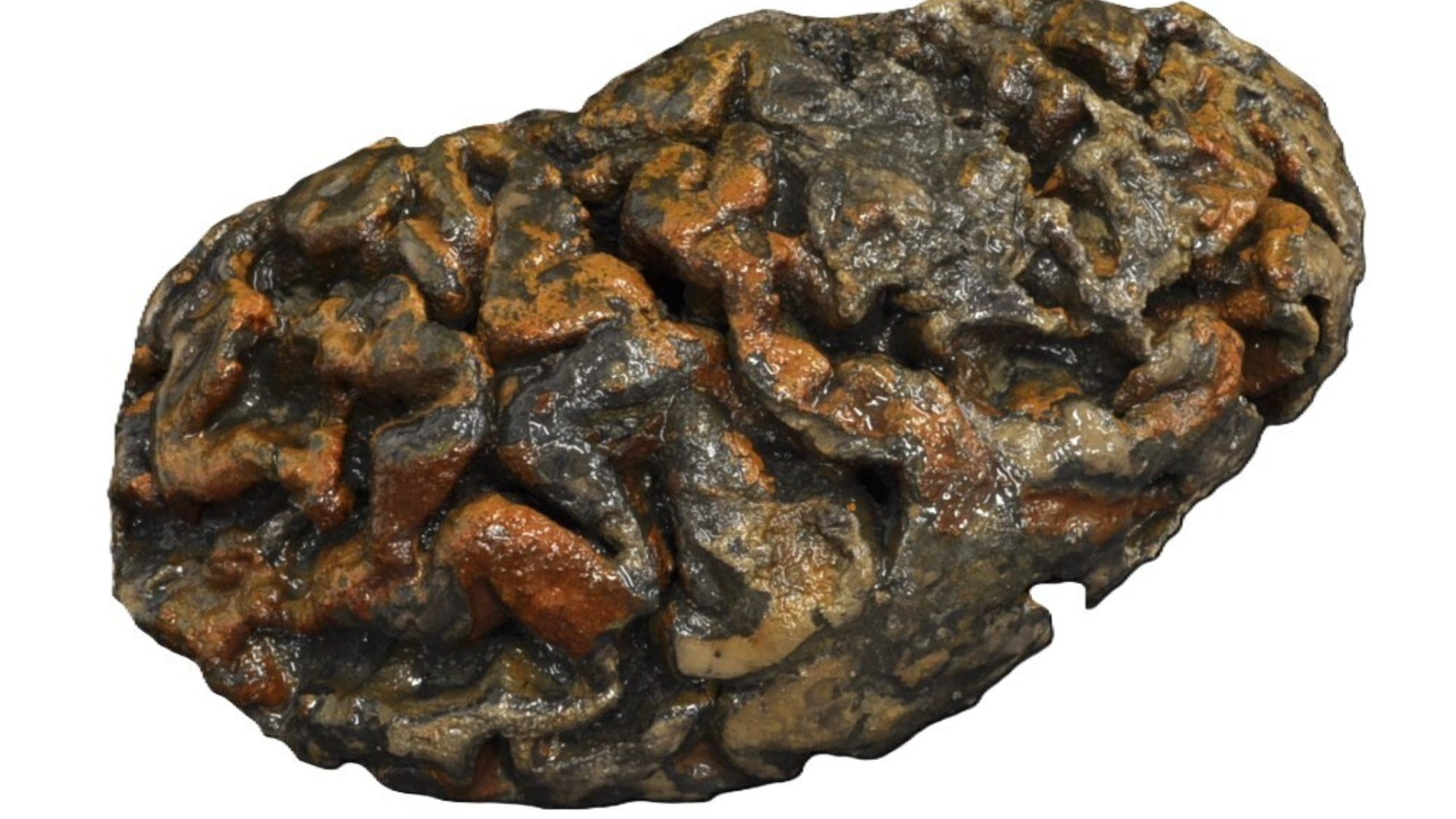
Scientists have uncovered a surprising scientific explanation for the brain preservation paradox, revealing that human brains can evade decay for thousands of years through a novel chemical pathway where destruction actually fuels persistence. According to research published on June 19 in the Journal of Proteome Research, scientists examined why thousands of ancient brains survive among skeletal remains when other soft tissues vanish.
The discovery addresses a mystery that has puzzled archaeologists and pathologists for decades. While mummification, freezing, and saponification typically preserve multiple body parts at once, approximately one-third of archaeological brains survive entirely alone as shrunken masses of protein alongside bare bones. Researchers found that these enduring relics are most frequently recovered from waterlogged, oxygen-poor environments like riverbeds, lake shores, flooded caves, and sunken shipwrecks.
“We found that brain preservation isn’t a rare anomaly, it’s a novel chemical pathway,” Alexandra Seviour, a doctoral researcher of paleobiology at the University of Oxford and first study author, stated regarding the work. “Under the right conditions, preservation actually arises from decay itself: the same reactions that degrade tissue can also weld the breakdown products together into something far tougher.”
Simulating Decades of Decay Through Buried Mouse Carcasses
To test how burial environments interact with unique brain chemistry, Seviour’s team buried mouse carcasses across four distinct water and oxygen conditions. Over a six-month monitoring period, the researchers retrieved the specimens at set intervals—24 hours, 72 hours, one week, six weeks, three months, and six months—and dissected the brains for high-resolution mass spectrometry analysis.
The high-throughput screening generated more than 1.26 million protein decay trajectories. The data showed that initial decomposition stages proceed similarly across environments. However, after several weeks, oxygen availability determines whether tissue breaks down completely or stabilizes. Abundant oxygen triggers a chain reaction of free radicals that rapidly shreds protein structures. Conversely, wet and hypoxic conditions starve the tissue of sufficient oxygen for that destructive cascade. Instead, intermediate molecules form cross-links with neighboring proteins, building tough, insoluble aggregates that resist further decay.
“Water, being nature’s solvent, is typically associated with decomposition, not preservation,” Seviour noted, highlighting the counterintuitive nature of the findings. “So the surprise is really the selectivity.”
Why Brain Tissue Defies Standard Decomposition
The brain’s intrinsic biological composition makes it uniquely suited for this self-limiting preservation pathway. Brain tissue contains high concentrations of metals that foster free-radical chemistry, is packed with cellular membranes where reactive particles accumulate, and features numerous redox-active amino acids capable of absorbing free radicals to forge durable cross-links. Furthermore, researchers point out that the physical barrier of the skull restricts fluid and oxygen exchange compared to the rest of the body.
Richard Evershed, an organic geochemist at the University of Bristol who was not involved in the study, praised the breadth of the analysis. He suggested that applying similar techniques to other soft tissues and archaeological materials, such as organic residues in pottery or dental calculus, could help determine whether the biochemical processes observed in brains are truly unique.
Beyond shedding light on the more than 4,400 preserved brains discovered globally over the past 12,000 years, the findings offer potential avenues for medical research. Seviour pointed out that the molecular fingerprint of these decay-resistant peptide aggregates closely mirrors patterns observed in neurodegenerative conditions like Alzheimer’s disease. Future investigations aim to determine whether studying ancient, preserved brain tissue can deepen scientific understanding of how such devastating illnesses progress.