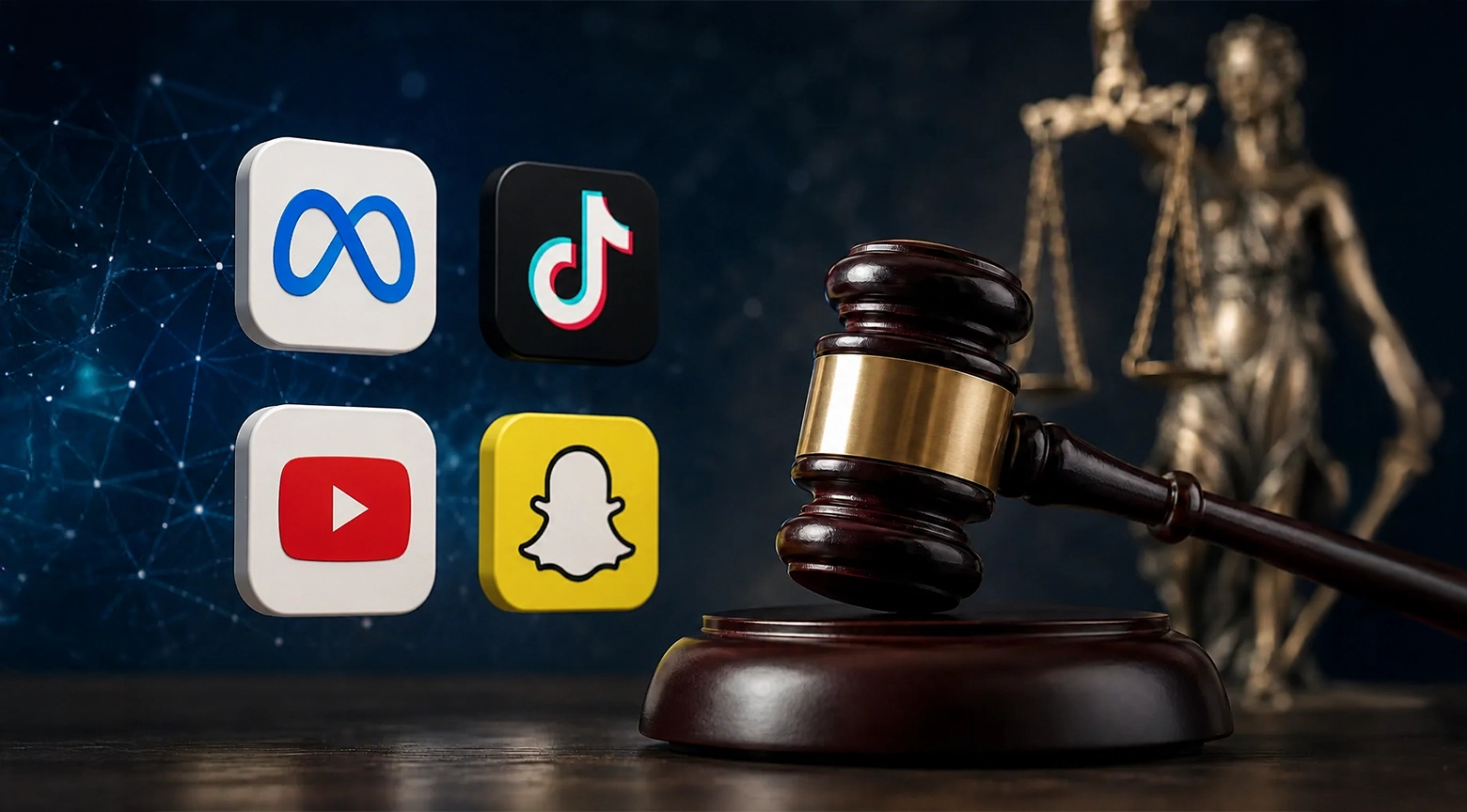
Meta, TikTok, Snapchat, and YouTube are facing a massive wave of coordinated legal actions from school districts, state attorneys general, and families who allege that the companies intentionally engineered their platforms to addict children and teenagers, causing a youth mental health crisis. The ongoing litigation, consolidated in federal court in California, brings together hundreds of lawsuits claiming that algorithmic feeds, infinite scroll features, and notification systems were designed to maximize user engagement at the expense of adolescent well-being.
According to court documents filed in the United States District Court for the Northern District of California, plaintiffs assert that tech executives ignored internal safety research regarding compulsive use, body image anxiety, and sleep disruption among minors. The lawsuits target core product features across Instagram, Facebook, TikTok, Snapchat, and YouTube, seeking damages and court orders to force structural changes in how tech platforms serve young users.
The legal battle represents one of the most significant coordinated product-liability actions against major technology firms since the tobacco and opioid litigation of past decades. Legal experts and public health advocates are watching closely as the proceedings move past preliminary motions toward trial discovery, raising fundamental questions about corporate responsibility for digital safety.
Origins of the Multi-District Litigation and Core Allegations
The judicial proceedings began to coalesce in late 2022 and 2023, when scores of individual lawsuits filed across the United States were consolidated into a single multi-district litigation (MDL) proceeding before U.S. District Judge Yvonne Gonzalez Rogers in Oakland, California. Plaintiffs include school districts grappling with rising absenteeism and mental health interventions, state attorneys general representing citizens, and parents of teenagers who experienced severe psychological harm.
The central legal theory rests on product liability, negligence, and consumer protection laws. Plaintiffs argue that social media companies created defective products by implementing addictive design features without adequate safety guardrails for minors. According to the complaints, features such as variable-reward algorithms, intermittent reinforcement schedules, and endless scrolling are engineered to exploit adolescent brain development, which is particularly sensitive to peer validation and social feedback.
Internal corporate documents uncovered during discovery have formed a cornerstone of the plaintiffs’ arguments. Court filings cite internal studies and communications from Meta and other firms that allegedly acknowledged the harmful psychological effects of excessive platform use on teenage girls and boys, yet resisted implementing effective restrictions or age-verification mechanisms.
Company Defenses and Industry Response
Representatives for Meta, TikTok, Snapchat, and YouTube have vigorously defended their platforms, arguing that the lawsuits lack legal merit and threaten free speech protections. Tech industry defense teams maintain that platforms provide valuable social connections, educational content, and creative outlets for young people, and that parents share the responsibility of monitoring screen time.
Furthermore, the companies argue that Section 230 of the Communications Decency Act shields them from liability for third-party content hosted on their networks. Industry statements emphasize ongoing investments in youth safety tools, including parental controls, time-limit reminders, and default privacy settings for accounts belonging to minors. Google, which owns YouTube, and its co-defendants have repeatedly asserted that their products are not defective and that the alleged harms stem from broader societal pressures rather than platform design.
Legal analysts note that navigating the intersection of First Amendment protections and product design liability will be a central challenge for the court. While tech firms enjoy broad latitude in publishing and curating content, plaintiffs argue that the targeted design mechanics constitute actionable commercial conduct rather than protected speech.
Impact on Schools, Families, and State Policy
The litigation has already galvanized public policy debates outside the courtroom, prompting numerous state legislatures to introduce or pass bills restricting youth social media access and algorithmic sorting. School districts participating in the lawsuits report mounting expenses related to counseling services, cyberbullying interventions, and behavioral health programs.
Families across the country have shared personal accounts of compulsive use and severe depression linked to relentless notification cycles and harmful content exposure. Advocacy groups continue to press for federal legislation establishing stricter age verification mandates and prohibiting targeted advertising to minors.
As the legal teams prepare for upcoming bellwether trials—which serve as test cases to gauge how juries react to core arguments—the outcome could reshape the digital landscape for consumer technology and set a binding precedent for how software companies handle user safety.
Next Steps in the Legal Proceedings
The multi-district litigation continues to move through crucial phases of discovery and expert witness depositions in the U.S. District Court for the Northern District of California. Judge Yvonne Gonzalez Rogers oversees the schedule for upcoming evidentiary hearings, with preliminary trial dates expected to be set as discovery disputes are resolved.
Readers seeking official updates, public court filings, and schedules for upcoming hearings can monitor the United States District Court for the Northern District of California docket for Case No. 4:22-md-03047-YGR.
Related reading
- Apple gears up for massive iPhone 18 event with retail employee lottery
- NFT Market Trends: Polygon and Courtyard Gain Momentum Amid Price Drop
- New Study Links GLP-1 Medications Like Wegovy and Ozempic to Health Risks (archyde.com)
- Google AI Overviews: Impact on Publishers and the AI Opt-Out Dilemma (archynewsy.com)