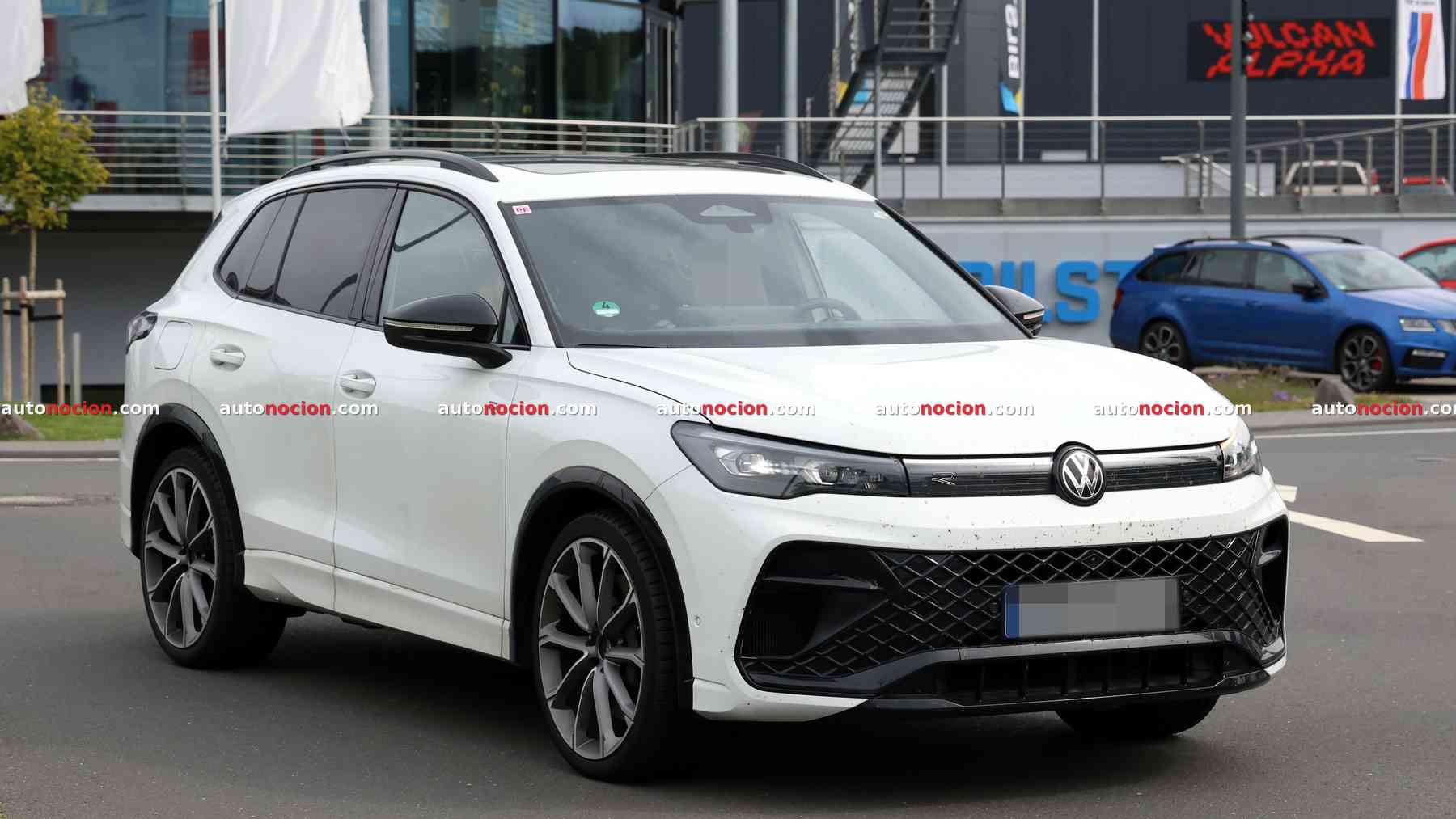
Volkswagen has expanded its high-performance lineup with the introduction of the new Volkswagen Tiguan R, a performance-focused compact SUV that inherits key engineering traits from the brand’s established Golf R hatchback. According to automotive industry reports and official brand specifications, the latest iteration of the performance SUV bridges the gap between everyday practicality and track-capable driving dynamics, utilizing advanced all-wheel-drive technology and a high-output turbocharged engine.
The vehicle arrives as part of Volkswagen’s ongoing effort to infuse its popular SUV architecture with the mechanical characteristics traditionally reserved for its dedicated sports cars. Market analysts note that consumer demand for high-performance crossover utilities has continued to rise across global markets, prompting manufacturers to adapt powertrain and chassis configurations from performance hatchbacks into larger vehicle footprints.
Detailed technical sheets published by Volkswagen indicate that the new Tiguan R incorporates sophisticated torque vectoring systems similar to those found in current Golf R models. These systems allow power to be distributed not just between the front and rear axles, but also dynamically between the left and right rear wheels, significantly altering cornering behavior and agility for a vehicle of its size and weight.
Powertrain Performance and Engineering Architecture
Beneath the hood, the Tiguan R relies on a heavily revised version of the Volkswagen Group’s EA888 turbocharged 2.0-liter four-cylinder engine. Official specifications released by the manufacturer show that the powerplant generates an output exceeding 300 horsepower, channeled through a seven-speed dual-clutch transmission known as the DSG.
This drivetrain combination enables the SUV to accelerate from zero to 100 kilometers per hour in approximately 5.1 seconds, placing its straight-line performance on par with many dedicated sports sedans. The integration of the R-Performance torque vectoring rear differential manages lateral dynamics, reducing understeer during aggressive cornering maneuvers by actively overdriving the outer rear wheel.
Engineers have also equipped the model with adaptive chassis control, commonly referred to as DCC. This system continuously adjusts the shock absorbers based on road conditions, driver inputs, and the selected driving profile, ranging from comfort-oriented cruising settings to a dedicated race mode designed for closed-circuit driving.
Chassis Tuning and Braking Dynamics
Stopping power matches the engine’s output through a bespoke braking system developed for the R division. According to technical documentation, the vehicle features drilled brake discs paired with multi-piston calipers bearing the signature R logo, designed to resist thermal fade under repeated heavy braking.
Suspension modifications lower the ride height compared to standard Tiguan variants, contributing to a reduced center of gravity and firmer body control. Combined with wider performance tires fitted to lightweight alloy wheels, the mechanical setup minimizes body roll during high-speed directional changes.
Industry observers have noted that while the Tiguan R shares its underlying MQB evo platform with standard versions, the specific calibration of its steering rack and suspension geometry aligns closely with the handling profile established by the Golf R.
Exterior Styling and Interior Ergonomics
Visually, the Tiguan R distinguishes itself from lesser trim levels through aggressive aerodynamic enhancements, including redesigned bumper fascias, larger air intakes, and a rear diffuser housing a quad-exhaust system developed in collaboration with Akrapovič. Matte chrome mirror caps and unique badging complete the exterior modifications.
Inside the cabin, the vehicle incorporates sport seats integrated with integrated headrests and blue accent stitching. The digital cockpit display features R-specific graphics, including a lap timer and a G-meter, alongside a flat-bottomed steering wheel equipped with dedicated R shortcut buttons for immediate access to performance drive modes.
Cargo capacity and interior packaging remain largely intact compared to the standard Tiguan, preserving the everyday usability and passenger space expected from a compact family utility vehicle while incorporating sporting aesthetics.
Market Availability and Future Outlook
Volkswagen has indicated that the new Tiguan R will be available across European markets first, with pricing and exact delivery schedules varying by country. Dealership ordering systems are slated to open in the coming months, accompanied by official regional homologation filings.
Prospective buyers seeking official updates, specification sheets, or regional pricing details can consult the Volkswagen global media center or local dealership networks as vehicle configurations are finalized for export markets.
Related reading