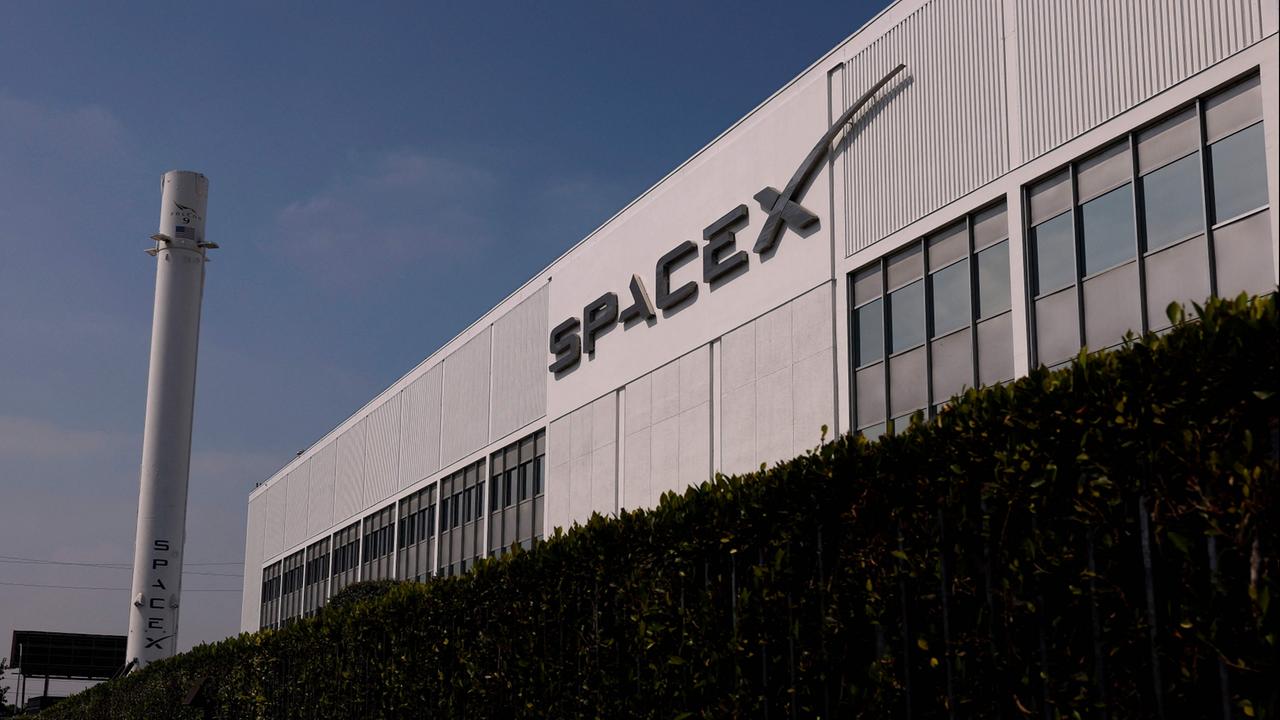
An abandoned piece of hardware from a SpaceX Falcon 9 rocket stage struck the lunar surface, marking an unintended debris impact on the Moon, according to astronomical calculations verified by planetary observers. The object, which spent years drifting in an eccentric orbit following a 2015 deep-space satellite launch, collided with the lunar far side, highlighting growing concerns over orbital debris beyond low-Earth orbit.
The spent booster stage originally launched the Deep Space Climate Observatory (DSCOVR) for NASA and the National Oceanic and Atmospheric Administration in February 2015. While the rocket’s first stage successfully separated and returned to Earth, the second upper stage possessed enough velocity to escape Earth’s gravity well entirely, leaving it in a chaotic, sun-centered orbit that eventually crossed paths with the Earth-Moon system.
Independent astronomers and orbital dynamicists tracked the trajectory of the derelict hardware for weeks leading up to the impact. The event underscores an increasing focus among space agencies and researchers regarding uncontrolled space junk tracking in cislunar space as commercial and scientific deep-space missions expand.
Tracking the Derelict Booster and Lunar Impact Trajectory
Astronomer Bill Gray, who maintains software used to track near-Earth objects, first identified the impending lunar collision trajectory in early 2012-vintage tracking data, calculating that the four-tonne booster stage would strike the Moon. Subsequent observations by independent planetary scientists confirmed the path, narrowing down the expected impact window to March 2022.
Because the collision occurred on the far side of the Moon, away from direct line-of-sight view from Earth, terrestrial telescopes could not directly witness the flash. Instead, confirmation relied heavily on precise orbital modeling and subsequent high-resolution imaging by orbital probes such as NASA’s Lunar Reconnaissance Orbiter (LRO), which later scanned the expected impact region for fresh craters.
The LRO team subsequently identified a unique double crater formed by the impact, suggesting that heavy masses at both ends of the spent rocket stage—specifically the heavy engine components balanced against an empty propellant tank—created two distinct depression zones upon striking the lunar regolith at roughly 2.58 kilometers per second.
Implications for Deep Space Debris Management
The incident has intensified discussions among aerospace engineers and regulatory bodies regarding the long-term management of upper-stage rocket bodies left in high-energy orbits. Unlike payloads designed to burn up in Earth’s atmosphere or execute controlled de-orbit maneuvers, objects placed on interplanetary trajectories often become untraceable orphans once their active mission phases conclude.
While space debris in low-Earth orbit is heavily monitored by entities like the United States Space Force’s 18th Space Defense Squadron, tracking objects thousands of kilometers away remains exceptionally difficult. Observers rely heavily on a global network of amateur astronomers and academic institutions to augment professional tracking catalogs for deep-space hardware.
International space agencies continue to refine orbital safety guidelines to prevent similar uncontrolled trajectories, though retrofitting existing policies for older mission architectures remains a complex logistical challenge for both public and private launch providers.
Next Steps in Lunar Observation and Safety
Researchers analyzing the LRO imagery continue to study the physical properties of the double crater to understand how artificial materials interact with uncompacted lunar dust and subsurface rock. As lunar exploration ramps up with upcoming robotic and crewed missions under international frameworks like the Artemis program, space situational awareness networks are pushing for more rigorous tracking standards for all spacecraft leaving Earth’s immediate vicinity.
Official updates regarding lunar orbital safety policies and deep-space tracking initiatives are regularly published through space agency portals, including the NASA Official Website and international astronomical clearinghouses.
What are your thoughts on managing space debris in lunar orbit? Join the conversation and share your perspective in the comments below.
Worth a look
- China: Activist Arrested Over Dalai Lama Photo in Tibet Must Be Released
- Morgan Wallen and Taylor Swift Lead Latest Country & Pop Hits
- SpaceX Rocket Stage to Hit Moon at 5,400 MPH in Unplanned Collision (time.news)
- U.S. stock futures rise after record Wall St close; SpaceX, AMD dip post earnings (archyde.com)