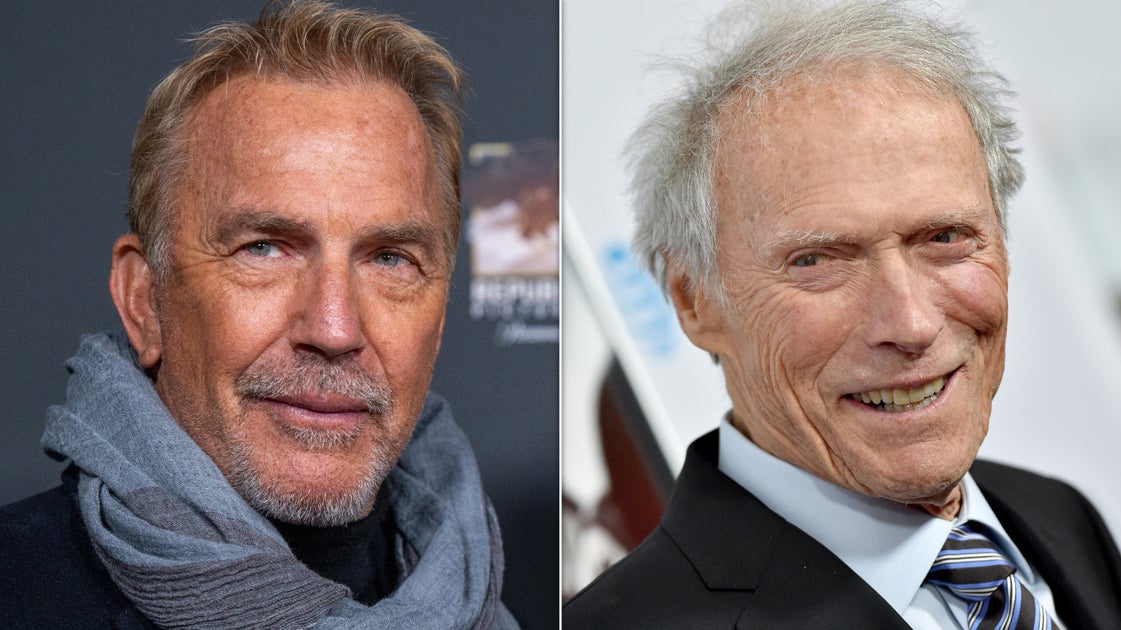
Hollywood lore often centers on fierce directorial command, but few stories capture the quiet authority of Clint Eastwood quite like a recollection shared by his son, Scott Eastwood. Reflecting on the production of the 1993 drama A Perfect World, Scott Eastwood recounted how his father subtly established boundaries with co-star Kevin Costner without raising his voice or triggering a confrontation. The film, directed by and starring Eastwood alongside Costner, brought together two massive cinematic heavyweights during a pivotal era for both actors.
According to entertainment reports and retrospective interviews regarding the classic Warner Bros. production, the dynamic on set required a careful balance of star power. Costner was fresh off a historic wave of critical and commercial success with films like Dances with Wolves and The Bodyguard, while Eastwood was cementing his legacy as both an iconic leading man and a disciplined, economical director. When minor friction arose regarding on-set pacing and authority, Eastwood relied on his trademark understated demeanor to maintain absolute control of the production.
Instead of engaging in a public dispute or a prolonged ego clash, the veteran filmmaker addressed the situation through sheer professional presence and efficiency. The incident highlights a directing style famously characterized by quick shooting schedules and a strict adherence to the call sheet—methods that have defined Eastwood’s prolific career behind the camera for decades.
The Production Dynamics of A Perfect World
Released on November 24, 1993, A Perfect World cast Kevin Costner as Butch Haynes, an escaped convict who takes a young boy hostage, played by T.J. Lowther, while Eastwood portrayed Texas Ranger Red Garnett leading the pursuit. The project marked a unique collaboration where two of Hollywood’s most bankable figures shared the screen under Eastwood’s direction. Filming across central Texas presented logistical challenges, but the primary friction point often involved balancing the sprawling creative demands of a major studio picture with Eastwood’s notoriously lean, rapid-fire filmmaking approach.
Scott Eastwood, who has occasionally reflected on visiting his father’s movie sets during his youth, noted that the elder Eastwood operated with a quiet confidence that naturally commanded respect from everyone in the cast and crew. Rather than tolerating any disruption to the rigorous schedule, Eastwood utilized his calm, unflappable demeanor to remind his collaborators of the hierarchy on set. Industry accounts from the era confirm that Eastwood valued preparation above all else, often shooting scenes in a single take to capture raw, authentic performances.
This disciplined environment left a lasting impression on the younger Eastwood, who later pursued his own acting career in films like The Longest Ride and Suicide Squad. Observing how his father managed complex personalities on a high-profile set provided a masterclass in professional boundaries and on-set leadership.
Clint Eastwood’s Directing Style and Legacy
Clint Eastwood’s reputation as one of Hollywood’s most efficient directors is well-documented by studio executives, crew members, and co-stars alike. Operating through his production company, Malpaso Productions, Eastwood has consistently completed films ahead of schedule and under budget—a rarity in modern studio filmmaking. This approach leaves little room for conventional Hollywood vanity or extended rehearsal periods.
By the time cameras rolled on A Perfect World, Eastwood had already secured Academy Awards for directing and producing Unforgiven (1992). His established method of working meant that actors were expected to arrive fully prepared to deliver their lines and move forward without unnecessary delays. When high-profile talent adjusted to this brisk pace, it occasionally required a subtle recalibration of expectations, handled swiftly by a director who preferred action over lengthy discussions.
The enduring appeal of A Perfect World stems largely from this sharp, unvarnished creative vision. While critics initially offered mixed reviews upon its late-1993 theatrical release, the film has since undergone a significant critical reevaluation, with many modern film scholars ranking it among Eastwood’s finest directorial achievements.
Impact on Modern Cinema and Subsequent Collaborations
The working relationship between Clint Eastwood and Kevin Costner ultimately yielded a critically acclaimed cinematic product, demonstrating that mutual professional respect could outweigh any initial on-set friction. Neither actor worked together directly as co-stars again in the decades following A Perfect World, but both maintained enduring, highly successful careers at the forefront of American cinema.
For audiences revisiting the film today, the interplay between Costner’s complex, sympathetic outlaw and Eastwood’s dogged lawman reflects a fascinating intersection of two distinct cinematic eras. As Hollywood continues to evolve, stories from legendary sets like A Perfect World serve as reminders of an older, more direct style of studio filmmaking—one where a director’s reputation and calm authority spoke louder than any confrontation.
Official updates regarding archival retrospectives, anniversary screenings, or upcoming physical media re-releases of Eastwood’s directorial catalog can be monitored through major entertainment distributors and industry databases such as IMDb Pro or Warner Bros. corporate announcements. Readers are encouraged to share their thoughts on A Perfect World and join the conversation in the comments section below.
Related reading