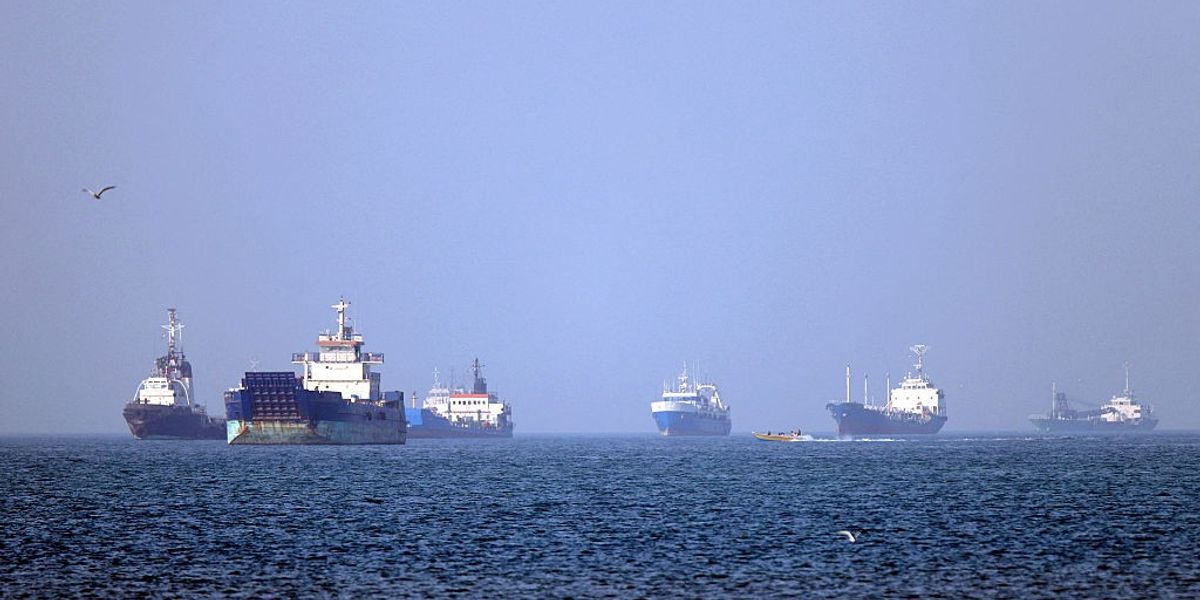
As regional diplomats weigh the contours of an interim arrangement to reopen maritime traffic in the Persian Gulf, international security analysts warn that the true strategic price of any compromise remains unexamined. Roule, current discussions regarding an “operational pause” and coercive restraint gloss over profound vulnerabilities that could permanently alter regional stability and international trade frameworks.
The diplomatic maneuvering centers on reopening the critical waterway for shipping lanes, but policymakers face intense scrutiny over whether concessions will inadvertently grant Tehran expanded leverage. Roule, a veteran intelligence official who served for 34 years in the Central Intelligence Agency and managed national intelligence policy related to Iran at the Office of the Director of National Intelligence (ODNI), emphasizes that the international community must confront the hidden liabilities of attempting to negotiate maritime access during an active conflict.
While as many as five million barrels of oil a day have reportedly moved through the Strait of Hormuz to relieve pressure on global energy markets, shipping remains exposed to extraordinary insurance rates and enduring blockades. As governments evaluate the mechanics of indirect talks, observers note that the lack of open dialogue regarding secondary economic and strategic fallout leaves critical alliances exposed to unprecedented gray-zone pressures.
Strait of Hormuz Concessions and the International Sanctions Regime
A central anxiety among geopolitical analysts involves how any operational arrangement inside the Persian Gulf interacts with existing economic penalties enforced by Western capitals. According to Roule, if Tehran acquires effective oversight or fee-collecting capabilities over transiting commercial vessels, the integrity of long-standing financial restrictions faces severe erosion.
Financial pressures inside Iran remain acute, with inflation hovering near 70% and severe unemployment spikes reaching figures as high as forty to forty-five percent in some areas in various domestic sectors. Despite these economic hardships, analysts caution that providing a financial windfall through formal or informal transit tolls would inject billions of dollars directly into state-backed power projection, funding regional proxy networks and advanced missile programs.
Furthermore, questions persist regarding maritime exemptions for specific nations or allied vessels. With Iran’s parliament officially barring enemy vessels from transit, policymakers in Washington and allied capitals must determine whether allied commercial fleets can legally transfer funds to Iranian authorities without violating sweeping international trade bans.
Regional Defense Successes and the GCC Partnership
Amid ongoing security friction, Gulf Cooperation Council (GCC) member states have demonstrated exceptional defensive capabilities against asymmetric threats. Through years of strategic engagement with the United States and private sector cybersecurity contractors, regional militaries have successfully intercepted numerous drone and missile incursions while protecting civilian infrastructure and expatriate populations.
These defensive successes have reinforced economic stability by keeping key energy corridors functioning and insulating global subsidiary industries from catastrophic shocks. Concurrently, regional air forces have executed targeted responses to external militant aggression, illustrating an increasingly close operational partnership between Western and Gulf military commanders.
However, because these states share a border with the ongoing crisis, their leaders demand a direct voice in any grand strategy concerning escalation or de-escalation. Their intimate knowledge of local dynamics heavily influences diplomatic pacing, ensuring that strategic restraint accounts for nations with direct security and economic vulnerabilities on the front line.
Gray-Zone Escalation and Cyber Infrastructure Risks
Beyond traditional naval choke points, state-backed digital probes remain a persistent vector for confrontation. Analysts point to historical patterns of Iranian cyber activity targeting critical supervisory control and data acquisition (SCADA) systems across Western infrastructure as an ongoing test of national resilience.
Although high-level disagreements persist regarding specific recent intrusions—such as reported digital probes directed at municipal water architecture in Minnesota—security experts maintain that unaddressed digital aggression invites repeated probing. Proportional, non-symmetrical responses directed at hostile cyber architecture remain standard options for policymakers seeking to establish material consequences for state-sponsored sabotage.
As diplomatic channels navigate this delicate transitional phase, experts emphasize that public rhetoric must be measured against ground-level realities. Observers will continue monitoring whether indirect talks yield formal transparency or if unaddressed structural risks ultimately unravel the fragile operational pause in the Gulf.
To read more national security analyses and expert interviews on global geopolitics, visit The Cipher Brief.