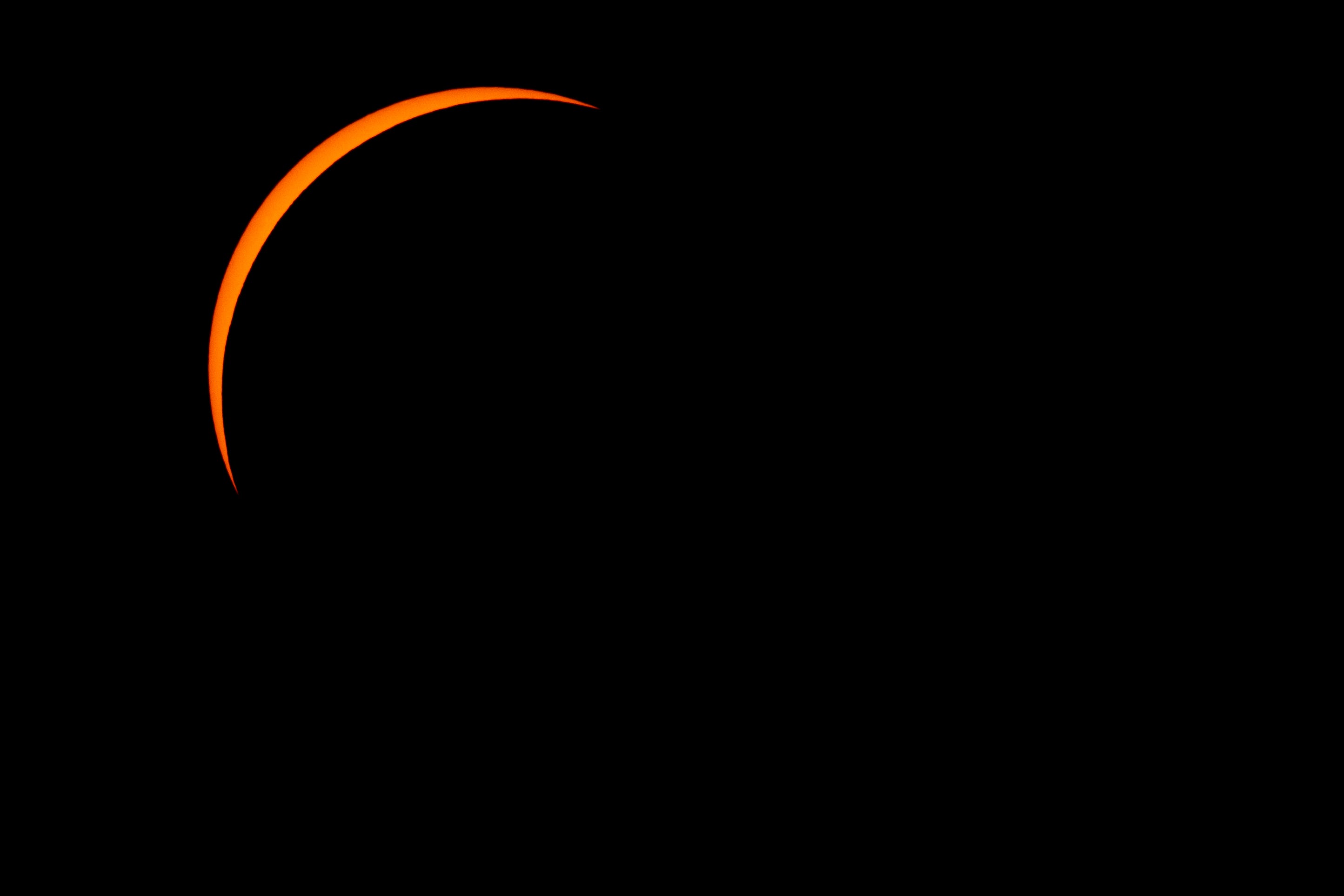
A partial solar eclipse will be visible across Latvia on August 12, 2026, with the moon covering approximately four-fifths of the sun’s diameter. While Latvia sees a partial event, a narrow band across Spain, Iceland, and Greenland will experience a total solar eclipse, according to reports from LSM and NASA.
The upcoming celestial event on August 12 will vary significantly in intensity depending on the observer’s location. In Latvia, the Latvian Astronomy Society (LAB) reports that the moon will obscure a substantial portion of the sun, though it will not reach totality within the country’s borders.
Rīga Timing and Regional Variations
Observers in Rīga can expect the eclipse to begin at 20:06, reaching its peak at 20:57. At this maximum point, 84 per cent of the sun’s diameter will be obscured before the sun sets at 21:11. Because sunset times differ across the region, the experience will shift based on local geography.
In eastern Latvia, the maximum phase of the eclipse will coincide with the sunset. Conversely, those in the west of the country will have a gap of roughly 20 minutes between the eclipse’s peak and the moment the sun disappears below the horizon, according to LSM. The Latvian Astronomical Society’s website provides the exact times of the eclipse’s maximum and sunset for different parts of Latvia.
The Path of Totality: Spain, Iceland, and Greenland
While much of Europe will see a partial eclipse, a specific narrow band will experience the full phenomenon. According to NASA, totality will be visible in Greenland, Iceland, northern Russia, the Atlantic Ocean, Spain, and a small corner of Portugal.
The timing and visual perspective of totality vary by country.
Several dozen astronomy enthusiasts from Latvia are expected to travel to Spain on August 12 to witness the total eclipse firsthand.
North American Visibility and Limitations
The 2026 event offers very limited visibility for those in the United States. The eclipse will reach its darkest point at 1:46 p.m. EST on August 12.
In North Carolina, the visibility is nearly negligible. Data from TimeandDate.com indicates a partial eclipse with a maximum of slightly less than 2% obscuration will be visible in the furthest northeastern areas from just after 1:30 p.m. until around 2 p.m. The event will not be visible from Western North Carolina, specifically the Asheville area, for local astronomy fans.
Historical Context and Future Eclipses
Partial solar eclipses occur in Latvia every two to six years. The most recent occurrence was on March 25, 2025, when one-fifth of the sun’s diameter was obscured. However, total eclipses are far rarer for the region; the last one was observed in 1954, and the next is not expected until 2142.
In the United States, the last total solar eclipse occurred April 8, 2024, with totality visible between 12:06 and 2:16 p.m. in several states, including Arkansas, Illinois, Indiana, Kentucky, Maine, Michigan, Missouri, New Hampshire, New York, Ohio, Oklahoma, Pennsylvania, Tennessee, Texas and Vermont. On that date, North Carolina saw a partial eclipse of roughly 84.71% obscuration in the Asheville area from approximately 1:47 p.m. to 4:32 p.m.
Other notable future events include:
- June 21, 2039: An annular solar eclipse will be observable in Latvia.
- August 22, 2044: The next total solar eclipse visible in U.S. states outside of Alaska, primarily affecting the western region, including Montana, North Dakota and South Dakota.
- May 11, 2078: The next total solar eclipse visible in North Carolina, as well as Alabama, Florida, Georgia, Louisiana, Mississippi, South Carolina, Texas, and Virginia.
Additional 2026 Astronomical Events
Beyond the August eclipse, the 2026 calendar includes several other events. Following a supermoon on January 3, the Old Farmer’s Almanac lists a Beaver Moon on November 24, 2026.
| Meteor Shower | Date |
|---|---|
| Perseids | Aug. 12-13 |
| Draconids | Oct. 8-9 |
| Orionids | Oct. 21-22 |
| Leonids | Nov. 17-18 |
| Geminids | Dec. 13-14 |
| Ursids | Dec. 22-23 |
Keep reading