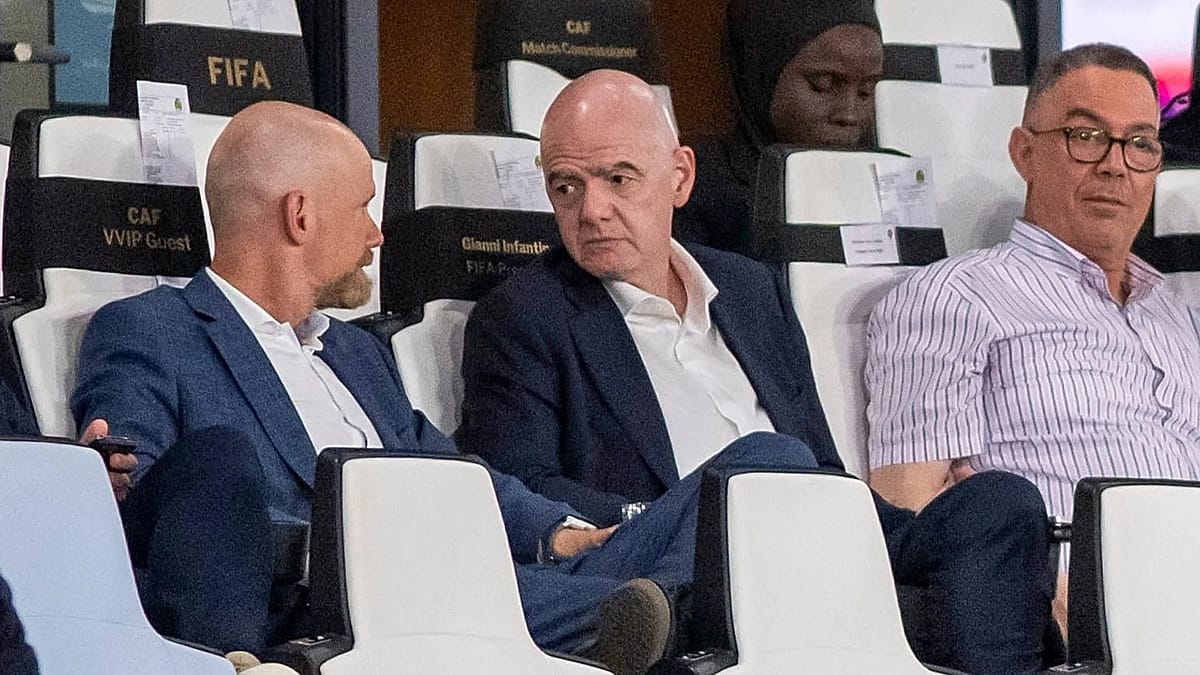
The global governance of association football faces a widening diplomatic chasm as regional federations divide sharply over the leadership of FIFA President Gianni Infantino. While European critics push for systemic change and leadership accountability, key confederations across the Americas have mobilized explicit backing for the incumbent administrator ahead of upcoming international congresses.
The fault lines crystallized when the Norwegian Football Association formally called for Infantino to resign, citing persistent concerns over transparency, governance standards, and the direction of global tournament expansion. Lise Klaveness, president of the Norwegian body, has repeatedly pressed world football’s governing body for comprehensive institutional reform since taking office, setting Scandinavia at direct odds with leadership headquarters in Zurich.
Conversely, the debate has galvanized strong institutional loyalty in Latin America. Major football powers, including the Mexican Football Federation and the Argentine Football Association, have publicly come out in support of the beleaguered FIFA boss, praising his administration’s financial distribution models and the expansion of the FIFA World Cup framework to include more developing member associations.
The European Push for Governance Reform and Transparency
Opposition from Nordic and select Western European associations centers primarily on executive power consolidation and consultation processes within FIFA. According to public statements released by the Norwegian Football Association, member federations require a greater voice in commercial decisions, human rights evaluations around major tournament hosts, and calendar harmonization.
The European resistance builds upon years of friction regarding governance oversight. When Infantino was first elected in 2016 following the corruption scandals that unseated Sepp Blatter, he campaigned on a platform of financial transparency and regional inclusivity. However, critics argue that subsequent expansions—such as the revamped 32-team Club World Cup and the 48-team men’s national team World Cup—were advanced without adequate consensus from player unions, domestic leagues, or continental stakeholders.
Despite these criticisms, European associations remain internally fractured. While Nordic federations maintain an active posture of dissent, several major European football associations have adopted a pragmatic approach, balancing calls for incremental administrative adjustments with a desire to maintain stable commercial ties with the Zurich-based governing body.
Latin American Backing and the Global South Alliance
In sharp contrast to the Scandinavian stance, South American and North American regional heavyweights have consolidated their support behind Infantino. Leaders from the Argentine Football Association and the Mexican Football Federation have emphasized the tangible benefits their regional member associations receive through FIFA’s Forward development programs.
Under Infantino’s tenure, FIFA has substantially increased financial disbursements to its 211 member associations, a policy that resonates deeply across Africa, Asia, and the Americas. Smaller and medium-sized federations often rely entirely on these grants to fund grassroots infrastructure, youth academies, and women’s football programs.
Supporters within CONMEBOL and CONCACAF argue that expanding global tournaments democratizes the sport, offering nations outside traditional European and South American powerhouses a realistic pathway to compete on the world stage. This redistribution of opportunity forms the bedrock of Infantino’s political durability among the global majority.
Institutional Stakes Ahead of the Next FIFA Congress
The widening split places immense pressure on uncommitted member associations across Asia and Africa as they weigh competing visions for the future of international football governance. The debate moves beyond personality politics, touching directly on revenue sharing, tournament frequency, and the balance of power between wealthy European domestic leagues and the rest of the global football ecosystem.
As preparations continue for the upcoming FIFA Congress, diplomatic maneuvering between Zurich, Oslo, Buenos Aires, and Mexico City is expected to intensify. Observers note that while European dissent highlights valid administrative grievances, the incumbent leadership retains a formidable voting bloc rooted in the developing world.
Stakeholders, sports administrators, and interested observers can monitor official updates, regulatory filings, and congressional schedules directly through the FIFA Official Compliance and Governance Portal.
What are your thoughts on the direction of international football governance? Join the discussion in the comments below.