<>
Rapid advances in generative artificial intelligence have made creating hyper-realistic digital media remarkably easy, leaving security researchers and software engineers racing to build reliable detection tools. As manipulated video and audio clips increasingly flood digital networks, tech companies and cybersecurity firms are deploying sophisticated algorithms to unmask synthetic media before it misleads the public.
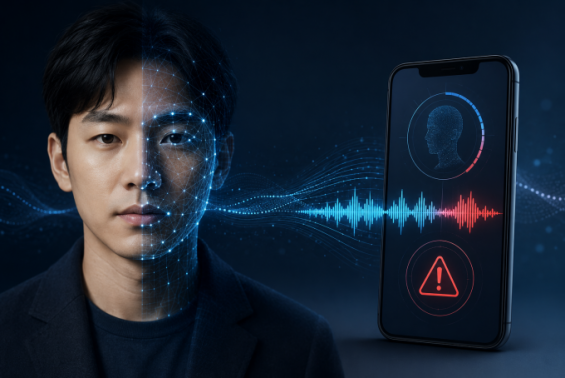
The proliferation of synthetic media spans multiple formats, primarily focusing on facial manipulation known as deepfakes and cloned human speech referred to as deepvoice. According to security analysts, these technologies leverage deep neural networks to map, alter, and synthesize audio-visual content with striking fidelity. Detecting these fabrications requires examining subtle digital artifacts that remain invisible to the naked eye.
Microscopic Inconsistencies in Video and Audio
Security researchers at various technology institutions note that synthetic video often betrays its artificial origin through microscopic inconsistencies in lighting, skin texture, and blinking patterns. Similarly, synthetic audio systems struggle to replicate natural vocal micro-tremors, breathing pauses, and environmental acoustic alignment. Forensic software now targets these specific anomalies to flag suspicious files automatically.
Major technology platforms face mounting pressure to integrate automated filtering systems as fraudulent audio and video clips target public figures, corporate executives, and everyday internet users. Industry standards organizations are currently developing frameworks to authenticate genuine media through cryptographic signatures and secure metadata tracking, providing a multi-layered defense against digital deception.
The Mechanics of Detection Technology
Modern detection systems rely heavily on machine learning classifiers trained on massive datasets of both authentic and synthetically generated media. These models analyze spatial artifacts in video frames, such as warped boundaries around facial features or unnatural blending edges. According to computer vision specialists, neural networks excel at spotting pixel-level inconsistencies that human observers routinely miss.
Forensic Tools and Spectral Analysis
Audio forensic tools operate on similar principles, examining spectral characteristics and frequency anomalies unique to synthetic speech generation models. By analyzing the time-frequency domain of recorded voice clips, detection algorithms can identify phase mismatches and unnatural harmonic structures typical of text-to-speech software.
The Ongoing Arms Race in Cybersecurity
Despite these technological strides, software developers acknowledge an ongoing cat-and-mouse dynamic. As generative models improve their output quality, detection filters must continuously update their training sets to recognize novel synthesis techniques. Cybersecurity firms emphasize that no single tool offers absolute protection, making user vigilance and multi-factor verification essential components of digital safety.
Regulatory Measures and Transparent Tracking
Technology leaders and policymakers continue to debate regulatory measures and technical standards to curb the misuse of synthetic media. Several software developers have released open-source toolkits aimed at helping journalists and researchers verify the provenance of digital files before publication. These initiatives focus on establishing transparent tracking mechanisms that record a file’s origin and modification history.
As the field evolves, the focus remains on balancing innovation with robust verification safeguards. Researchers anticipate that upcoming industry guidelines and platform updates will introduce more standardized labeling for AI-generated content, helping users navigate this complex digital ecosystem.
>
Keep reading