U.S. cryptocurrency market structure legislation faced a major setback as Coinbase CEO Brian Armstrong opposed a pending draft over stablecoin yield limits.
The political battle over digital asset regulation in Washington has intensified as major industry players and lawmakers clash over key provisions governing market structure, stablecoin yields, and potential conflicts of interest. While congressional committees push forward with competing legislative frameworks, key stakeholders are drawing hard lines over what compromises they are willing to accept.
Senate Agriculture Committee Advances CFTC Digital Commodities Bill Along Party Lines
The Digital Commodity Intermediaries Act advanced out of the U.S. Senate Agriculture Committee on a strict party-line vote of 12 Republicans in favor and 11 Democrats opposed. The legislative milestone marks the first time a crypto market structure bill has successfully cleared a Senate committee, establishing a vital precedent for digital asset oversight.
Senate Agriculture Committee Chairman John Boozman pushed forward with the measure after losing bipartisan backing from Senator Cory Booker, who split from the final committee text. Booker criticized the Republican-led process during Thursday’s hearing.
“the product put before us today is not the bipartisan draft that we have been working on.”
Sen. Cory Booker, D-N, via CNBC
Despite the Democratic defections, Senator Kirsten Gillibrand noted she remained optimistic that the committee would successfully advance its measure. Chairman Boozman defended the legislation in a statement, calling the vote a critical step toward creating clear rules for digital asset markets
while acknowledging that there’s still more work ahead,
according to coverage from CNBC.
Coinbase Pushback and the High-Stakes Battle Over Stablecoin Yields
As the Senate Banking Committee prepares for its own legislative markup, the broader cryptocurrency ecosystem is fractured over regulatory compromises. Coinbase CEO Brian Armstrong signaled fierce opposition to emerging drafts, declaring in a social media post that his firm would rather see no legislation pass than accept a flawed regulatory framework. Fortune reported that Armstrong’s intervention threw the high-stakes Senate Banking proceedings into immediate limbo.
At the center of the dispute is a fierce turf war with traditional banking lobbies over stablecoin yields. Traditional lenders argue that allowing digital asset platforms to offer high yields on stablecoin holdings threatens the broader financial system by siphoning deposits away from traditional commercial banks. Conversely, crypto exchanges rely heavily on these products; Coinbase alone reported $355 million in stablecoin-related revenue during the third quarter of 2025.
Industry leaders remain deeply divided on the strategic approach. While Coinbase adopted a hard-line stance, competing executives urged pragmatism. Kraken co-CEO Arjun Sethi argued against walking away from negotiations, warning that obstruction would lock in uncertainty and leave American companies operating under ambiguity while the rest of the world moves forward,
as detailed by Fortune.
Ethics Provisions and Political Scrutiny Over Crypto Holdings
Legislative friction has also intensified around ethics safeguards and potential conflicts of interest tied to executive branch officials. Democratic lawmakers during the Agriculture Committee markup introduced amendments aimed at barring public officials, including the president, from profiting off digital asset ventures. These proposals failed to advance after committee leadership ruled them outside the panel’s direct jurisdiction.
The ethics debate has been fueled by heightened public scrutiny over the Trump family’s financial entanglements in the digital asset sector, including the World Liberty Financial platform, which applied for a federal bank license. Senate Banking Committee Chair Tim Scott dismissed the inclusion of such ethics mandates in market structure legislation, telling industry reporters that governance guardrails do not belong in the measure. However, a coalition of nonprofit watchdog groups challenged that position, sending letters to congressional leaders describing the omission of conflict-of-interest rules as alarming.
Banking Industry Rivalry and What Comes Next in the Senate
The unfolding legislative showdown highlights a fundamental shift in the crypto industry’s posture toward institutional finance. Traditional banking institutions spent years trying to wall off the digital asset sector over compliance and money-laundering vulnerabilities. With congressional committees now advancing major bills, the battlefield has shifted from whether crypto belongs in regulated finance to the exact terms under which traditional banks and digital asset firms will compete for customer deposits, payments, and long-term financial relationships.
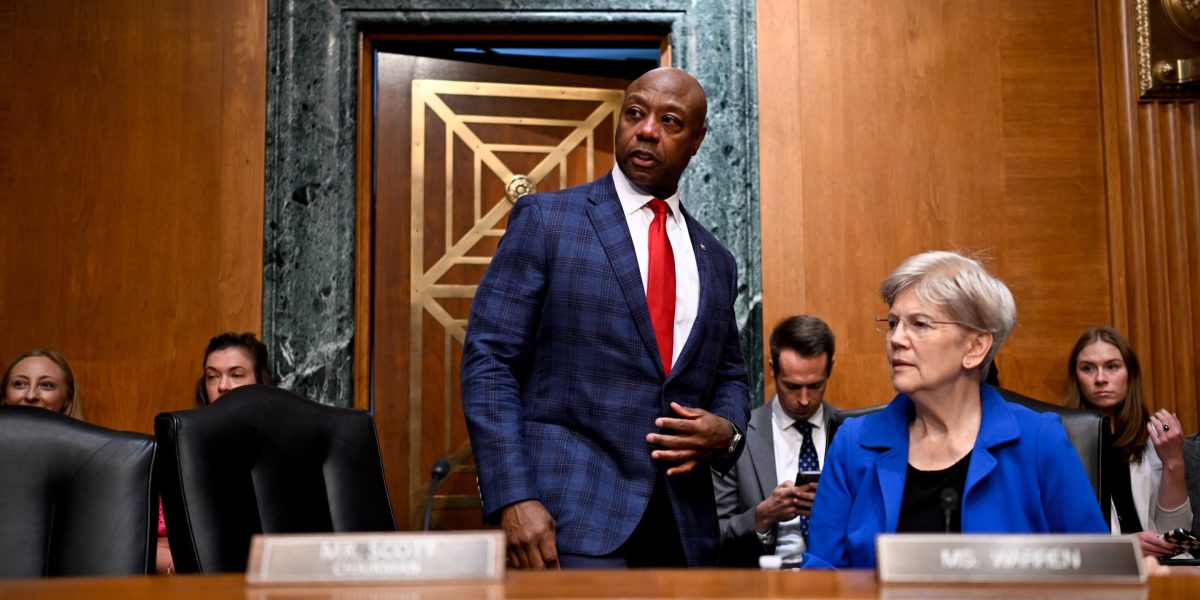
Before any comprehensive market structure package can reach the full Senate floor, the Senate Banking Committee must schedule and approve its companion measure, combining it with the agricultural framework passed earlier. With Wintermute head of policy Ron Hammond noting that it’s crypto and there’s always last-second drama,
policy experts anticipate continued lobbying battles over yield limits and ethics rules before the legislation moves forward.