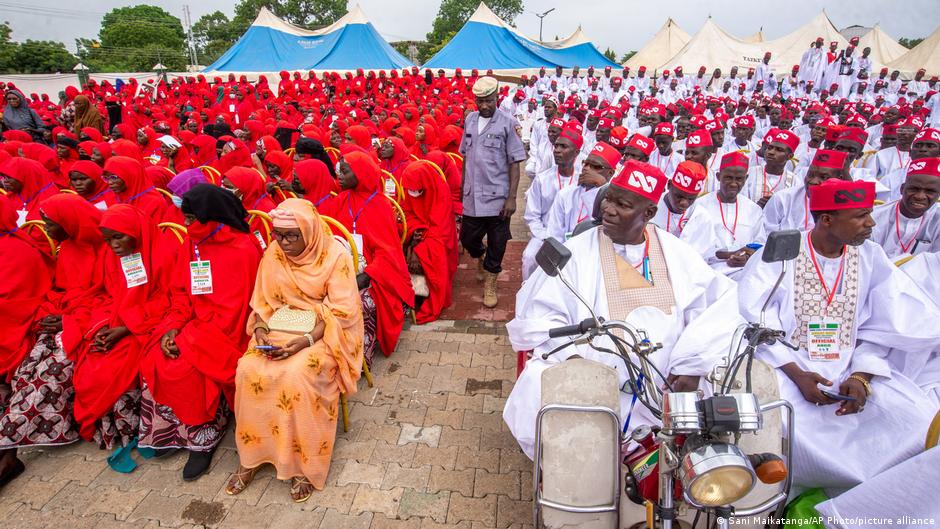
Government authorities in Nigeria recently orchestrated a large-scale civic initiative, uniting 1,500 couples in a mass wedding ceremony designed to ease financial hurdles for low-income households and foster community stability. The program, organized in regions affected by prolonged regional insecurity, specifically extended support to individuals who lost immediate family members during violent conflicts, offering state assistance for couples who otherwise could not afford traditional nuptial expenses.
Mass wedding programs funded or endorsed by regional governments have periodically served as a policy instrument in parts of Nigeria to address economic exclusion, lower the cost barriers associated with formal marriage rites, and integrate vulnerable populations into recognized social structures. Officials supervising the initiative noted that covering venue expenses, dowries, and essential household goods directly mitigates the economic strain on impoverished citizens.
For participants arriving from conflict-impacted districts, the event carried profound social significance. Security challenges across parts of Nigeria have displaced communities and fractured family units, leaving many survivors without the financial or familial networks typically required to host formal marriage ceremonies. By absorbing these costs, state-backed programs aim to restore a sense of normalcy and societal cohesion among displaced or grieving populations.
Critics and civil society groups, however, have historically monitored such state-sponsored ceremonies to ensure that participation remains entirely voluntary and that administrative backing aligns with fundamental rights. While proponents emphasize poverty alleviation and community welfare, observers often stress the importance of sustained economic follow-up to ensure that newly established households receive long-term support beyond the initial wedding day.
Socioeconomic Objectives and State Support
The primary driver behind large-scale matrimonial programs in Nigeria remains economic relief. Formal weddings in many Nigerian communities involve considerable financial outlays for venues, catering, traditional attire, and ceremonial gifts. For low-income earners and daily wage workers, these expenses can delay or entirely preclude formal unions.
State involvement typically includes underwriting the collective costs, providing uniform attire, and distributing basic domestic items such as mattresses, kitchen utensils, and sometimes small financial grants to help newlywed couples launch household enterprises. By removing these financial obstacles, administrators seek to encourage legal recognition of unions, which aids in matters of inheritance, child welfare, and family law protections.
Impact on Conflict-Affected Families
A notable cohort within the recent 1,500-couple ceremony consisted of individuals who had suffered personal losses during violent attacks. Years of localized insurgency and banditry in certain northern and central states have left thousands of widows, widowers, and orphans.
For these participants, community-supported ceremonies provide an avenue for social reintegration. Human rights monitors and local community leaders often point out that widows and survivors of violence face heightened economic vulnerability. Programs that incorporate these individuals aim to rebuild social support systems, reduce stigma, and offer a formalized framework for families seeking to rebuild after trauma.
Policy Context and Future Outlook
State-sponsored or religiously endorsed mass weddings are not new to Nigeria. Various state governments, particularly in the northern region, have institutionalized similar boards or committees tasked with facilitating marriages for widows, divorcees, and economically disadvantaged youth. Proponents argue these measures uphold moral standards and reduce the number of unmarried individuals living in poverty.
As state authorities evaluate the outcomes of this latest 1,500-couple event, public discourse continues to focus on the balance between immediate ceremonial assistance and enduring economic empowerment. Observers emphasize that while mass weddings address immediate social hurdles, long-term stability requires continuous job creation, security improvements, and targeted welfare policies for vulnerable households across the country.
Related reading