President William Ruto and ODM leader Oburu Oginga are set to lead a high-level political retreat in Naivasha starting August 9, 2026. The meeting brings together leaders from the United Democratic Alliance and the Orange Democratic Movement to align legislative priorities and negotiate a formal 2027 coalition framework.
Aligning Legislative Agendas and Parliamentary Leadership
Lawmakers allied to the broad-based administration are scheduled to begin checking into a Naivasha hotel on Sunday evening, August 9, 2026, ahead of parliamentary sittings. According to an internal memo dated August 4 from National Assembly Minority Leader Junet Mohammed, the retreat will climax on Monday when President William Ruto and ODM leader Oburu Oginga join the joint Parliamentary Group meeting.
Discussions during the opening sessions will center on harmonizing government Bills and policy proposals across both the National Assembly and the Senate. National Assembly Majority Leader Kimani Ichung’wah outlined the scheduling to reporters by stating, We’re checking in tomorrow, Sunday evening, then hold sessions all the way to Monday 4pm.
Ichung’wah further elaborated on the legislative focus, noting, We want to strike a common position on priority legislation and that members move in one direction,
and adding, We are formatting the way forward on what we intend to do in the next one year in the run up to the general election.
In addition to reviewing policy proposals, the retreat will evaluate the performance of parliamentary committees. Sources indicate that expected changes could affect several committee chairpersons and vice-chairpersons who are struggling to spearhead key government programs under their purview. Alongside parliamentary business, Junet Mohammed’s internal memo confirmed that inter-party and coalition affairs will form a significant portion of the meeting agenda.
Coalition Strategy and the 2027 General Election
The broader purpose of the Naivasha gathering is to strengthen cohesion between the United Democratic Alliance and the Orange Democratic Movement, reviewing the progress of their partnership and charting the political direction of the broad-based administration ahead of the August 2027 General Election. Leaders will discuss the future of the UDA-ODM arrangement, assess progress on issues arising from the National Dialogue Committee (Nadco), and focus on setting up a team to begin formal coalition talks between the two parties.
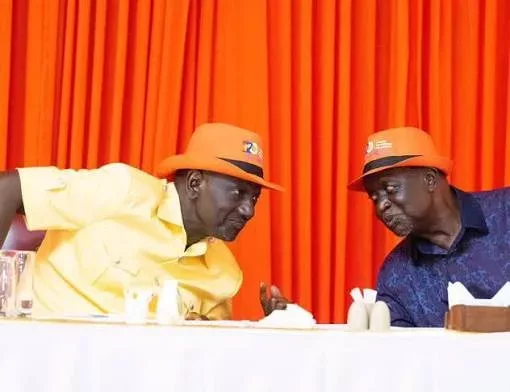
Proposals stemming from the Nadco process—whose recommendations formed part of the political understanding reached between President Ruto and the late former Prime Minister Raila Odinga—include the creation of the offices of Official Leader of the Opposition and Prime Minister. Furthermore, attendees will address the implementation of the NADCO report, the status of compensation for protest victims that has since degenerated into a protracted legal battle, and the recently unveiled Vision 2060. As Senate Minority Leader Stewart Madzayo noted regarding the coalition’s outlook, We are keen as ODM to know how are we moving forward as broad-based government.
Kimani Ichung’wah reinforced this sentiment, stating, Those of us in the broad-based government are clear in our minds how we intend to move forward.
Tensions Over Running Mate Selection and Political Zoning
The retreat is also expected to draw attention to competing interests surrounding the selection of President Ruto’s running mate for the 2027 contest. Several ODM leaders have publicly backed Cooperatives Cabinet Secretary Wycliffe Oparanya as a possible running mate, creating tension with politicians allied to Deputy President Kithure Kindiki as leaders from different regions position themselves.
Political Zoning and Campaign Strategies in Naivasha
Another contentious issue on the agenda is political zoning. The Orange Democratic Movement has pushed for political zoning in areas regarded as its traditional strongholds, arguing that parties within the broad-based arrangement should respect each other’s political bases. Conversely, the United Democratic Alliance has maintained that parties should be allowed to field candidates across the country in elective positions, with the presidency being the main exception. Alongside governors, deputy governors, Members of Parliament, and their speakers, the leadership aims to address these sticky issues as the Kenya Kwanza administration faces sustained attacks from the United Opposition, prompting broad-based leaders to push for a new strategy to roll out nationwide campaigns supporting President Ruto.
Related reading