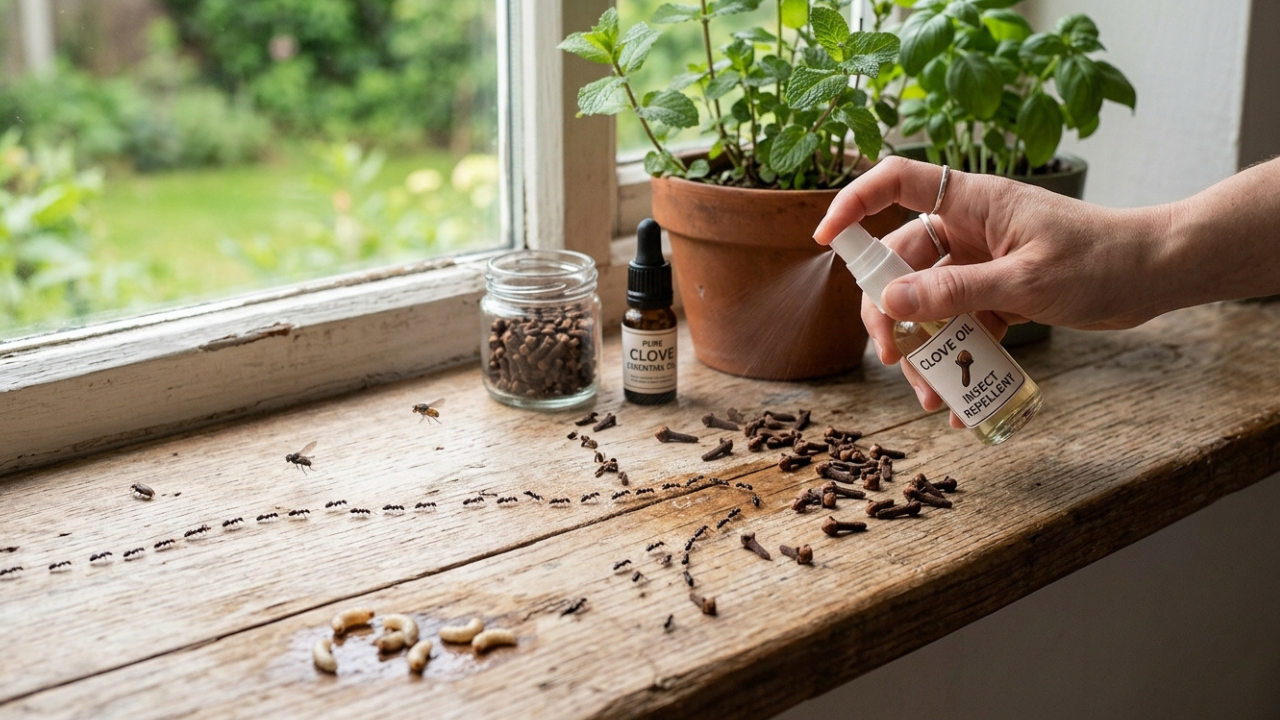
Households seeking alternatives to commercial insecticides are turning to a common kitchen spice, clove, to deter mosquitoes and ants naturally, according to reports from multiple outlets including Uai. This accessible pantry staple offers a chemical-free method for managing urban pests through sensory disruption, leveraging natural compounds found within the aromatic flower buds.
As warmer weather drives up household pest activity, consumers search for safe, economical deterrents. Cloves release a strong, penetrating aroma that repels flying insects like mosquitoes while preventing ants from infesting dry goods. According to reporting from Uai, this traditional remedy combines practicality with ease of use, making it a staple of integrated domestic pest prevention.
The science behind the deterrent properties of cloves centers on eugenol, a naturally occurring chemical compound found in the spice’s essential oils. William H. Robinson notes in his published text Urban Insects and Arachnids (Cambridge University Press, 2005, p. 214) that natural methods integrate effectively into prevention frameworks when prioritizing environmental measures before chemical interventions. The strong scent acts as a sensory barrier, disorienting pests and driving them away from treated zones.
How Cloves Deter Mosquitoes and Pests
The potent aroma of cloves interferes with the navigation systems of common household insects. When placed strategically near entry points like windows and doors, whole cloves create an olfactory shield. A popular and effective variation involves inserting whole cloves into fresh lemon halves. The acidity of the citrus fruit enhances the aroma of the spice, creating an outdoor or open-window deterrent that requires no toxic ingredients.
Beyond whole cloves, homeowners can prepare an inexpensive liquid spray for indoor and outdoor application. According to household guides, boiling 500ml of water with 10 cloves for 10 minutes releases the active compounds into an aqueous infusion. Once cooled and strained, mixing the liquid with 1 tablespoon of alcohol allows it to be bottled in a spray applicator. Spraying this solution along baseboards and corners every 2 days maintains active repulsion, while placing the liquid on cotton balls intensifies the barrier in areas prone to ant activity.
Protecting Pantry Staples and Food Stores
In addition to surface sprays, dry cloves serve a preservation role inside food storage containers. Placing whole cloves directly into containers containing grains or flour acts as a natural deterrent against ants. This traditional storage method leverages the antiseptic qualities of the spice, which guards against contamination without requiring commercial insecticides inside kitchen cabinets.
Guidelines recommend keeping cloves away from direct contact with active food preparation utensils to prevent altering the flavor profile of dishes. However, utilizing small cloth sachets filled with cloves inside pantries and wardrobes establishes a continuous, pleasant aroma that discourages pests from settling in dark, enclosed spaces.
Limitations and Environmental Safety Standards
While natural solutions reduce reliance on harsh chemicals, experts emphasize that they function primarily as preventative measures. According to the World Health Organization’s Global Vector Control Response 2017–2030 (Geneva: World Health Organization, 2017, p. 18), effective vector control requires the reduction of breeding sites and the adoption of sustainable methods in conjunction with community measures.
Guidelines remind residents that while kitchen remedies are safe for routine prevention, they do not replace repellents in areas with high infestation of mosquitoes. Integrating cloves with routine cleaning and sealing provides the most reliable long-term protection for households.