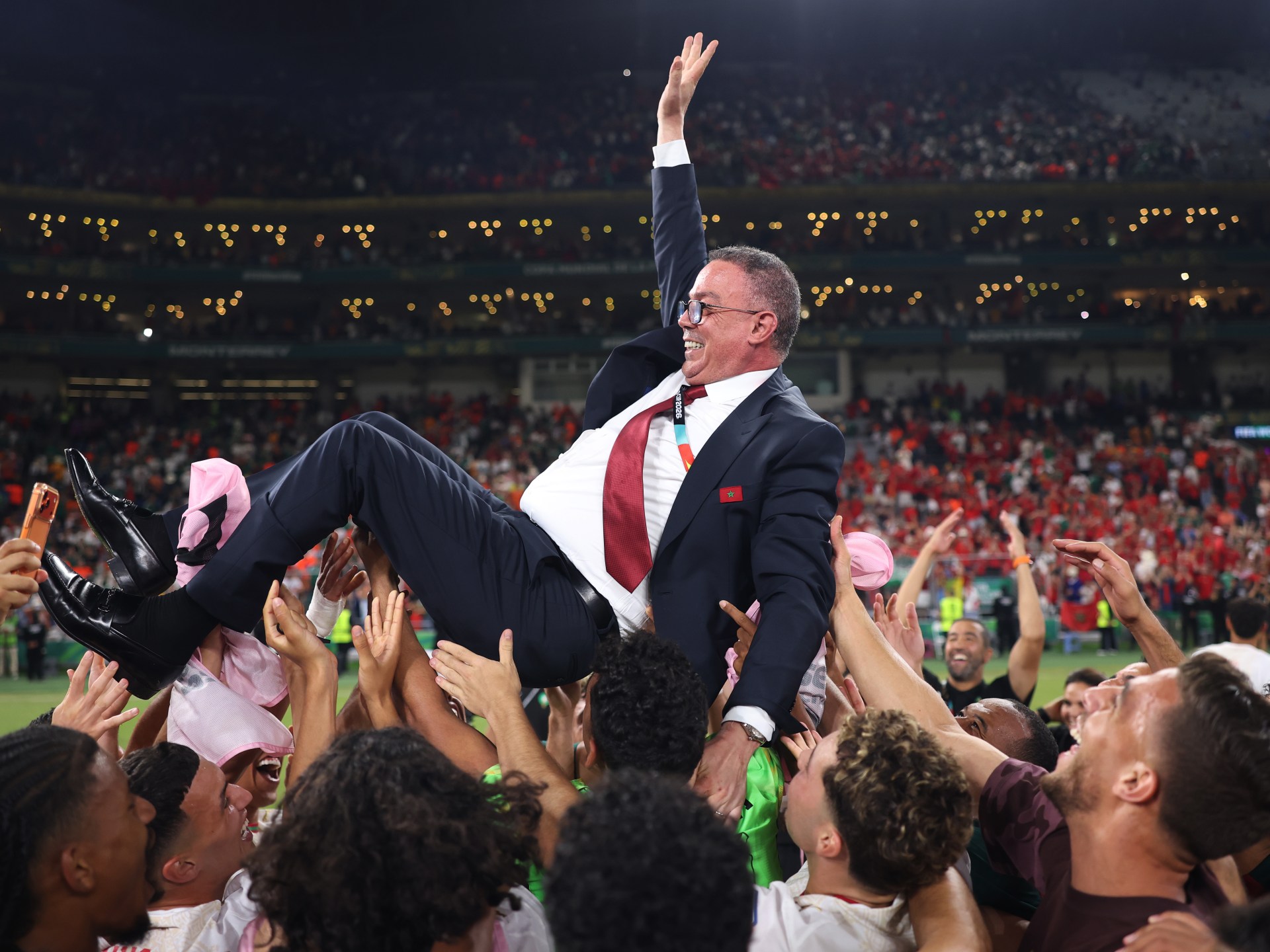
Fouzi Lekjaa, Morocco’s budget minister and president of the Royal Moroccan Football Federation (FRMF), joined the Authenticity and Modernity Party (PAM) on July 25, positioning himself as a leading contender for prime minister ahead of September’s parliamentary elections, according to Al Jazeera and Le Monde.
Political Shift in Morocco
Fouzi Lekjaa’s decision to join the Authenticity and Modernity Party (PAM) has sparked intense political debate in Morocco, with analysts noting the timing’s significance as the country prepares for parliamentary elections on September 23. Lekjaa, who serves as minister delegate for the budget, has long been a figure of influence in public administration and Moroccan football. His move to PAM, the governing coalition’s second-largest party, has raised questions about the intersection of sports, politics, and national development in a country poised to host the 2030 FIFA World Cup with Spain and Portugal.
Mustafa Ahdar, a researcher in constitutional law and political science at Ibn Zohr University, emphasized that while the 2011 Moroccan Constitution allows citizens to join political parties, Lekjaa’s dual roles as a senior minister and president of the Royal Moroccan Football Federation complicate his political maneuvering. Someone who simultaneously heads the national football federation and occupies a senior ministerial position cannot realistically be viewed in the same way as an ordinary citizen entering politics,
Ahdar told Al Jazeera. The timing of his affiliation—less than three months before the election—has drawn particular scrutiny, as the next government will oversee preparations for the 2030 World Cup, a project expected to require billions in infrastructure and tourism investments.
Lekjaa’s Dual Influence
Lekjaa’s rise reflects a broader trend in Moroccan politics, where managerial expertise and national prestige are increasingly shaping political legitimacy. As budget minister, he oversaw major infrastructure projects and played a pivotal role in Morocco’s football renaissance, including the Atlas Lions’ historic 2022 FIFA World Cup semifinal run and their 2025 Africa Cup of Nations victory. These achievements have bolstered his public profile, with some analysts suggesting his popularity as a football leader could translate into political capital.
Le Monde reported that Lekjaa plans to run in his hometown of Berkane, where he is expected to secure a “landslide” victory. Law professor Mustapha Sehimi, citing internal party discussions, stated, Everything seems to be unfolding as if his victory is preordained, and that he is set to lead PAM to victory and to be appointed by Mohammed VI as the next head of government.
The overlap between football success and political aspirations has drawn comparisons to Prime Minister Aziz Akhannouch, who also entered politics after building a reputation outside traditional party structures.
Political parties are supposed to create spaces where citizens become politically engaged and future leaders emerge,
Ahdar said. When parties increasingly recruit influential personalities who have built their popularity outside politics, they risk abandoning that mission.
This tension highlights the evolving dynamics of Moroccan politics, where public figures increasingly shape electoral outcomes.
Constitutional Framework and Electoral Dynamics
Morocco’s 2011 Constitution expands parliamentary powers while preserving the monarchy’s role in government formation. Under Article 47, the king appoints the head of government from the party winning the most parliamentary seats. The proportional electoral system typically results in coalition governments, making post-election negotiations as critical as the vote itself. Lekjaa’s potential candidacy has intensified speculation about the next administration’s composition, with some observers describing it as the 2030 World Cup government.
Despite his high-profile move, Lekjaa has not explicitly stated his intention to seek the prime ministerial role. However, his association with PAM—currently part of the governing coalition—has fueled speculation. The party faces criticism over its economic record, yet Lekjaa’s arrival has shifted focus away from policy debates toward his personal political trajectory. Social media users have even joked that Lekjaa attracted PAM rather than PAM attracting Lekjaa,
underscoring the growing personification of Moroccan politics.
This inevitably raises questions about internal party democracy,
Ahdar said. The debate also reflects broader shifts in voter behavior, with younger Moroccans increasingly prioritizing performance over traditional party loyalty. Turnout in the 2021 elections exceeded 50%, but nearly half of eligible voters still abstained, highlighting skepticism toward political institutions.
The coming weeks will test whether Lekjaa’s political ambitions align with PAM’s broader strategy. With the 2030 World Cup looming, his ability to balance his roles will be closely watched. Analysts note that any formal candidacy would require navigating complex coalition dynamics and addressing concerns about party internal democracy.
As Morocco prepares for its next government, the case of Fouzi Lekjaa underscores the blurring lines between public service, sports, and politics. His journey offers a glimpse into a political landscape where managerial competence and national prestige increasingly define leadership, even as constitutional frameworks and electoral traditions remain central to the process.
Worth a look