
As e-commerce giants tighten their grip on consumer attention, retail supply chains face a wave of store closures and consolidation. Industry leaders across global markets warn that digital platforms are eroding traditional retail footprints while shifting consumer habits demand rapid adaptation from brick-and-mortar mainstays.
The Clash Over E-Commerce Platforms
The tension between digital marketplaces and traditional storefronts has sparked sharp warnings from prominent business leaders. Zhong Shanshan, founder and chairman of Nongfu Spring—who served as Forbes China’s richest person for five consecutive years from 2021 to 2025—has criticized e-commerce platforms as pervasive middlemen that are effectively killing off physical retail stores.
Speaking on China Central Television’s finance program Dialogue, Zhong argued that while digital platforms help move agricultural products to broader markets, they simultaneously devastate local merchants who rely on impulsive, sensory-driven shopping. He contended that staring at mobile screens restricts human thought and diminishes creativity, which he believes thrives on real-world sensory experiences. Consequently, he advocated for stricter government oversight of platform powers.
Zhong also addressed the destructive nature of price wars within industrial competition. He asserted that competing solely on cutthroat pricing rather than product quality and high-end standards damages society’s broader productive capacity. When facing competition in beverage markets, he maintained that high-quality standards ultimately prevail because taste buds will not lie.
Staples Accelerates Nationwide Store Closures and Footprint Reductions
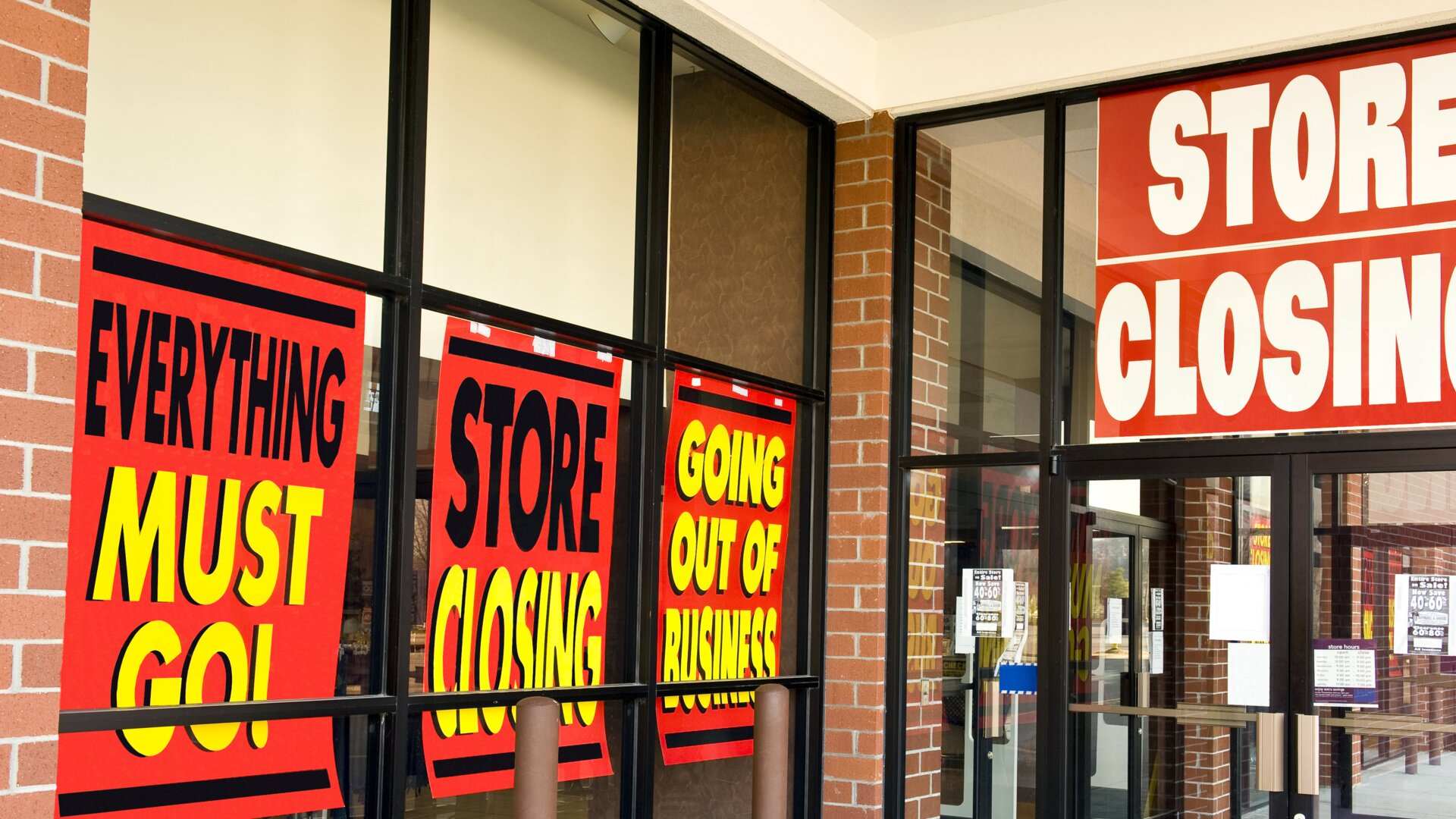
While retail titans debate the philosophical costs of digital commerce, traditional office supply chains are actively shrinking their physical footprint. Staples is set to close more stores in August 2026, continuing an extended adjustment to weakened demand for workplace essentials and rising operating expenses.
Founded in 1986 in Brighton, Massachusetts, the retailer expanded into a nationwide heavyweight boasting over 900 U.S. stores. Today, however, digital tools, remote workflows, and online purchasing have fundamentally altered commercial demand. The upcoming August closures include locations in Goleta, California—which marks the end of the brand’s physical presence in Santa Barbara County after more than 27 years—and Levittown, New York, closing after more than 15 years.
| Store Location | Address | Operational History |
|---|---|---|
| Goleta, California | 7015 Market Pl Dr | Open for more than 27 years |
| Levittown, New York | 2981-2991 Hempstead Tpke | Open for more than 15 years |
These summer shutdowns build on a broader, long-running corporate consolidation strategy. According to data from ScrapeHero, Staples’ U.S. store count dropped from 929 locations in October 2025 down to 916 by January 2026. Additional 2026 closures tracked by Usearch include sites in Astoria and Bayside, New York; Waterville, Maine; Frederick, Maryland; Chicopee, Massachusetts; and Whitehall Square, Pennsylvania.
Private Equity Ownership and Decades of Corporate Restructuring
The structural transformation of office supply retail has unfolded over more than a decade. Former Staples CEO Ron Sargent acknowledged as early as 2014 that customers were buying fewer office products while increasingly shopping online, which made generating profitable add-on sales increasingly difficult. In response, the company announced plans to shutter roughly 225 stores by 2015 under a cost-cutting initiative designed to save $500 million.
An attempted merger with Office Depot in 2015 was ultimately blocked by federal regulators over antitrust objections. Following that failed combination, Staples pivoted heavily toward business-to-business services. The corporate structure shifted again in 2017 when private equity firm Sycamore Partners acquired the company for $6.9 billion. That buyout relied on heavy debt financing and a subsequent $5.4 billion refinancing in 2019.
Management faced scrutiny after Sycamore Partners paid itself a $1 billion dividend shortly after the acquisition, enabling the private equity firm to recoup approximately 80 percent of its initial investment in under two years.
Market Projections and the Shift Toward E-Commerce
Broader industry figures illustrate why physical store networks continue to contract. Circana projects that the U.S. office supplies market will generate $11.1 billion in sales in 2026, marking a modest 0.1 percent revenue decline while unit sales drop by 2.8 percent. The research firm expects the sector to keep rightsizing through through 2028 as growth remains concentrated in select product categories, according to Circana Executive Director and Consumer Technology Industry Analyst Ben Arnold.
E-commerce continues to gain share, hybrid work trends are shifting some commercial purchases into retail channels, and third-party marketplaces are expanding their influence. Investments in technology and AI are diverting traditional office supplies budgets. Ben Arnold, Circana Executive Director and Consumer Technology Industry Analyst
Data compiled by WifiTalents indicates that online purchasing now captures 28 percent of total industry revenue. Meanwhile, mobile applications drive 72 percent of business-to-business orders, underscoring how deeply digital channels have supplanted traditional retail interactions across the commercial landscape.