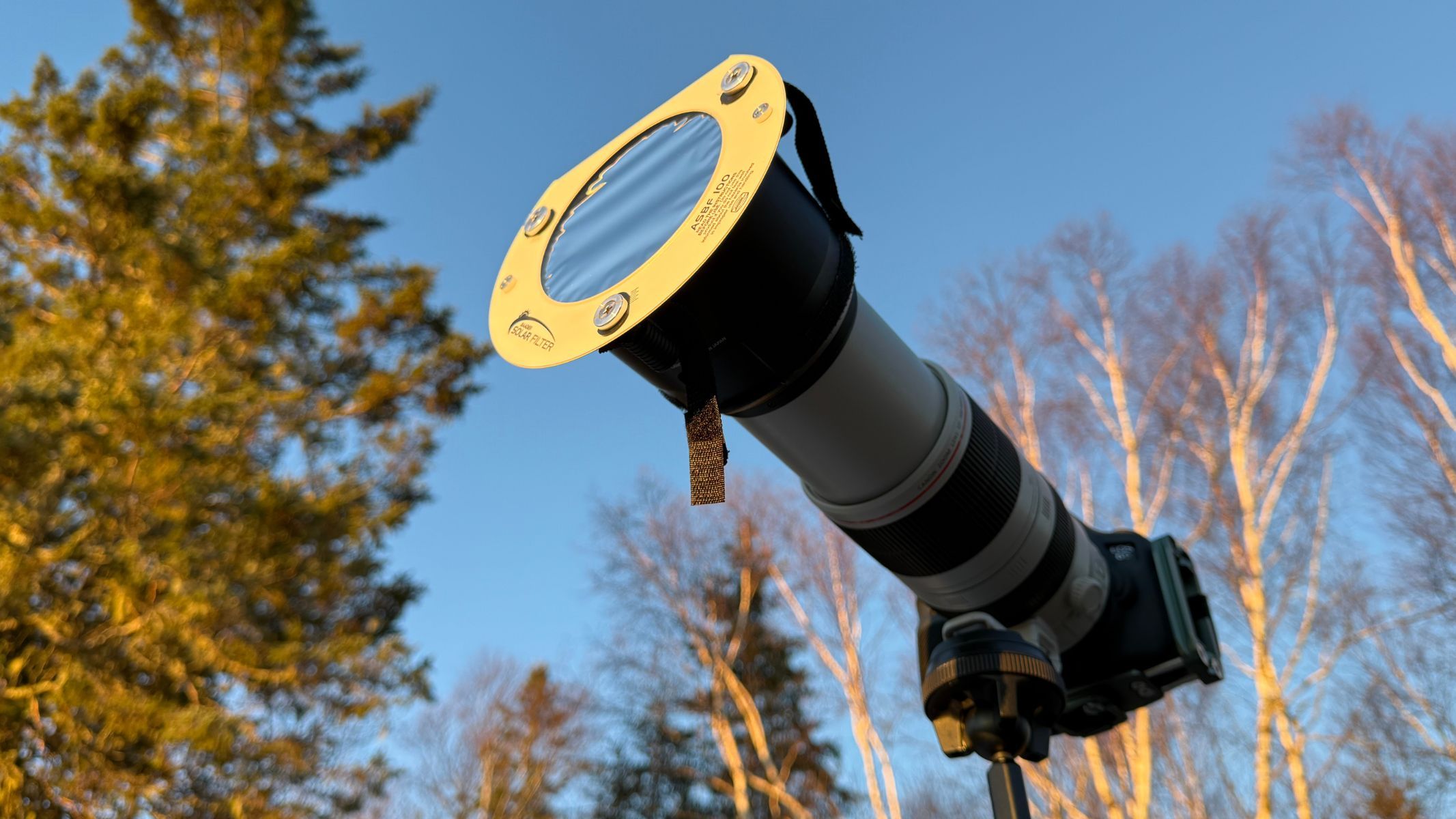
Baader AstroSolar Filter Film OD 5.0 is a specialized metalized sheet material engineered for safe white-light solar viewing and photography, serving as both a versatile DIY medium and the core component of ready-made optical filters. Manufactured in Germany by Baader Planetarium and distributed globally, the ultra-thin safety film blocks 99.999% of visible sunlight, making it a staple among eclipse chasers, astronomy enthusiasts, and long-focal-length photographers who demand high-contrast optical clarity without a heavy financial investment in specialized glass filters.
While premium polymer filters and rigid glass cells offer simpler out-of-the-box handling, AstroSolar film remains widely regarded for its ability to deliver sharp, clinical sunspot detail and neutral white solar rendering across telephoto lenses, binoculars, and travel telescopes.
Design and Specifications of Baader AstroSolar Safety Film
The defining characteristic of Baader AstroSolar Filter Film OD 5.0 is its extreme thinness. Measuring approximately 0.01 mm (or about 0.0004 inches), the metalized film feels exceptionally fragile compared to tougher solar polymers, often disconcerting first-time users who pull it from its packaging. However, this delicate design serves a distinct optical purpose. Unlike rigid filters that must remain perfectly flat to avoid distortion, AstroSolar film is specifically engineered to be mounted slightly slack. Wrinkles and ripples in the material do not degrade the image; instead, they prevent mechanical stress across the surface, ensuring the incoming light wavefront remains undisturbed.
The material is sold in loose sheets for custom crafting—ranging from ECO sizes to A4, 100×50 mm, and Giant 117×117 mm formats—as well as pre-mounted commercial cell configurations, including the ASTF Telescope Filter, ASSF Spotting Scope Filter, and ASBF Binocular Filter lines. According to technical specifications provided by Digital Camera World, the OD 5.0 designation indicates an optical density that blocks 99.999% of visible sunlight, yielding a neutral white solar disk rather than the deep amber or orange hues produced by competing polymer filters.
A technical nuance noted in review evaluations is that AstroSolar Safety Film OD 5.0 technically falls short of the strict ISO 12312-2 international standard required for direct handheld eclipse viewers because it permits slightly higher ultraviolet transmission. Consequently, manufacturers and experienced astronomers emphasize that the film must always be placed over the objective end of an optical instrument—never behind the eyepiece—allowing the glass elements of binoculars, spotting scopes, or telephoto lenses to absorb residual UV radiation. Furthermore, photographers are advised to compose and monitor images using digital camera viewfinders rather than direct optical viewfinders during solar observation.
Field Performance and Image Quality
When deployed on telephoto lenses ranging from 400mm to 600mm, Baader AstroSolar Filter Film OD 5.0 demonstrates its primary performance advantage: high light transmission that permits significantly faster shutter speeds. Field tests utilizing a 400mm lens set to f/8 and ISO 100 consistently achieved optimal sharpness at shutter speeds between 1/800s and 1/1,000s, freezing atmospheric shimmer and yielding crisply defined sunspots and solar limbs.
The neutral white rendering of the sun offers distinct editing advantages for digital astrophotographers. While casual observers frequently anticipate an orange sun due to the visual conditioning of traditional eclipse glasses, a neutral white solar disk provides a clinical baseline that can be easily warmed during post-processing. For binocular users, mounting an A4 sheet cut-out over one objective lens of a 10×50 pair creates a lightweight, highly portable solar-viewing instrument for tracking the partial phases of an eclipse, provided the uncovered objective lens is securely capped.
During total solar eclipses, the physical characteristics of DIY AstroSolar slip-on filters offer logistical advantages over heavy screw-in glass or metal cells. Because homemade cardboard or plastic sleeve filters can be built to slide snugly over a lens hood or telescope tube, observers in the path of totality can swiftly slip the filter off during the dark moments of totality without battling hot, threaded metal rings. Securing the filter in an accessible pocket ensures immediate reapplication once the solar crescent reappears.
Handling, Safety, and Purchasing Considerations
Building a custom filter requires patience, cardboard, scissors, and adhesive, but it remains significantly more economical than purchasing dedicated screw-in filters for multiple camera lenses. A single A4 sheet can supply material for multiple telephoto lenses or binoculars. However, handling demands strict adherence to safety protocols. Users must inspect the film meticulously before every session; any pinholes, tears, scratches, or delamination require immediate retirement of the filter to prevent eye damage.
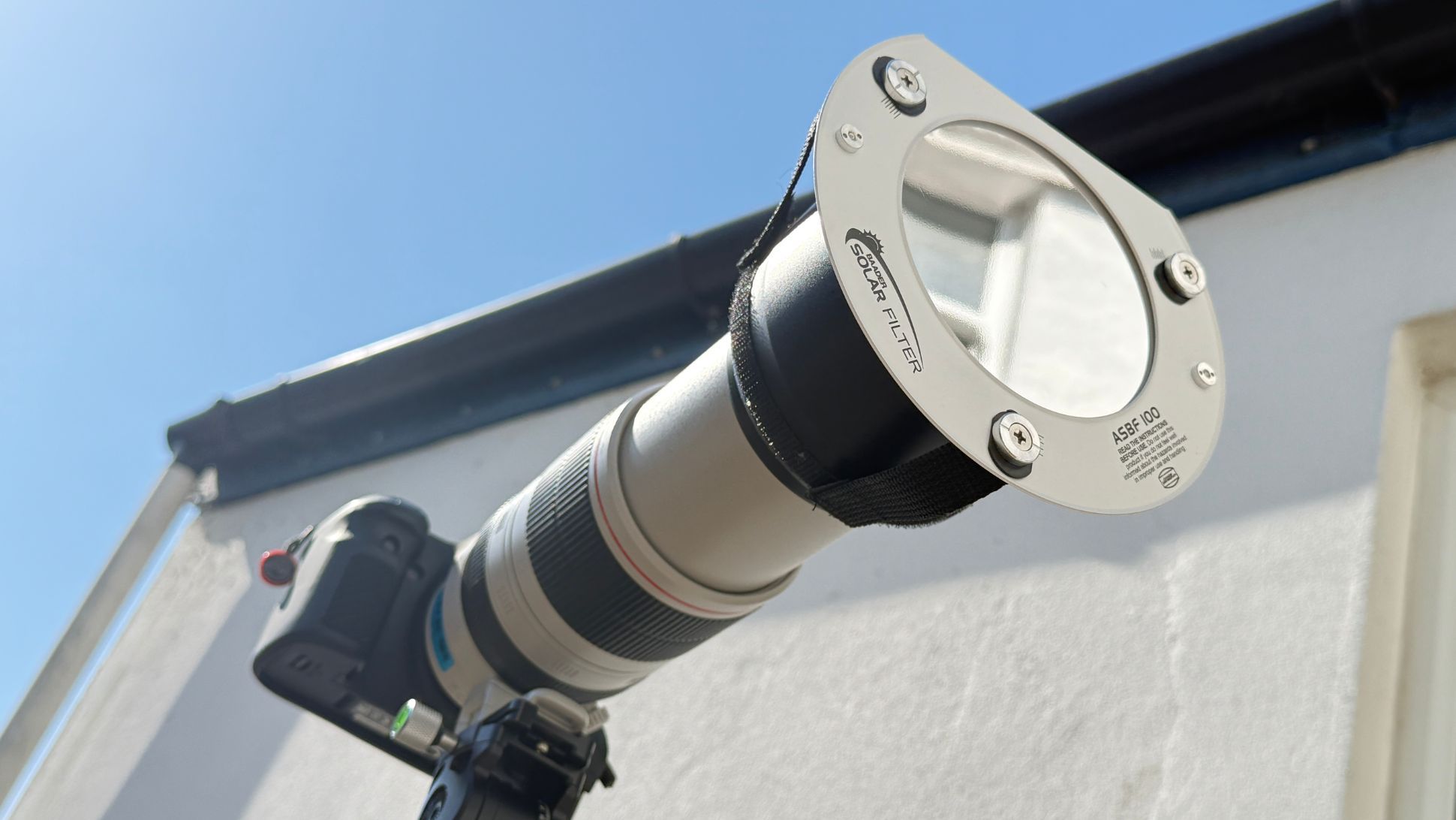
Market availability fluctuates significantly, particularly across North America, where retail stocks often vanish when public interest surges ahead of major celestial events. While European distribution remains steady, buyers outside Europe should plan acquisitions well in advance. For users prioritizing out-of-the-box durability and minimal preparation, rigid glass or polymer filters may reduce travel anxiety. For photographers and visual observers demanding maximum sharpness, fast shutter speeds, and custom adaptability, Baader AstroSolar Filter Film OD 5.0 remains an indispensable tool in the field.
- 20 Million Shia Pilgrims Gather in Karbala for Arbaeen Amid Mideast Conflict
- Gvidas Gineitis Transfer Rumors: Celtic Interest and Torino Dilemma
- Octopus Energy Offers Free Electricity to Customers Who Cut Usage During Solar Eclipse (world-today-news.com)
- Tariff vs. Price Floor: What Trump's New Solar Rule Does (daybreakwire.com)