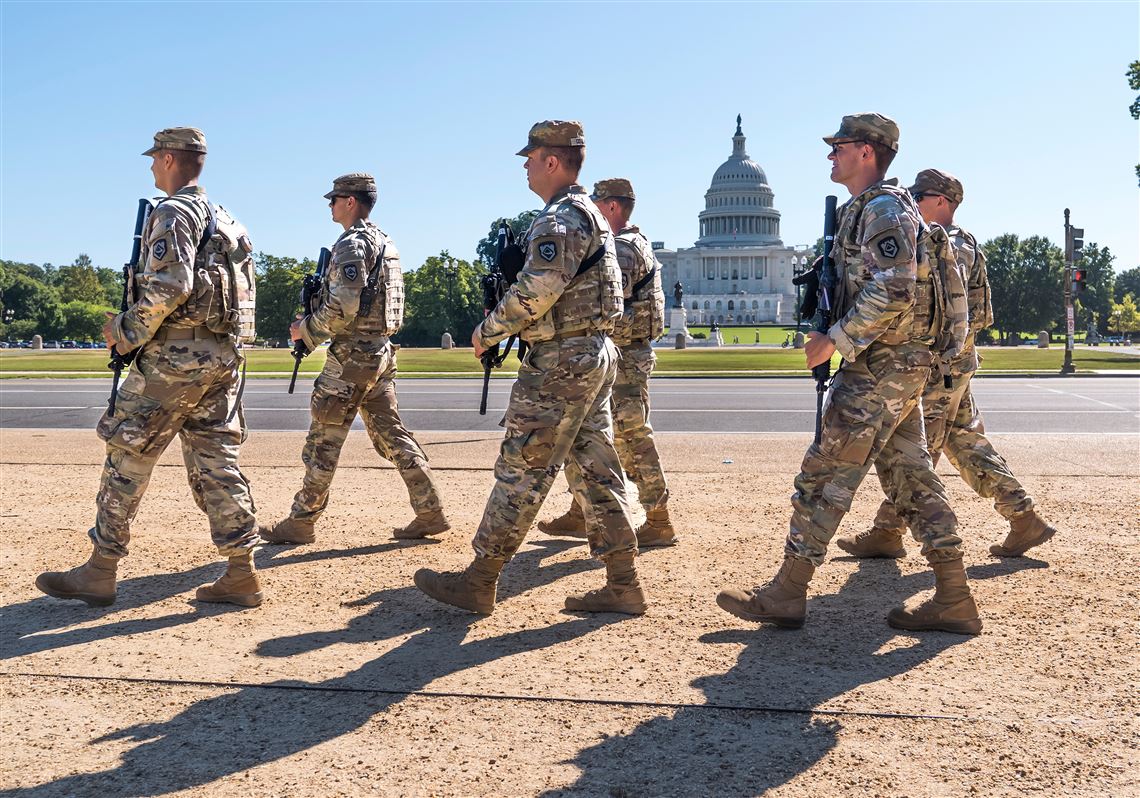
The National Guard deployment in Washington, D.C., has been officially extended through January 2029, a decision that has intensified local friction over federal oversight and urban autonomy in the nation’s capital. Pentagon officials confirmed the timeline to NPR, noting that thousands of armed military personnel will remain stationed across the federal district through Inauguration Day unless the president orders otherwise.
Originally initiated in August 2025 when President Donald Trump declared a crime emergency and launched the D.C. Safe and Beautiful Task Force, the mission was initially framed as a temporary surge. Instead of drawing down, troop levels have grown significantly. According to data reported by The Associated Press, more than 4,600 military personnel from D.C. and 24 states and territories were deployed alongside federal law enforcement officers as of Aug. 4, with estimates running near 5,000 troops during a recent summer surge.
The prolonged operation carries a heavy financial and civic footprint. The nonpartisan Congressional Budget Office estimated the first year of the deployment cost roughly $660 million, running at a pace exceeding $3 million per day, while the Defense Department projects the full multi-year extension through 2029 will cost approximately $1.4 billion. While federal authorities credit the presence with sharp drops in regional crime statistics, local leaders and civil liberties advocates argue the ongoing military patrols infringe upon democratic norms and local self-governance.
Federal Justifications and Crime Statistics
Federal officials maintain that the joint military and law enforcement surge has fundamentally improved safety for residents and visitors. White House spokeswoman Abigail Jackson stated via email, as reported by The Associated Press, that President Trump has successfully transformed the district into a secure haven.
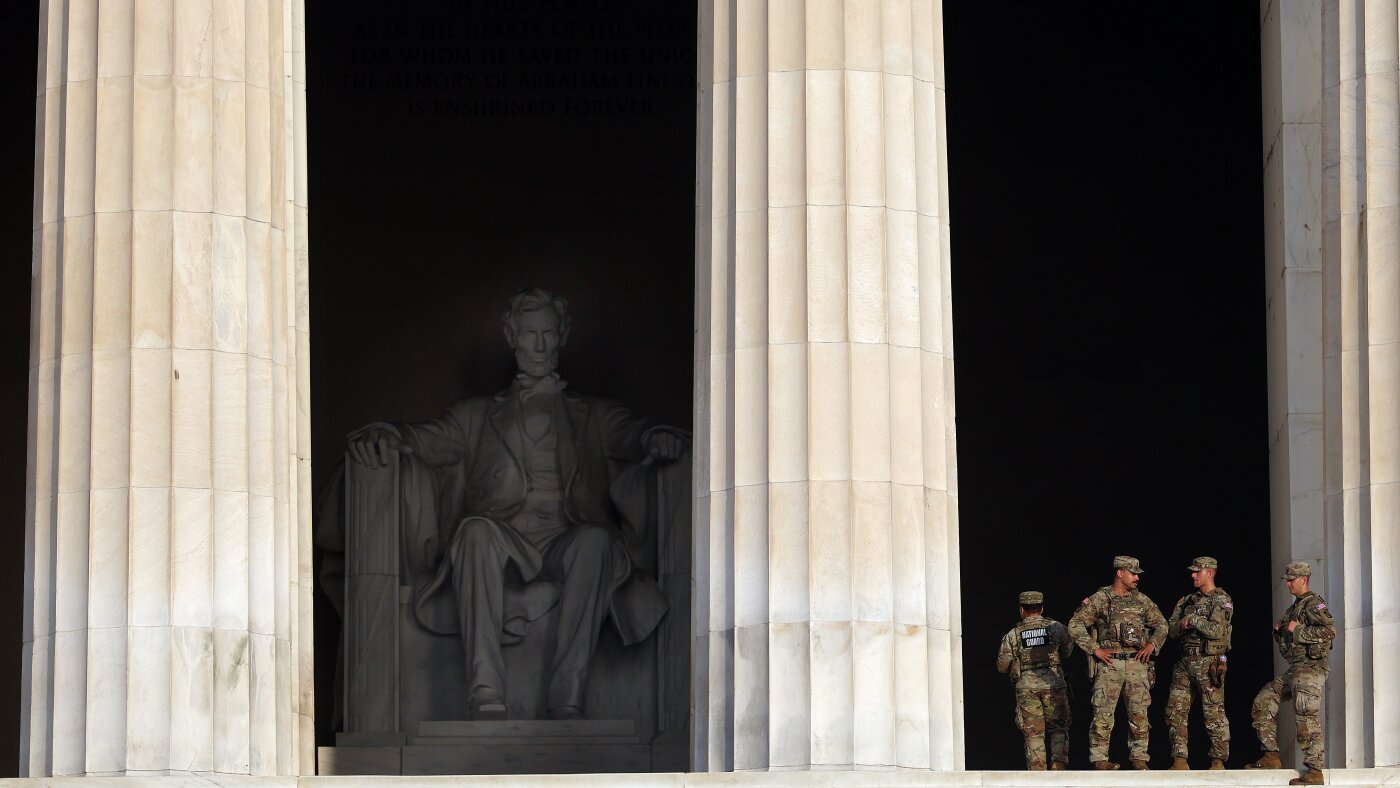
Supporting these assertions, figures released by the U.S. Marshals Service show that more than 16,000 arrests have been executed since the operation began. That total includes 35 homicide suspects, 3,200 narcotics-related arrests, and the seizure of nearly 2,000 illegal firearms. Attorney General Todd Blanche stated that these actions directly translate to protected lives and safer neighborhoods.
Metropolitan Police Department data indicates that overall crime dropped 20% compared to the same period in 2025, alongside a 32% decline in homicides from 97 to 66. However, local analysts and city officials debate whether those decreases stem directly from the National Guard mission or from long-term, community-driven policing strategies that predated the federal intervention.
Local Pushback and Civil Liberties Concerns
Because Washington, D.C., is a congressionally established federal district rather than a sovereign state, the executive branch holds unique authority to deploy the National Guard locally without gubernatorial sign-off. This structural reality leaves local elected officials with limited legal mechanisms to counter the federal footprint.
Critics point out the constitutional and civic implications of maintaining armed troops in a major American municipality. Elizabeth Goitein, senior director of Liberty and National Security at the Brennan Center for Justice, told NPR that labeling an open-ended, multi-year military presence as an ongoing emergency misrepresents the concept entirely.
“An emergency is a sudden, unforeseen, and temporary state of affairs. Announcing that an emergency will last for another 2 1/2 years means it’s not an emergency,” Goitein said.
Scott Michelman, legal director of the ACLU of the District of Columbia, echoed those concerns to The Associated Press, describing a deep irony in treating the capital of the free world like a police state absent any genuine domestic emergency. Local lawmakers, such as city council member Brianne K. Nadeau, have similarly called the daily presence of armed patrols demoralizing for constituents.
Operational Reality on the Streets
Unlike standard domestic National Guard deployments where troops typically assist with natural disasters or logistical support, personnel operating in Washington have been deputized as special police officers by the U.S. Marshals Service and issued firearms. While they lack independent arrest powers—requiring them to detain individuals until arresting officers arrive—their daily routines involve presence patrols across commercial corridors, tourist hubs like the Tidal Basin, and residential neighborhoods.
In addition to patrols, troops have assisted with infrastructure support, medical responses, and public beautification projects. While these community-facing duties have garnered praise from some neighborhood groups, the broader implications of the mission remain a central point of contention as political candidates prepare for upcoming midterm elections.
- Trump Signs Executive Order Calling for Spaced-Out Childhood Vaccines Against Medical Guidance
- Trump team intervened to protect Rep. Max Miller amid domestic abuse allegations: report
- Trump Adopts Wait-And-See Approach To Iran Amid Strait Of Hormuz Talks (archyworldys.com)
- Trump’s National Guard Deployment in DC Extended to 2029 Amid Autonomy Concerns (archynewsy.com)