
As artificial intelligence dominates the modern tech landscape, a dedicated counter-movement is quietly unfolding in garages and community centers across the globe. Vintage computer collecting has surged into a passionate global subculture, driven by hardware enthusiasts eager to preserve, debug, and repair the classic machines that laid the groundwork for the digital age.
According to software engineer Josh Dersch, who maintains a collection of more than 200 vintage computers and devices in his Seattle home, working on older systems offers a unique tactile and intellectual connection missing from modern electronics. “It’s always been fascinating to me to see the origins of things,” Dersch said, as reported by ABC News. “It’s a fun challenge to debug and repair. You can understand the entire system from top to bottom.”
While major technology hubs like Silicon Valley have since moved on to shaping the future of artificial intelligence, hobbyists are combing through online marketplaces, garage sales, and basements for Atari, Commodore, and IBM hardware. These legacy systems serve as the direct ancestors to contemporary laptops, smartphones, and wearable devices, turning what casual observers might dismiss as electronic waste into treasured historical artifacts.
Reviving the Roots of Computing at Global Festivals
The growing appetite for retro technology is increasingly visible at dedicated public gatherings. According to The Economic Times, more than 3,500 attendees gathered in early August for the two-day Vintage Computer Festival held at the Computer History Museum in Mountain View, California. The event coincided with the 50th anniversary of Apple, which was founded in nearby Cupertino in 1976.
Erik Klein, president of the Vintage Computer Federation, noted that public enthusiasm for computer history is scaling rapidly. The Mountain View festival featured a panel discussion with Apple co-founders Steve Wozniak and Ronald Wayne, who reminisced about the company’s early days as a scrappy startup under the late Steve Jobs. Klein stated that similar gatherings have since emerged in more than a dozen cities across North America, South America, and Europe.
This surging demand has left its mark on digital marketplaces as well. Rare machines—such as the Apple-1, the company’s first product—can fetch hundreds of thousands of dollars among collectors.
Preserving the Grandfather of the Modern Computer
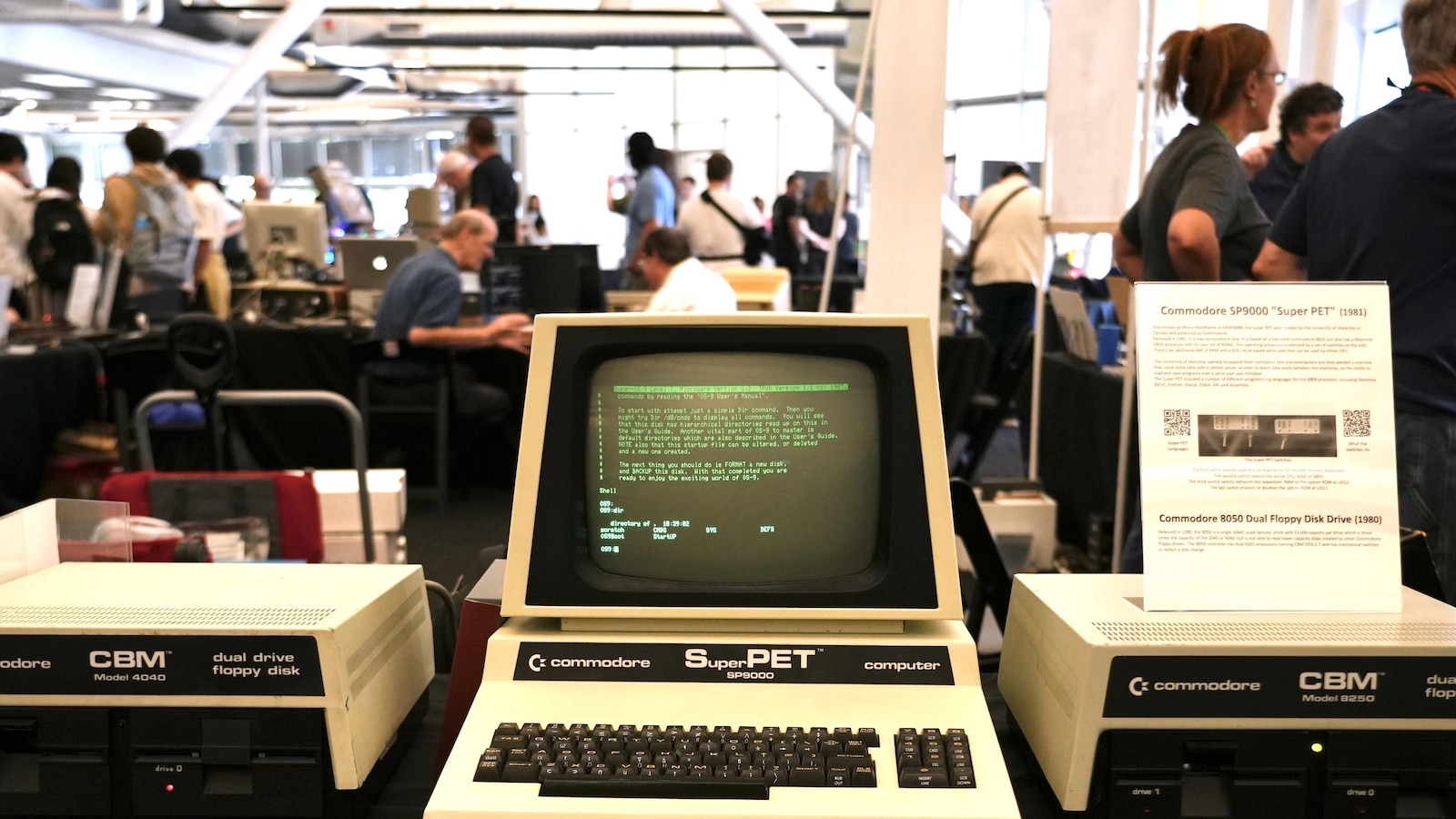
At the Mountain View festival, collectors showcased fully restored hardware built long before the internet, social media, and AI reshaped daily life. Attendees were invited to operate vintage machines and play low-definition iterations of classic titles like “Pong” and “Space Invaders.”
Among the most notable exhibits was a fully functioning Xerox Alto brought by Dersch, who drove down from Seattle to display the machine. Developed at the Xerox Palo Alto Research Center in the 1970s, the Alto is considered “the grandfather of the modern computer.”
The system was among the first to transition away from text-only interfaces, introducing a mouse and a graphical user interface featuring windows, icons, and cursors that eventually established the industry standard. Those very innovations famously inspired figures like Steve Jobs and Bill Gates when they designed their own early products. Dersch’s workstation featured the Alto’s signature vertical monitor, a chunky keyboard, and pizza-sized spinning disks designed to store tiny amounts of data by contemporary standards.
From Overwhelming Hoards to Community Stewardship
While collecting classic hardware offers immense satisfaction, maintaining dozens of bulky systems can present substantial logistical challenges. Klein, a software engineering manager in Silicon Valley, accumulated as many as 150 computer systems complete with original documentation, packaging, and accessories before his hobby began crowding his home and family life.
Describing his massive collection as an “albatross” that posed a potential burden to his relatives, Klein gradually sold and gifted away the bulk of his inventory until only a small selection of personal favorites remained in his house. Today, he channels that same passion into organizing repair workshops, swap meets, and public festivals through the Vintage Computer Federation.
“So it’s really about evangelizing that history and evangelizing this hobby of maintaining, collecting and enjoying,” Klein said.
For enthusiasts like Dersch and Klein, safeguarding these aging relics ensures that future generations can physically touch, repair, and understand the raw mechanics of the digital revolution before it disappeared behind sleek glass screens and cloud servers.