The industrial landscape of southern Lima is undergoing a profound economic transformation, driven by a surge in warehouse construction and a growing corporate demand for specialized logistics talent. According to recent market analyses, the surface area dedicated to warehousing in Lurín grew by nearly 70% between 2018 and 2024, positioning the district as a primary anchor within the capital’s supply chain network. This rapid physical expansion is reshaping employment patterns across Lima Sur, where staffing agencies and logistics providers report a sharp rise in hiring requirements for inventory, storage, and distribution roles.
Employment figures from human resources firm Adecco indicate an increase of approximately 25% in personnel requirements for storage, inventory, and distribution positions across Lima Sur over the past year. Industry leaders point out that this employment boom is not merely about headcount growth, but rather a fundamental shift in the skill sets required by modern distribution hubs. Alejandro Botero, director of Adecco Industrial & Logistics, notes that the ongoing expansion of industrial infrastructure is directly elevating employer expectations. “The most valued profiles are those that combine operational experience with technological knowledge. Adaptability and the capacity to learn have become key factors for employability within the sector,” Botero explains.
This dynamic growth is heavily concentrated in specific commercial sectors. Market observations from Adecco show that retail, e-commerce, mass consumer goods, and manufacturing drive the heaviest demand for logistics talent in the southern corridor. Among these, e-commerce remains the primary catalyst, fueled by rising consumer order volumes, tighter delivery windows, and heightened service expectations. Parallel assessments from Ransa Perú confirm that retail, mass consumption, and online retail lead the market, while noting a distinct surge in convenience store formats. These smaller retail networks demand frequent replenishment cycles, fractional deliveries, and highly efficient inventory routing, which in turn alters the operational competencies required of warehouse personnel.
Technology and Evolving Workforce Requirements
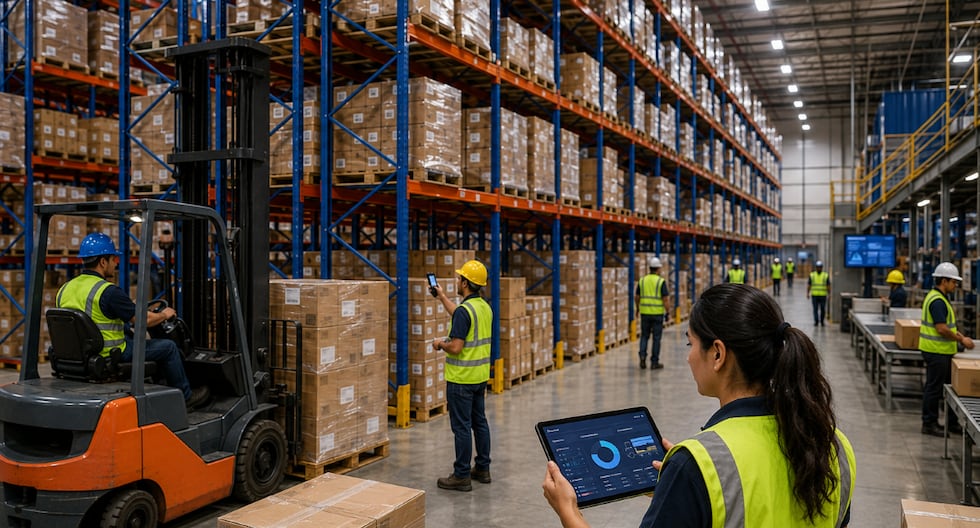
Inside the region’s modern facilities, technological integration is actively redefining daily warehouse operations. Malena Gonzales Escudero, People Manager at Ransa Perú, explains that the traditional warehouse operator role has shifted from purely manual labor to technology-driven execution. Today’s floor workers routinely log transactions via portable terminals, operate warehouse management systems (WMS), perform digital inventory audits, and utilize tracking tools designed to ensure end-to-end process traceability.
Supervisory roles have experienced an equally significant transition. Rather than simply managing shift teams, supervisors must interpret complex performance indicators, make data-driven operational decisions, and anticipate bottlenecks across the supply chain. Companies are increasingly deploying advanced digital tools—such as WMS platforms, fleet control towers, voice-picking technology, SAP Intelligent Desktop, and predictive analytics suites—to automate routine tasks. Consequently, logistics firms are actively prioritizing digital adaptability and investing in internal reskilling initiatives to help existing employees master emerging technologies.
Despite the strong job creation, filling specialized technical roles remains a persistent hurdle for employers. Adecco reports acute shortages in certified forklift operators and supervisors experienced in advanced logistics management systems. Finding candidates willing to cover night and early morning shifts during peak demand periods—such as Cyber shopping events, national holidays, and the year-end holiday season—presents an additional challenge. During these intense retail windows, certain facilities routinely double their temporary workforce to manage order surges.
Infrastructure Expansion and Market Dynamics
The employment surge mirrors the aggressive development of physical logistics real estate throughout Lima Metropolitana. Diego Briceño, transactions and projects manager at Cushman & Wakefield, notes that Lima Sur has successfully transitioned from a secondary industrial zone into a premier logistics corridor, anchored by abundant land availability, modern Class A parks, and high-spec infrastructure.
Data compiled through the first half of 2026 places total modern warehouse inventory in Lima at approximately 1.97 million square meters, with Lima Sur and Callao serving as the market’s primary hubs. Specifically, the southern zone concentrates more than 1.48 million square meters of inventory while maintaining a low vacancy rate of 5.4%. Current development pipelines in the area include roughly 114,000 square meters under active construction and over 600,000 square meters in preliminary planning stages.
Modern tenants are moving far beyond basic storage leasing, demanding facilities equipped with higher clear heights, heavy-duty floor slabs, expansive maneuvering yards, future expansion capabilities, and certified sustainability standards. As automation and digital sophistication reshape the sector, industry specialists emphasize that targeted professional training and educational partnerships will remain essential to sustaining the region’s labor market momentum.
What are your thoughts on the growth of Lima Sur as a logistics hub? We invite you to share your perspective in the comments below.
Related reading
- Why Investors Are Shifting From US to European Markets: Stocks, Bonds, and AI Gains
- How Pawn Shop Loans Work: Costs, Risks, and Benefits
- Wall Street Giants and Nvidia Team Up for $500B AI Infrastructure Fund (archynewsy.com)
- Pax Silica: Driving Economic Growth and Industrial Development in Central Luzon (archyworldys.com)