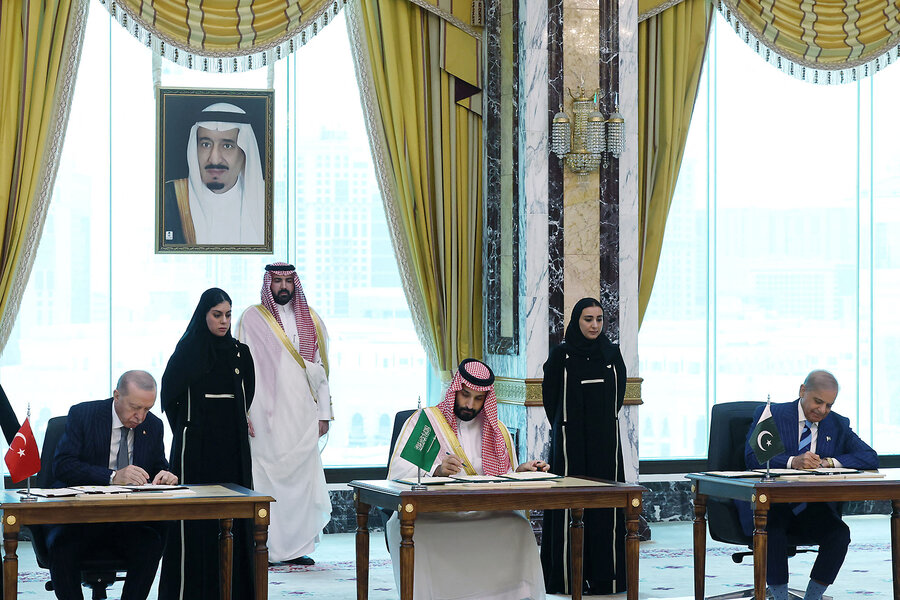
A New Diplomatic Compact Takes Shape Amid Regional War
Three regional powers have formed a new diplomatic compact amid an ongoing Middle East war. This alignment among Saudi Arabia, Turkey, and Pakistan responds directly to the failure of traditional diplomatic initiatives and a vacuum left by changing U.S. foreign policy priorities. They operate against a backdrop marked by a prolonged conflict involving Iran, perceptions of Israeli hegemony, and a retreating American regional posture.
Analysts note that while these nations share overlapping concerns regarding regional stability, they remain strategic competitors rather than natural allies, frequently jostling for influence across neighboring flashpoints like Syria and the wider Gulf.
Security Anxieties and the U.S. Retreat
The formation of the Saudi-Turkish-Pakistani alignment reflects a calculated response to acute security anxieties. For Riyadh and Ankara, the prolonged conflict with Iran has exposed vulnerabilities that bilateral diplomacy alone cannot resolve. Furthermore, policymakers in both capitals view Israeli regional strategy with mounting apprehension, interpreting military actions and diplomatic overtures as a push toward regional hegemony.
Writing on regional power dynamics, GIS Reports observes that Middle Eastern nations frequently cooperate when tactical interests align, though enduring stability historically requires outside stewardship. The compact also accounts for a diminishing U.S. military and diplomatic footprint in the Middle East. As Washington refocuses its strategic priorities toward other global theaters, regional capitals are increasingly taking security architectures into their own hands.
Economic Scale, Religion, and Nuclear Deterrence
Each member of the new compact brings distinct assets and historical tensions to the table.
Turkey boasts the largest economy in the region, supported by a substantial urban middle class and critical geographic choke points, including the straits connecting the Black and Mediterranean seas. However, President Recep Tayyip Erdogan’s foreign policy—marked by past competition with Saudi Arabia for influence in post-Assad Syria and sharp rhetoric regarding Jerusalem—has frequently strained ties with Arab neighbors and Israel, according to GIS Reports.
Saudi Arabia matches Turkey’s economic scale while possessing significantly larger financial reserves relative to its population size. As the custodian of Islam’s holiest sites in Mecca and Medina, the kingdom holds immense religious and diplomatic prestige across the Muslim world.
Fragile Coalitions Without American Mediation
The rise of independent minilateral alignments raises pressing questions for Washington policymakers accustomed to anchoring Middle Eastern security frameworks. Traditionally, analysts argued that enduring alliances in the region required active American mediation to bridge deep-seated mutual suspicions. Without external stewardship, critics warn that coalitions formed under the banner of “the enemy of my enemy” risk fracturing into renewed competition.
Monitoring Upcoming Diplomatic Summits
Related reading
- Mexico Weather Alert: Severe Rain and Extreme Heat Forecast Across Multiple States
- New Stephanibrücke in Bremen: Plans for Bridge Replacement by 2030
- What the FAA's New 737 MAX Crack Order Actually Requires (daybreakwire.com)
- Stock Futures Waver and Oil Rises Amid Middle East Tensions and Iran Stances (archynewsy.com)