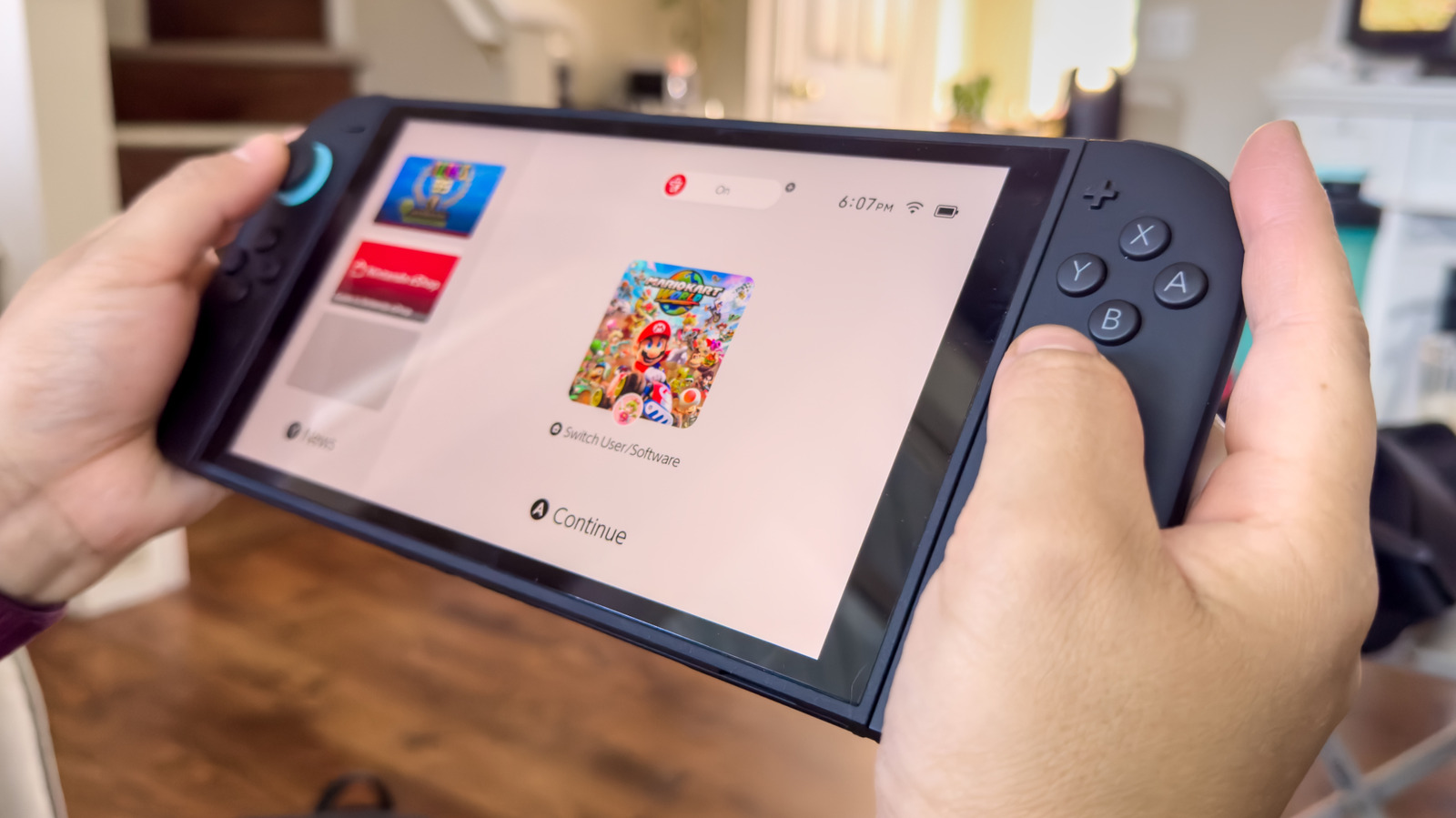
The Nintendo Switch 2 features a custom Nvidia processor with a GPU that bridges high-end mobile architecture and console optimization, prompting hardware analysts to compare its specifications against laptop graphics cards like the GeForce RTX 2050 Mobile. Unveiled by Nvidia, the upcoming console incorporates advanced artificial intelligence and ray-tracing capabilities designed to elevate portable and docked gaming performance.
According to technical data outlined by Mastertrend, the console’s graphics core utilizes Samsung’s 8-nanometer technology to pack 1,536 shaders, 12 second-generation ray-tracing cores, and 48 third-generation tensor cores. While those raw figures position the hardware behind discrete mobile laptop parts in pure compute capability, the system relies on specialized memory architecture and advanced software scaling to narrow the real-world performance gap.
Understanding how this custom silicon operates requires looking closely at how its hardware specs, AI scaling features, and thermal profiles compare to established PC graphics processors.
Technical Specifications of the Nintendo Switch 2 GPU
Hardware disclosures indicate that the Nintendo Switch 2 GPU relies on the Ampere architecture, mirroring the foundation used in several entry-level PC graphics cards. Mastertrend reports that the console’s estimated clock speed sits at 561 MHz while docked, delivering an approximate calculation power of 1.72 TFLOPS at FP32 precision.
The system integrates 32 raster units alongside 48 texturing units to manage visual data. For memory, the unit utilizes a 128-bit memory bus with a unified architecture, achieving a bandwidth of up to 120 GB/s when operating under optimal conditions. In comparison, Nvidia’s official documentation notes that the console represents a significant generational leap, offering up to 10 times the graphics performance of the original Nintendo Switch.
This generational upgrade is built on a foundation that includes dedicated hardware for real-world lighting effects. According to Mastertrend, the inclusion of 12 second-generation RT cores allows for real-time ray tracing, bringing dynamic reflections and shadows to titles designed for the platform.
Comparing Performance Against the GeForce RTX 2050 Mobile
When evaluating which PC graphics card most closely matches the console, hardware analysts frequently point to the GeForce RTX 2050 Mobile. Despite sharing the same Ampere architecture and Samsung 8nm manufacturing process, the two processors diverge significantly in configuration and raw output.
Mastertrend notes that the RTX 2050 Mobile features 2,048 shaders operating at higher clock frequencies between 735 MHz and 1,245 MHz, alongside 16 RT cores and 64 tensor cores. This configuration enables the laptop GPU to deliver up to 5.1 TFLOPS in FP32 precision—roughly triple the estimated raw compute output of the Nintendo console.
However, raw compute metrics do not tell the entire story of real-world gaming efficiency. While the RTX 2050 Mobile holds a clear advantage in raw shader count and clock speed, the Nintendo Switch 2 counters with a wider 128-bit memory bus compared to the laptop card’s 64-bit bus, which relies on 4GB of GDDR6 memory to achieve 112 GB/s of bandwidth. This wider bus helps offset memory bottlenecks during complex asset streaming.
The Role of AI Scaling and DLSS Technology
A primary driver behind the console’s visual fidelity is its integration of artificial intelligence hardware. Nvidia specifies that the 48 third-generation tensor cores power advanced features like Deep Learning Super Sampling, allowing the system to upscale lower-resolution renders into sharper images without demanding excessive power consumption.
According to Mastertrend, the console supports the DLSS 4 transformational model, providing efficient image reconstruction and stability when scaling from lower resolutions. Unlike AMD-based scaling technologies found in other portable systems, Nvidia’s implementation uses dedicated tensor hardware to maintain clarity. However, industry reporting highlights that the hardware does not support frame generation, as that specific feature is restricted to newer Ada Lovelace and Blackwell architectures.
Nvidia also points out that these tensor cores extend beyond gaming graphics. The hardware enables features such as AI-powered face tracking and background removal for video streaming applications, expanding the utility of the device beyond traditional gaming sessions.
Display Modes, Resolution Targets, and Power Constraints
The hybrid nature of the console demands distinct operational states depending on whether it is connected to a television or running on battery power in handheld mode. Nvidia confirms that the system supports up to 4K gaming when docked to a TV, while handheld operation targets up to 120 frames per second at 1080p resolution, supplemented by high dynamic range support.
To ensure fluid visuals during portable play, the system incorporates variable refresh rate technology via Nvidia G-SYNC. This feature mitigates screen tearing and stuttering as frame rates fluctuate in demanding software titles.
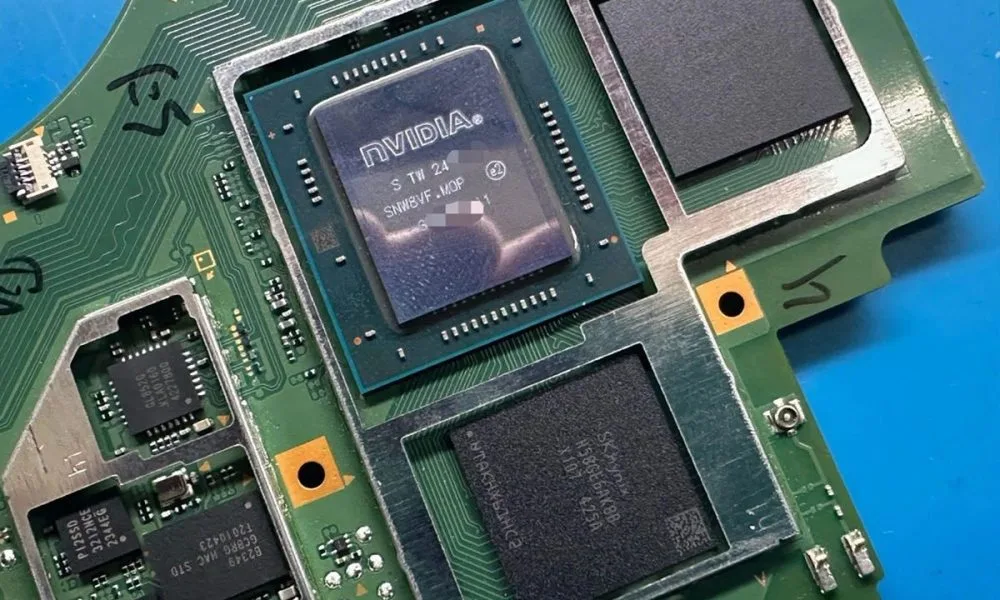
Thermal and power constraints remain the defining factor for the console’s clock speeds and sustained performance. While the desktop and laptop variants of Ampere architecture consume significant wattage, the console must manage heat and battery draw within a compact chassis. Consequently, while the RTX 2050 Mobile serves as a useful benchmark for architectural lineage, the Nintendo Switch 2 relies on dedicated console optimization, custom APIs, and aggressive AI upscaling to punch above its raw floating-point calculations.
As developers continue to release software optimized for the new hardware platform, official updates from Nintendo and Nvidia will provide further clarity on final clock frequencies and performance profiles. Players seeking updates on software compatibility and system updates can monitor official announcements directly through Nintendo’s corporate portal.
Keep reading