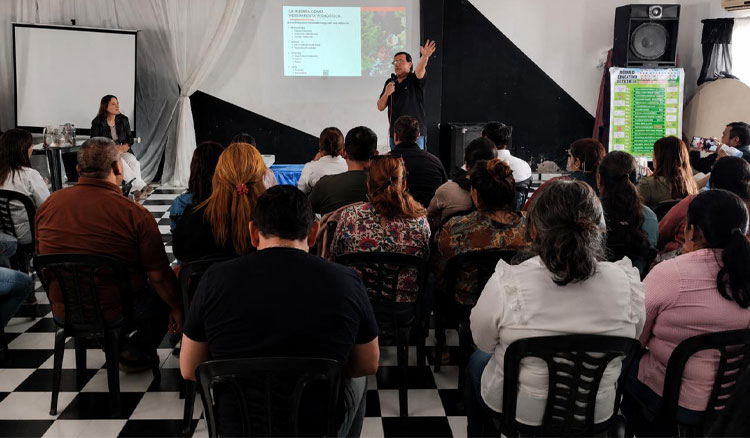
More than 80 directors, teachers, and agricultural instructors gathered in Embarcación for a specialized training program designed to promote healthy eating habits, environmental stewardship, and community involvement through school gardens.
The initiative marks the third year of coordinated work between the Ministry of Education and Culture and the Siwok Foundation. Organized by the Provincial Plan for Nutrition and Food Education, the program drew educators from educational units across the departments of Orán, Rivadavia, and San Martín.
School garden projects serve as hubs for learning. By bringing together administrative leadership and instructional staff, the recent sessions aimed to give educators concrete strategies to integrate agricultural education directly into school curricula.
Three-Tiered Training Structure
The program was divided into three distinct workshops, each targeting a different dimension of school garden management and pedagogy. Supervisors who are licensed nutritionists from the Provincial Plan for Nutrition and Food Education led the first session, titled “Healthy Eating and the Garden as a Health Promotion Strategy.”
Primary education supervisors directed the second workshop, focusing on “The School Garden as a Pedagogical and Interdisciplinary Strategy.” This module explored how growing food on school grounds can bridge multiple academic subjects.
The Siwok Foundation led the final workshop, titled “Design and Implementation of the Institutional Educational Gardens Project.” This segment provided participating schools with tools to plan and carry out garden projects from each educational institution. Furthermore, the ongoing partnership incorporates the use of the Agricultural Manual for Consumption and Production in Family Gardens, offering a technical reference for teachers and families.
Pedagogical Value and Intercultural Learning
Gisela Murillo, coordinator of the Provincial Plan for Nutrition and Food Education, emphasized the broader educational scope of the initiative. “The garden is a key tool to strengthen food education and build healthy habits, integrating content from different areas and promoting an intercultural perspective that recovers the knowledge, practices, and traditions of each community,” Murillo stated regarding the program’s core philosophy.
Educators participating in the workshops examined ways to connect classroom lessons on nutrition with hands-on agricultural work. By doing so, schools aim to strengthen gardens as spaces of learning and participation, articulating food, health, education, and environment.
Next Steps for Provincial Schools
With the training sessions concluded, participating schools in Orán, Rivadavia, and San Martín are tasked with refining their institutional garden projects using the frameworks provided by the Ministry of Education and Culture and the Siwok Foundation.
Readers interested in learning more about provincial educational programs or accessing agricultural guides can consult official announcements through the Ministry of Education portal. We invite educators and community members to share their experiences with school garden projects in the comments below.
Related reading