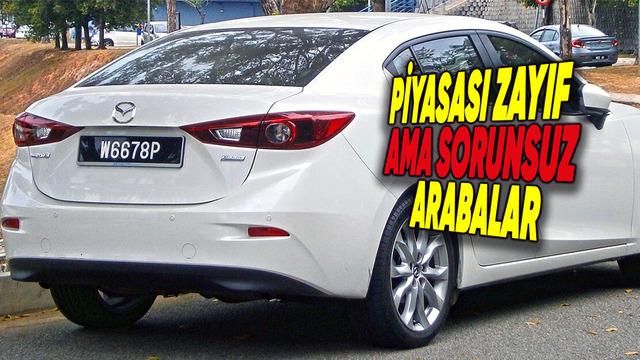
When shopping in the pre-owned vehicle market, buyers frequently gravitate toward high-volume nameplates that promise rapid resale turnover. Models such as the Toyota Corolla, Honda Civic, Fiat Egea, and Renault Clio routinely dominate transaction volumes, commanding widespread attention across dealerships and digital listings alike. Yet, this preference often leaves equally capable alternatives lingering on dealership lots for weeks. For motorists seeking a dependable daily driver to keep for the long term, these overlooked models frequently present exceptional mechanical integrity, robust engineering, and strong value without the inflated price tags demanded by more popular rivals.
Several international car manufacturers engineered vehicles that earned praise from automotive journalists and technicians for their long-term reliability, even if they ultimately secured a smaller footprint in local sales registries. Examining these under-the-radar models reveals distinct engineering choices, from naturally aspirated engines to classic automatic transmissions, designed to withstand years of routine operation.
Mazda 3: The C-Segment Atmospheric Alternative
Among compact sedans and hatchbacks, the Mazda 3 stands out as a frequent choice for motorists prioritizing mechanical simplicity. While it has historically achieved lower sales figures in various markets compared to class mainstays like the Toyota Corolla or Honda Civic, the vehicle maintains a dedicated following due to its 1.5-liter Skyactiv-G naturally aspirated gasoline engine. Unlike many competitors that shifted toward small-displacement turbocharged powerplants, Mazda retained a traditional atmospheric configuration designed to offer linear power delivery.
Furthermore, automotive reviewers highlight the vehicle’s classic torque-converter automatic transmission as a significant advantage for long-term ownership, avoiding the complexities sometimes associated with dual-clutch systems. Combined with responsive handling, interior craftsmanship, and distinctive styling, the model appeals to drivers focused on long-term retention rather than immediate market churn.
Suzuki S-Cross and Toyota Avensis: Space and Durability
In the crossover and midsize segments, utility and comfort take precedence. The Suzuki S-Cross offers a spacious cabin, elevated driving position, and a straightforward mechanical layout. Earlier iterations featuring a 1.6-liter naturally aspirated gasoline engine appeal directly to buyers who favor mechanical longevity over high-strung performance. Additionally, versions equipped with the AllGrip four-wheel-drive system provide enhanced traction capabilities that distinguish the crossover from many front-wheel-drive competitors in its class.
Stepping up in size, the Toyota Avensis occupies a distinct space among midsize sedans. While the Corolla remains the default choice for buyers seeking absolute market liquidity, the Avensis historically served as a comfort-oriented alternative in the D-segment. Equipped with refined suspension tuning and spacious cabins designed for extended highway travel, pre-owned Avensis models function reliably without drawing excessive attention, fulfilling utilitarian transport needs with minimal fuss.
Mitsubishi and Honda Accord: Balancing Longevity with Operating Realities
Mitsubishi contributed two distinct options to this category: the ASX crossover and the Lancer sedan. The Mitsubishi ASX, particularly in variants featuring the 1.6-liter naturally aspirated engine paired with a manual gearbox, appeals to motorists looking to bypass complex powertrain combinations. Its straightforward mechanics and elevated stance make it a practical option for extended family use.
Similarly, the Mitsubishi Lancer commands a loyal enthusiast base owing to its aggressive exterior design. Finding a well-maintained, unmodified example requires patience, and sellers should anticipate a more selective pool of potential buyers when it comes time to trade the vehicle.
A similar dynamic defines the Honda Accord within the D-segment. While the Accord offers exceptional interior space, ride comfort, and robust gasoline engines suitable for multi-year retention, its secondary market remains relatively niche. Prospective buyers must evaluate specific mechanical configurations, such as larger 2.0-liter engine variants, where fuel consumption and tiered vehicle taxation structures play a direct role in long-term ownership costs.
Ultimately, while these vehicles may require a more deliberate search process and a longer wait when entering the pre-owned market, their mechanical attributes often reward drivers who prioritize enduring utility over rapid resale velocity.
What are your thoughts on purchasing vehicles with lower secondary market demand for long-term use? Share your experiences and join the discussion in the comments below.
Worth a look