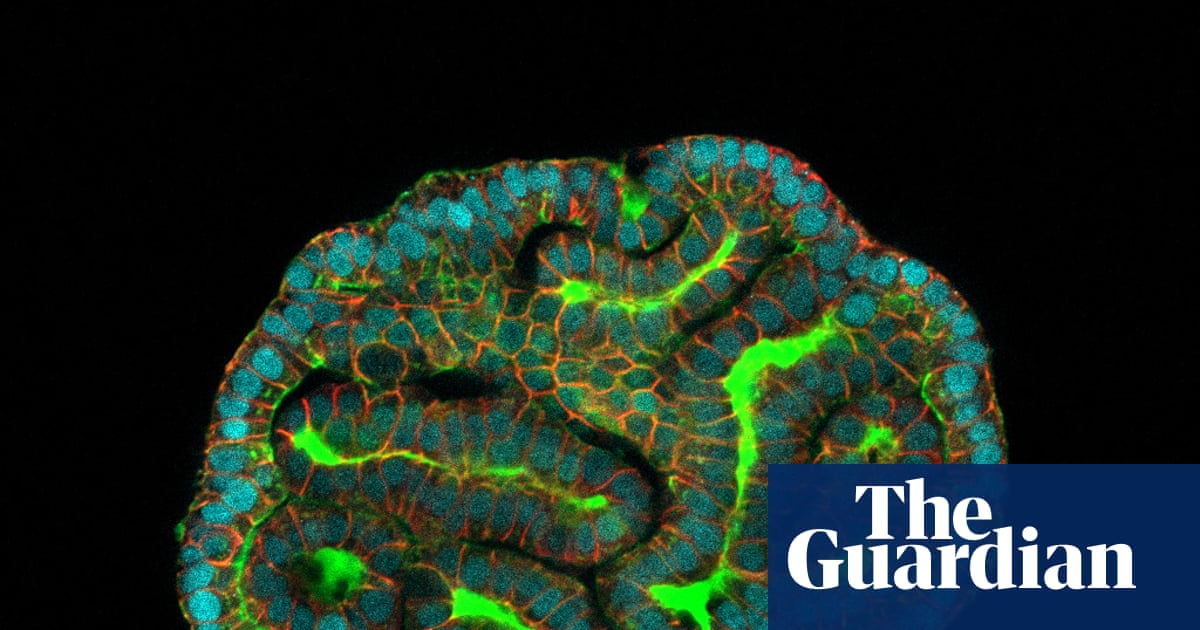
British researchers are launching a major £20m initiative in Cambridge to grow miniature human organs from NHS patient cells for drug testing. The program aims to curb reliance on animal models, which face rising scrutiny as scientists push for more reliable, human-relevant testing platforms.
Miniature human organs grown from patient cells are set to transform pharmaceutical development across the United Kingdom. Funded by a £20m award from the Medical Research Council, a new research hub in Cambridge will anchor a national push to develop standardized organoids and move away from traditional animal testing.
The strategy aligns with government plans to fast-track non-animal methods, known as new approach methodologies
(Nams), which include artificial intelligence, organ-on-a-chip systems, and lab-grown tissues. Proponents argue that shifting toward human-based screening will deliver faster, more predictive data for drug developers while addressing long-standing questions about translation from animal models to human clinical trials.
The Limits of Animal Models in Modern Drug Discovery
For nearly a century, animal testing has served as a regulatory baseline, a requirement mandated by law since 1937 after a new formulation of a common antibiotic had a poisonous new ingredient and caused over 100 deaths. Yet critics and researchers point out a glaring discrepancy in contemporary research: more than 90% of drug candidates that successfully clear animal trials ultimately fail in human clinical trials.
That high attrition rate contributes heavily to the soaring costs of pharmaceutical development. Companies frequently spend more than $2 billion to bring a single drug to market, while the broader industry invests nearly $300 billion annually in research and development. Behind those figures lies a fundamental biological mismatch.
“A lot of human diseases either do not occur in animals or occur in a different way because they’re not human. We want tests and models that can tell us which treatments work, and in what patients, and a mouse cannot tell us that.”
Matthias Zilbauer, clinical professor of paediatric gastroenterology at the Cambridge Stem Cell Institute
In Britain alone, laboratories recorded 2.54m animal testing procedures last year, a 3.8% decrease compared to 2024 figures. While rodents and fish account for the vast majority of those tests, roughly 1% involve protected species such as dogs, cats, horses, and monkeys.
Building Organoids, Organ Chips, and Mini Pumps
To bypass these limitations, laboratories across the globe are scaling up production of organoids—sub-millimeter tissue clusters grown from stem cells that mimic the architecture and function of full-scale human organs. At Children’s Mercy Hospital in Kansas City, clinicians cultivate tiny, beating lab-grown hearts from patient cells within days to evaluate prospective therapies.

Engineers and geneticists are also advancing microfluidic systems. Researchers at Boston University engineered a device dubbed the miniPUMP, which replicates a heart chamber using nanoengineered parts and live human tissue without requiring external springs or power sources. Similarly, teams in Edinburgh have deployed ‘body-on-chip’ devices to trace how candidate drugs circulate through human tissue.
Commercial startups are entering the space to automate and standardize the process. London-based Mytos, which has raised nearly $29 million since 2016, automates cell culture growth to eliminate the manual inconsistencies that often plague laboratory replicates. Meanwhile, firms like VivoSphere encapsulate heart cells in tiny gel spheres to screen for toxicity earlier, reducing the need for traditional safety tests on guinea pigs, rabbits, and dogs.
Regulatory Shifts and the Promise of Personalized Medicine
Legislative and regulatory backing is accelerating the transition. In the United States, President Joe Biden signed the FDA Modernization 2.0 Act in 2022 after it cleared the Senate unanimously. The legislation removed mandatory animal testing requirements for drug approval when computer simulations or alternative cell models provide satisfactory safety data to regulators.
Drug classes such as monoclonal antibodies—used to treat conditions from cancer to Crohn’s disease—face acute testing bottlenecks because they often show poor efficacy in mice, forcing developers to rely on expensive primate trials. Guidance issued by the FDA encourages developers to substitute these trials with human cell alternatives wherever possible.

In Cambridge, Zilbauer’s team is prioritizing organoids for inflammatory bowel conditions like Crohn’s disease and ulcerative colitis, while other researchers target tumors and neurological disorders. Innovate UK has additionally awarded £2m across nine specialized projects aimed specifically at cutting animal usage in safety evaluations.
“One of the huge advantages of organoids, organs-on-a-chip and other in vitro microphysiological systems is that, unlike animal models, they have real potential to deliver the promise of truly personalised medicine for individual patients. It is all very exciting.”
Dr Juliet Dukes, of the charity Replacing Animals in Research
Related reading