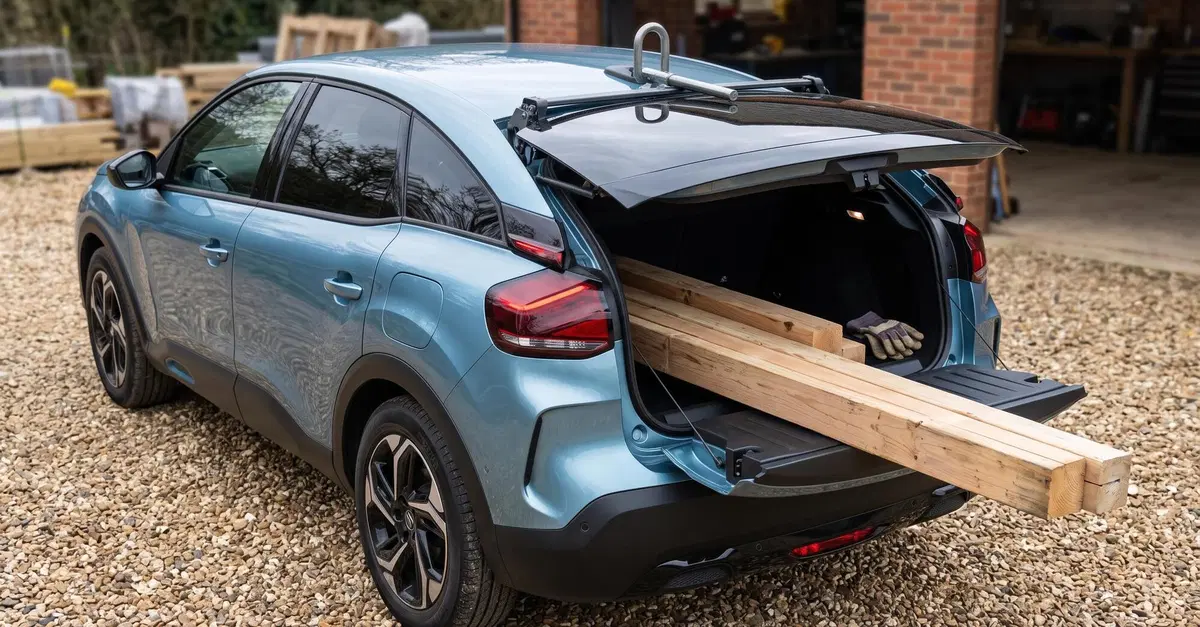
Automotive giant Stellantis has filed a patent in France detailing a novel split tailgate design aimed at transforming standard hatchbacks and sedans into versatile vehicles capable of hauling long cargo similar to a pickup truck. The proposed engineering project explores how traditional passenger cars might gain expanded utility without requiring consumers to purchase bulky commercial vehicles or larger sport utility vehicles.
The filing outlines a two-part opening mechanism designed to maximize interior space and rear loading dimensions. While the concept introduces notable flexibility for everyday drivers, it also presents distinct structural and aerodynamic challenges that engineers must resolve before any potential production model reaches the market.
The Mechanics of the Two-Part Rear Hatch
According to the patent documentation filed in France, the proposed system divides the rear hatch into two independent operational sections. Each part serves a specific function to alter the vehicle’s rear profile during loading procedures.
The lower section functions similarly to a traditional truck bed drop gate. It unlatches and folds downward to create a flat extension of the load floor, allowing drivers to slide in lengthy items such as lumber or sports gear that would otherwise exceed standard trunk dimensions.
Hinges, Glass Rotation, and Roof Anchors
Meanwhile, the upper section incorporates the rear window glass and rotates upward on specialized hinges with an extended range of motion. Instead of opening at a standard angle, this upper glass panel swings completely forward to rest flat against the vehicle’s roof. Technical illustrations in the patent filing show a bar-and-loop securing mechanism mounted directly to the roof structure to anchor the glass firmly in place during transit.
Structural Integrity and Cabin Sealing
While the modularity offers clear advantages for cargo capacity, transforming a standard hatchback or sedan layout introduces complex engineering demands. Vehicle designers face rigorous hurdles regarding everyday durability, including maintaining cabin sound insulation, structural rigidity, and weatherproofing around the movable joints.
Aerodynamic Penalties for EVs and Gas Cars
The most substantial obstacle involves aerodynamics. Operating a vehicle with the upper rear window folded against the roof and the lower tailgate dropped alters airflow patterns significantly across the body structure. In internal combustion engine vehicles, such alterations typically increase fuel consumption. For electric vehicles, where airflow efficiency is critical to preserving driving range, an exterior-mounted hatch configuration could prove heavily penalizing.
The Path from Patent to Production
Stellantis has not announced official production timelines for the patented design. As automotive manufacturers continuously evaluate methods to enhance interior utility and differentiate traditional passenger cars from dominant market segments, patent filings serve primarily as an exploration of advanced design concepts rather than a confirmed commitment to manufacturing.
Related reading