Microsoft Resolves 421 Flaws in August Security Cycle
Microsoft released its monthly security update, resolving 421 software flaws across a wide range of products including Windows 11, Windows 10, Office, Exchange, Azure, and SharePoint, according to reports from ZDNET. The August patch cycle addresses multiple zero-day vulnerabilities, including one actively exploited in the wild that grants attackers system privileges without user interaction.
The update arrives as software vendors increasingly lean on automated tools to accelerate patch deployment. While the August fix count is lower than July’s total of 570 patched vulnerabilities, the volume of fixes underscores an ongoing effort by Microsoft to secure widely used enterprise and consumer software ecosystems against active threats.
Active Exploitation of WinSock Privilege Flaw
The most pressing issue resolved in the update is a zero-day vulnerability officially tracked as an elevation of privilege flaw in the WinSock Windows Auxiliary Feature Driver, according to ZDNET. Attackers leveraging this vulnerability can bypass user interaction on target machines running Windows 11 or Windows 10, provided they already possess initial low-level access to the system.
Once an attacker secures that initial foothold and exploits the driver flaw, they can escalate to full system privileges. According to commentary from patch management provider Action1 cited by ZDNET, this level of access permits malicious actors to browse or delete files, disable security controls, create new user accounts, install malware, or enlist the compromised machine into a botnet.
Three Zero-Days Confront Enterprise Networks
Action1 noted that because exploitation of this flaw has already been detected in the wild, organizations should prioritize deploying the fix immediately, even though its baseline severity rating is classified as “important” rather than “critical.”
Alongside this actively exploited flaw, Microsoft patched two additional zero-day vulnerabilities, including a Windows User Profile Service elevation of privilege flaw that could grant administrator privileges on a compromised computer. While that specific issue lacked active exploitation at the time of release, Microsoft flagged its high potential for abuse following prior public disclosure.
MDASH Harnesses Automation to Shrink Windows Vulnerability Windows
To manage the relentless influx of code defects and speed up remediation timelines, Microsoft relies on an internal artificial intelligence tool coded as “MDASH,” formally known as the Multi-Model Agentic Scanning Harness. According to reporting from ZDNET, this AI-powered system helps engineers accurately pinpoint software flaws, reduce false positives, and distribute findings swiftly.
By streamlining vulnerability discovery and validation through automated scanning, the company aims to shrink the window of opportunity that attackers have to weaponize unpatched bugs. The broad deployment affects modern operating system builds, including Windows 11 versions 25H2, 24H2, and 23H2.
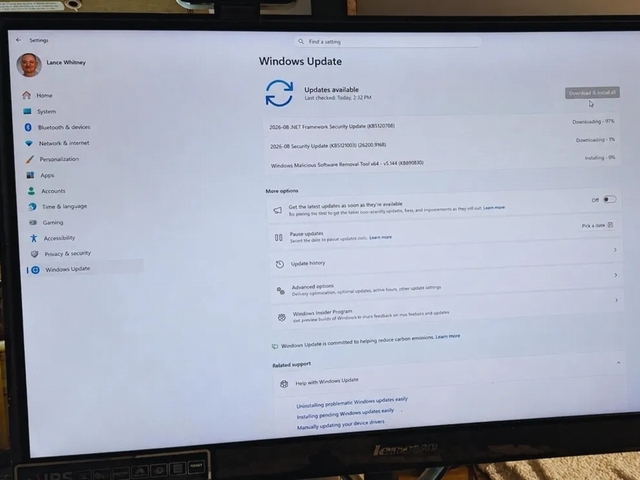
Immediate Remediation Recommended Through Standard Channels
Users are encouraged to apply the patches promptly to mitigate active local privilege escalation vectors.
Worth a look