
Negotiations between authorities in the Democratic Republic of the Congo and the World Health Organization have advanced to expedite a multi-armed Phase 3 clinical trial of Ebola vaccines, aimed at containing the spread of the Bundibugyo virus in the country’s northeast. World Health Organization Director-General Tedros Adhanom Ghebreyesus warned during a press conference in Geneva that the current epidemic is moving faster than any previous outbreak and is on track to become the largest on record.
“It’s already the second-biggest Ebola epidemic on record, and it’s moving faster than any previous Ebola outbreak. At its current pace, it’s on track to eclipse the West African Ebola outbreak of 2014-2016,” Tedros Adhanom Ghebreyesus stated during the Geneva news briefing. According to United Nations reporting, the outbreak had reached 3,748 cases, including 1,657 deaths and 708 recoveries, as of August 1.
The push to accelerate clinical trials represents a procedural step in outbreak management. While therapeutic and preventive options exist for other strains, public health officials note that no proven safe and efficacious treatments or vaccines currently exist specifically for the Bundibugyo species of the virus. Multilateral health agencies and national regulators are actively working to compress standard trial timelines without compromising safety and data integrity.
Understanding the Multi-Arm Trial Design
The core of the WHO-brokered negotiation involves establishing a multi-armed Phase 3 clinical trial protocol. Unlike traditional trials that evaluate a single candidate in isolation, a multi-arm trial assesses more than one intervention inside a single protocol against a shared comparator and a shared endpoint definition.
According to biotech-insider.com, this platform-style design offers three distinct advantages in an active public health emergency. First, statistical efficiency allows investigators to share a control group, requiring fewer overall participants to yield definitive data. Second, direct comparability permits researchers to assess candidates against each other under identical protocols, eliminating confounding variables caused by differing geographies or case definitions. Third, speed is maximized because a pre-written, pre-approved protocol can be deployed immediately upon transmission spikes rather than drafted reactively.
Despite these benefits, multi-arm trials introduce administrative and logistical complexity. National health ministries, multilateral sponsors, manufacturers, and local ethics boards must reach consensus on common data standards, endpoints, and stopping rules. In active filovirus zones, these negotiations frequently run up against tight epidemiological windows where transmission rates dictate the speed of trial activation.
On-the-Ground Response and Treatment Rollout in Ituri Province
The Democratic Republic of the Congo remains the site for these efficacy trials due to the country’s experience managing recurrent outbreaks. Local infrastructure—including established ring vaccination campaigns, contact-tracing networks, and experienced investigators—provides the necessary framework for emergency research.
Clinical trials of alternative treatment options are already underway in Ituri province, the restive epicenter of the current transmission wave. According to Vasee Moorthy, acting lead of the WHO’s R&D Blueprint, a trial evaluating a potential post-exposure oral prophylaxis medicine has enrolled over 25 patients. The study, led by the DRC’s National Institute for Biomedical Research alongside international partners, administers a 10-day regimen to confirmed high-risk contacts to evaluate whether it prevents the onset of disease.

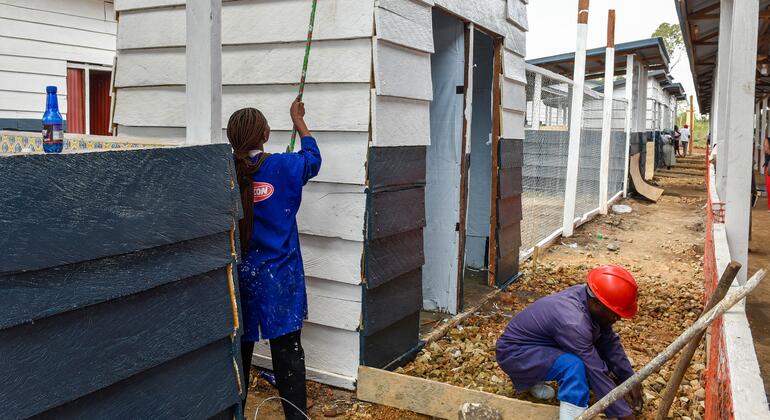
“We are trying to ramp up the enrolment,” Dr. Moorthy told reporters, noting that three testing sites have opened across Ituri province and a fourth is set to open later this week to ensure participants are monitored safely. Meanwhile, international bodies are scaling up supportive infrastructure. A new 100-bed treatment center has been inaugurated in Bunia, the capital of Ituri, and a mobile laboratory established at the DRC-Uganda border by the WHO and the World Food Programme delivers test results in approximately one hour for local populations.
International Coordination and Parallel Vaccine Trials
While discussions continue within the DRC regarding local Phase 3 protocols, parallel developmental work is advancing internationally. The WHO technical advisory group continues to review emerging data on both experimental candidates and licensed alternatives such as Ervebo.
Broader humanitarian support accompanies the medical response. The United Nations refugee agency is assisting with infection prevention and hygiene distribution, while the UN Office for the Coordination of Humanitarian Affairs has released up to $60 million from its Central Emergency Response Fund to bolster preparedness in the DRC and neighboring countries.
Health authorities have not yet announced a definitive start date, specific manufacturer allocations, or total enrollment targets for the forthcoming multi-armed trial in the DRC. Stakeholders await the next official technical updates and recommendations from the World Health Organization as negotiations progress.
- HHS Secretary Robert F. Kennedy Jr. Honors Fallen Officer David Rose at CDC Memorial
- 7 Best Foods to Rejuvenate Blood Vessels and Lower Heart Disease Risk by 25%
- Otsuka Subsidiary Lung Cancer Drug Trial Meets Primary Endpoint (world-today-news.com)
- Ebola Outbreak in DR Congo on Track to Surpass Historic West African Crisis (time.news)