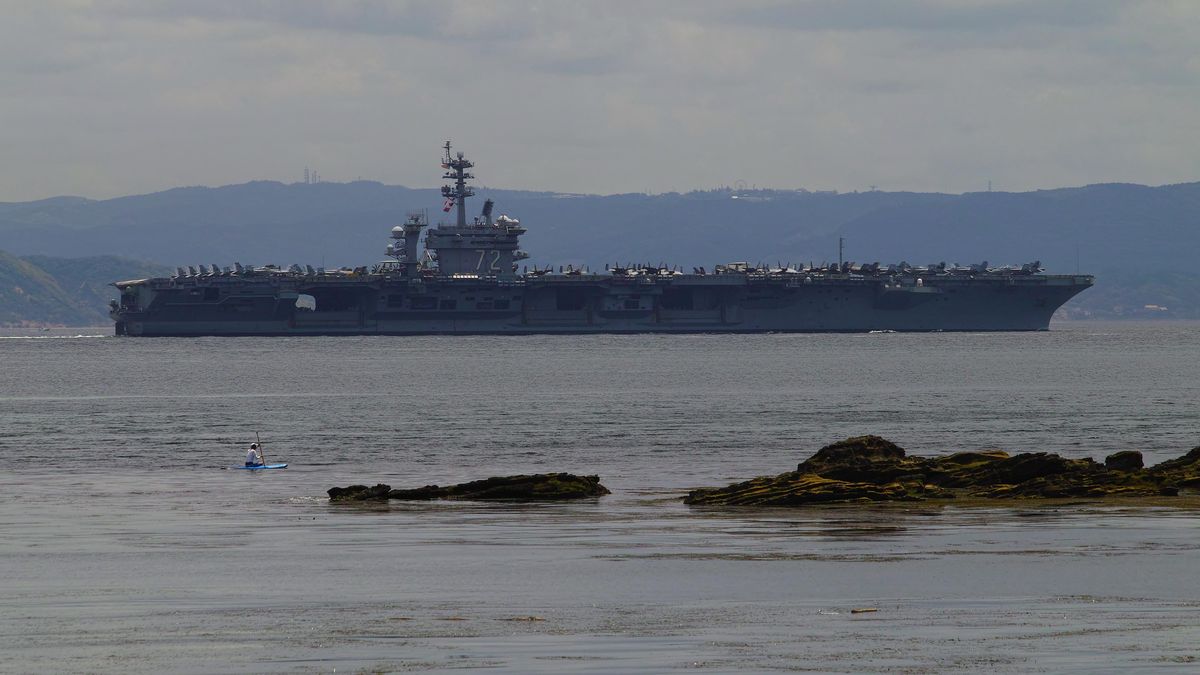
Sailors and Marines aboard the nuclear-powered aircraft carrier USS Abraham Lincoln have surpassed 260 days at sea in the Arabian Sea, triggering severe mental health concerns and reports of thwarted suicide attempts. Military publications and lawmakers warn that grueling combat operations against Iran and extended deployments are straining the crew’s well-being.
The nuclear-powered aircraft carrier USS Abraham Lincoln has spent more than 260 days away from home port during one of the longest aircraft carrier deployments in modern history. The vessel left San Diego on November 21 for a routine Pacific deployment before being redirected to the Middle East in January ahead of U.S. and Israeli military strikes against Iran. Stationed in the Arabian Sea, the 37-year-old carrier is now deep into its ninth month at sea and its fifth month supporting active combat operations and enforcing a naval blockade of Iranian ports.
Deteriorating Living Conditions and Suicide Attempts Aboard the Carrier
Independent military news organizations have reported multiple suicide attempts by sailors and Marines assigned to the vessel. Families of the crew, speaking during a meeting with Navy leadership in San Diego, voiced mounting alarm over the psychological toll of the voyage. One family member shared that her husband texted her to say that he hoped he didn’t wake up tomorrow, while another parent recounted that crew members constantly contemplate jumping overboard simply to find relief from the ordeal.
Lawmakers have stepped forward to highlight the deteriorating environment on the ship. Rep. Mike Levin (D-Calif.) detailed severe physical hardships aboard the vessel, pointing to moldy showers, broken toilets, and laundry facilities that remained out of service for weeks. Levin also described basic provisions dwindling to sparse rations, noting meals that reduced down to half a cup of rice and two tortillas alongside a complete lack of basic hygiene products such as soap, deodorant, and toothpaste.
Rep. Mike Levin (D-Calif.) stated via Forbes that conditions on the ship included moldy showers, broken toilets, laundry out of action for weeks, long stretches with no hot water, and meals reduced to half a cup of rice and two tortillas, with no soap, deodorant, or toothpaste.
Rep. Jason Crow (D-Colo.), an Army Rangers veteran of the wars in Iraq and Afghanistan, warned that the strain on service members and their families intensifies week by week as the deployment stretches onward without a confirmed return date.
Navy Leadership Response and Public Rebuttal
Navy officials have pushed back against aspects of the public reporting while acknowledging the severe pressures of extended deployments. In a formal statement, the service declared that no increase in reported suicidal ideation or suicide attempts has been identified aboard the ship based on current command data.
U.S. Navy Officials stated via Task & Purpose that they know extended deployments place a significant strain on service members and their families, and expressed gratitude for the resilience and sacrifices made in support of the nation’s security, while noting that based on information available to the command, they had not identified an increase in reported suicidal ideation or suicide attempts aboard the ship.
Defense Secretary Pete Hegseth dismissed earlier accounts regarding food rationing and deteriorating shipboard amenities as forbes.com. Navy representatives similarly stated that sailors maintain continuous access to clean water, functional air conditioning, and healthy meal options, though they conceded that traditional Middle East supply hubs and postal deliveries were disrupted by combat actions, prioritizing mission-critical items like food and hygiene products over mail.
To combat stress, leadership has emphasized that the warship deploys with specialized mental health resources. Vice Adm. Joseph Cahill, commander of Naval Surface Forces, addressed family members during the San Diego meeting to assure them that command staff heard their concerns and that deployment-resilience counselors and chaplains remain available on board.
Limited Shore Leave and the Broader Fleet Readiness Debate
Opportunities for the roughly 5,000 sailors and Marines to leave the vessel have been severely restricted. Crew members have touched solid ground on only two days since the carrier departed its home port in November: a stop in Guam in December where many personnel were barred from disembarking, and a brief resupply stop in July in Oman, where those permitted off the ship were confined to a secure port compound.

The protracted deployment of the Lincoln follows a broader trend across the U.S. Navy, where high operational demands and a smaller pool of available carriers have driven up deployment lengths. The modern record for a carrier deployment is held by the USS Gerald R. Ford, which spent 326 days at sea before returning in May. The Lincoln’s open-ended timeline has prompted congressional inquiries, including a letter from Sen. Richard Blumenthal (D-Conn.) questioning whether current carrier generation models can be sustained without damaging fleet readiness, maintenance schedules, and the long-term well-being of service members.
- Why Houthi Rebels’ New Offensive Signals a Long-Term Red Sea Crisis
- S. Korea’s Shipbuilding Orders Up 61% in Jan-July, China Surges 107%
- Why Abraham Lincoln Is Considered America’s Greatest President (news-usa.today)
- FDA Approves Groundbreaking mRNA Vaccine Booster for Adults 50+, Boosting Immunity and Protecting Against Chronic Health Risks (archyworldys.com)