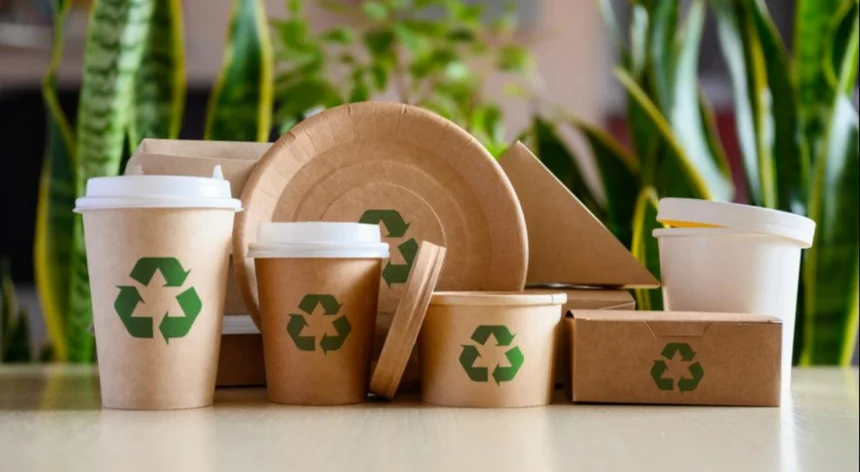
The European Union has begun implementing sweeping new packaging regulations across 27 member states, introducing immediate restrictions on hazardous chemical substances like PFAS in food containers. The multi-year framework aims to overhaul recycling standards, eliminate certain single-use plastics, and reshape retail practices through 2030.
A major regulatory shift for consumer goods officially took effect this Wednesday as the European Union initiated its new packaging framework across the 27 Member States, including Portugal. Designed to transform how items are packaged, transported, sold, and discarded, the rules arrive with a phased timeline extending toward 2030. According to estimates cited by the reporting outlets, the average European citizen discards roughly half a kilogram of packaging waste daily, driven by online shopping, takeout containers, and single-use beverage pods.
Without intervention, European Commission projections indicate that total packaging waste could climb by 19 percent by the end of the decade, while plastic packaging waste might surge by as much as 46 percent. The European Union argues that the updated directive will curb this trajectory while lessening the bloc’s reliance on imported fossil fuels, which serve as the primary feedstock for plastic production.
Immediate Restrictions on PFAS Chemicals in Food Packaging
The most immediate health-focused mandate targets per- and polyfluoroalkyl substances, widely known as PFAS. These synthetic compounds have long given commercial food containers their resistance to grease, moisture, and heat. Under the rules enforced starting this Wednesday, manufacturers are prohibited from placing food-contact items on the market that exceed established threshold limits for PFAS. The restrictions encompass the container bodies themselves alongside integrated printing inks and adhesive coatings.
Environmental advocates have welcomed the restrictions while warning that external supply chains present significant enforcement hurdles. Susana Fonseca, vice-president of the environmental association Zero, told reporters that the shift should have happened sooner, only faulting it for being late while noting that consumers will be better protected.
it is necessary to be very careful with what comes from outside Europe because there is a very large risk that the legislation will not be respected, noting that inspection is complex, as it requires analyses of food packaging. Susana Fonseca, Vice-President of Zero, via TSF
To aid traceability, the legislation mandates that manufacturer details remain clearly visible on commercial packaging so that authorities can identify and contact responsible parties when necessary.
Phased Timeline: From Container Labelling to Restaurant Reuse
While the chemical limits apply instantly, other components of the regulation roll out across a staggered timeline. Between now and the end of the year, authorities expect to finalize a harmonized labelling system that could feature up to 24 distinct symbols. These markers aim to clarify material composition and sorting instructions, even distinguishing between clear, colored, green, and amber glass.

- 2027: Hotels, restaurants, and cafés must permit patrons to bring their own reusable containers for prepared food take-out.
- 2028: Hospitality venues must also actively provide a reusable container option for customers taking meals away.
- 2028: Tea bags and similar infusions must transition to compostable materials.
- 2030: The primary wave of structural changes arrives, restricting plastic packaging for fresh fruit and vegetables sold in quantities under 1.5 kilograms.
Extended Producer Responsibility and Industrial Adaptation
The regulatory framework introduces the extended producer responsibility principle, tying financial accountability directly to the polluter-pays model. Companies placing packaging on the market must shoulder the cost of the entire product lifecycle, spanning material selection, collection, reuse, and recycling.

Industry operators acknowledge the operational complexity of the transition. Jessika Roswall, European Commissioner for Environment, Water Resilience and a Competitive Circular Economy, emphasized that the directive replaces fragmented national regulations with uniform standards across the internal market. According to the European Commission, this harmonization aims to eliminate cross-border trade barriers while lowering compliance expenses for businesses over the long term.
At the same time, Brussels acknowledges that adaptation will generate short-term cost pressures. Officials stated that regulators worked closely with market operators to implement the provisions pragmatically and avoid excessive bureaucratic burdens, even as supply chains prepare for the stricter recycling mandates scheduled for full enforcement by 2030.
Keep reading