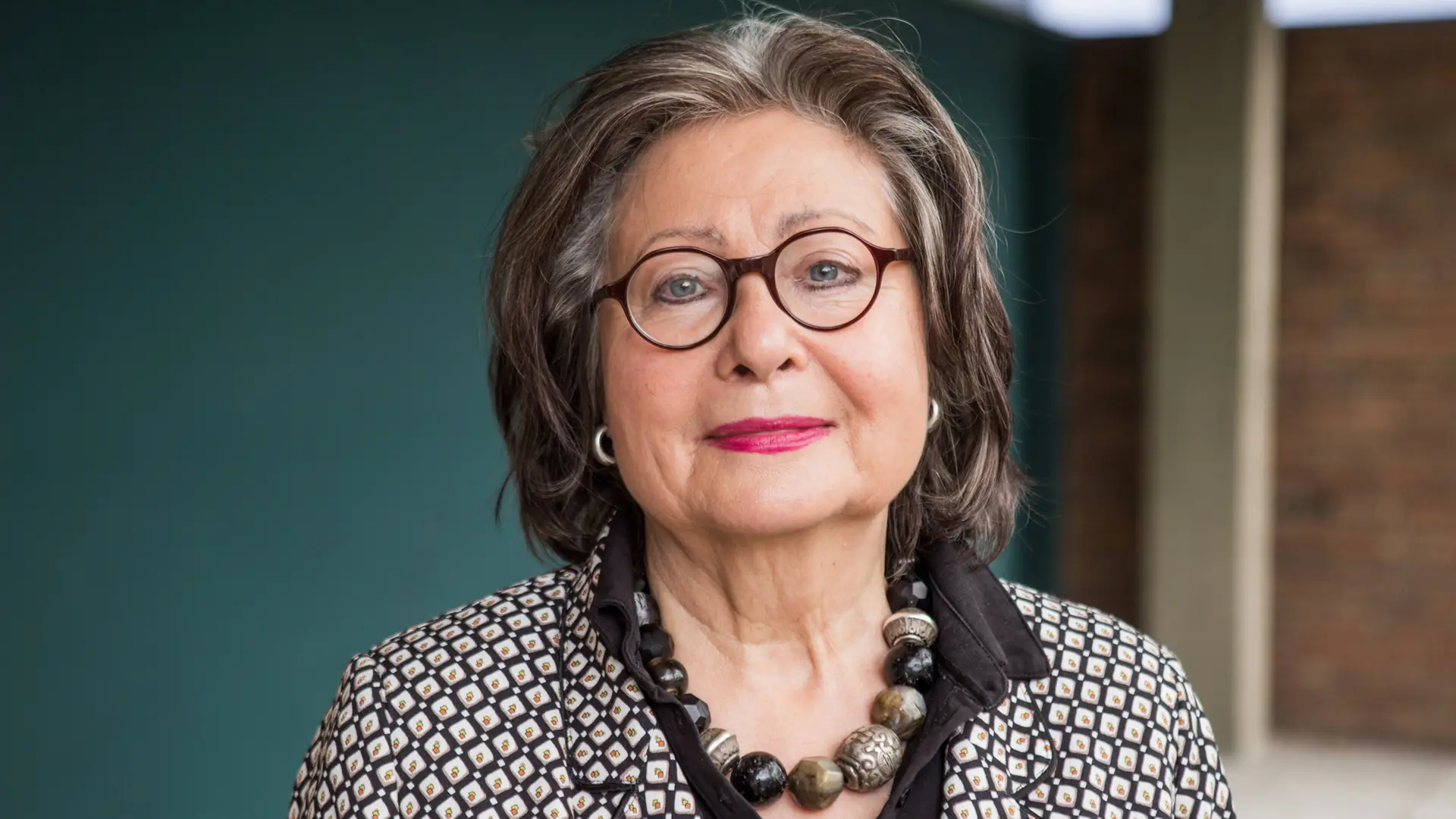
German film director Jutta Brückner has completed her cinematic trilogy exploring generational conflicts between women with the release of her new mother-daughter drama, Im Spiegel meiner Mutter (“In My Mother’s Mirror”). At 85 years old, Brückner returns to the autofiction format, examining how historical trauma, shifting feminist politics, and late-life caregiving shape the complex psychological ties binding mothers and daughters.
The new feature drama stars Hildegard Schmahl and features Corinna Harfouch, centering on a woman confronting the lingering emotional shadow of a toxic parent. Brückner began her trilogy 51 years ago with a film about her own mother’s life, later followed by a second installment focusing on her teenage years. For decades, she believed the narrative was complete, viewing the first two chapters as two sides of the same coin.
However, personal circumstances and sweeping cultural shifts revived the project. In an interview conducted by Mischa Kreiskott, Brückner explained that her mother developed dementia over several years, a process that brought long-suppressed, unworked family dynamics to the surface. Simultaneously, the rise of the #MeToo movement in 2016 galvanized film funding institutions, television broadcasters, and younger audiences, creating renewed appetite for how an older generation of women raised on feminist insights views contemporary society.
History, Feminism, and the Roots of Conflict
Brückner points out that mother-daughter relationships always serve as a mirror of their historical era. Reflecting on her own upbringing as a war child, she notes that the wartime absence of fathers left mothers responsible for survival, forging unusually intense bonds. “The fathers were at war, and the mothers were responsible for survival,” Brückner said, describing how this dynamic drove her initial cinematic explorations in films such as Tue recht und scheue niemand (“Do Right and Fear No One”) and Hungerjahre (“Hunger Years”).
Over time, Brückner attempted to share the insights of the women’s movement with her mother, who harbored a strong desire to assert herself against Brückner’s father. While this dynamic worked temporarily—providing her mother with a satisfying new professional path—it also illustrated how generational friction persists. Although the intense prudery and over-controlling parental pressures of mid-20th-century girlhood have largely faded, Brückner emphasizes that mother-daughter relationships retain deep-seated conflict potential across generations.
Symbolism and Autofictional Artistry
Im Spiegel meiner Mutter relies heavily on layered cinematic symbolism, incorporating motifs of archaeology, active construction sites, bog bodies, and memory-laden houses. Addressing whether audiences need explicit intellectual keys to decode these choices, Brückner argues that artistic mediums should prioritize visceral feeling over rigid explanation. The cinematic elements are designed to prompt sensory awareness that leads viewers toward personal realizations about their own lives.
“If you make autofictional films like I do, it always has something to do with your own life,” Brückner noted, stressing that personal narratives must transcend private diary entries to achieve universal resonance. The director reported receiving profound reactions from viewers, particularly women experiencing similar family strains who feel a sense of validation and identification upon watching the drama.
As distribution and festival screenings continue, audiences and industry observers await further exhibition schedules and official platform rollouts for the concluding chapter of Brückner’s trilogy. Readers and film enthusiasts are encouraged to share their thoughts on the film and join the conversation in the comments below.