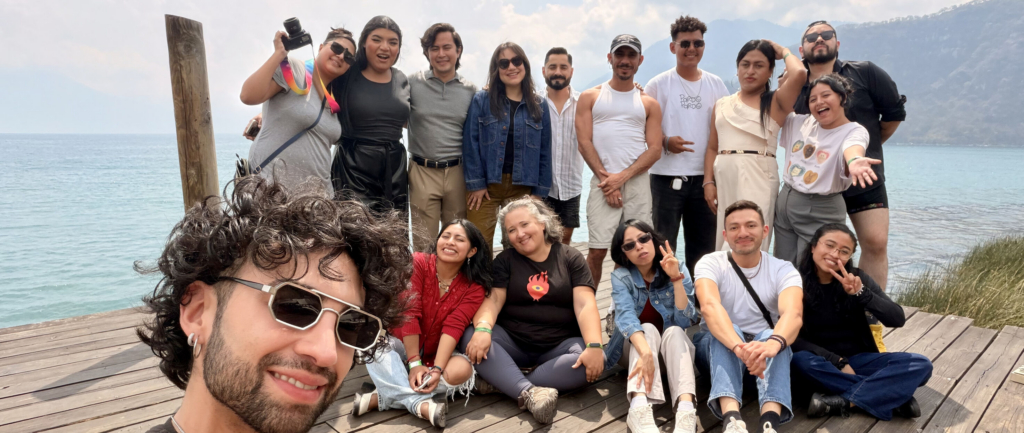
Around the world, young people are responding to growing inequality, exclusion, and attacks on human rights by organizing, resisting, and creating solutions. According to Amnesty International, three young activists—Pablo Mendoza, Dina Alami, and Christopher Arunga—are leading initiatives addressing discrimination, gun violence, and digital doxxing as part of the Digital Disruptors project, which supports youth seeking justice for issues affecting their communities.
The initiatives led by these activists intersect with broader global trends in youth-led social movements. Data compiled by the World Economic Forum’s Global Shapers Community indicates that young leaders across more than 500 cities have developed hundreds of unique projects focusing on civic engagement, inclusive communities, and digital safety, though young people remain vastly underrepresented in formal political decision-making globally according to the World Economic Forum.
Addressing human rights, mental health support, and digital safety, these three activists have built distinct grassroots platforms designed to protect vulnerable populations and fill systemic gaps left by adult-led institutions.
Grassroots Mental Health and LGBTIQ+ Advocacy in Guatemala
For 24-year-old Pablo Mendoza in Guatemala, youth activism stems from personal experiences with rejection and a lack of early support. Mendoza stated that he came out at age 15 after falling in love with another boy, an experience that was met with fear and rejection rather than institutional or familial backing.
“If even one young person finds the support I didn’t have at 15, that’s enough,” Mendoza said, reflecting on his motivations.
Mendoza is part of Disruptorxs, a collective of 14 young people from across Guatemala who spent the past year establishing a Care Platform for the Community. Aimed specifically at LGBTIQ+ youth living on the outskirts of urban centers, the platform provides accessible information regarding mental health, sexual health, support networks, and community opportunities, while also publishing diverse narratives that counter heteronormative and adult-centric media representations in Guatemala.
Challenging Street Crime and Gun Violence in Sweden
In Sweden, 30-year-old Dina Alami co-founded Kollectiv Sorg—translating to Collective Grief in English—following personal experiences with violent loss. What started as an open letter addressing gun violence and street crime evolved into an Amnesty youth group and eventually a broader societal movement.
“Kollectiv Sorg gave me a language for feelings I couldn’t explain,” Alami noted, describing how isolating grief can be when carried alone.
The organization challenges politicians and decision-makers to view victims beyond raw statistics, emphasizing that every headline represents a child, sibling, or friend whose absence alters entire communities. To address root causes and provide peer support, Kollectiv Sorg established Collective Talks, a support group meeting multiple times a month for relatives of victims and others affected by violence. The movement has also organized public art exhibitions in galleries and churches across Stockholm to foster open dialogues around safety, loss, and hope.
Tackling Unauthorized Data Exposure in Kenya
In Kenya, 28-year-old Christopher Arunga turned a personal violation into a digital rights campaign after discovering screenshots of his personal details—including his name, photographs, and home address—published online without his consent.

“I became a digital rights activist because my own data was shared without my consent,” Arunga explained.
That incident led Arunga and four other young activists to establish Linda Data—meaning “Protect Data” in Kiswahili—following a workshop convened through Digital Disruptors. After surveying hundreds of young people in Kenya, the founders found that unauthorized access to personal data was a primary concern in one of the region’s most digitally connected nations. Linda Data conducts campus visits, community workshops, and online advocacy campaigns to educate youth on informed consent, privacy rights, digital safety, and legal protections against cyberbullying, surveillance, and data exploitation.
Next Steps and Community Engagement
As these movements continue to expand their outreach through international exchanges and local organizing, supporters can follow project updates through Amnesty International’s ongoing human rights initiatives and local youth network events. Readers are encouraged to share their thoughts or experiences in the comments below.
Related reading