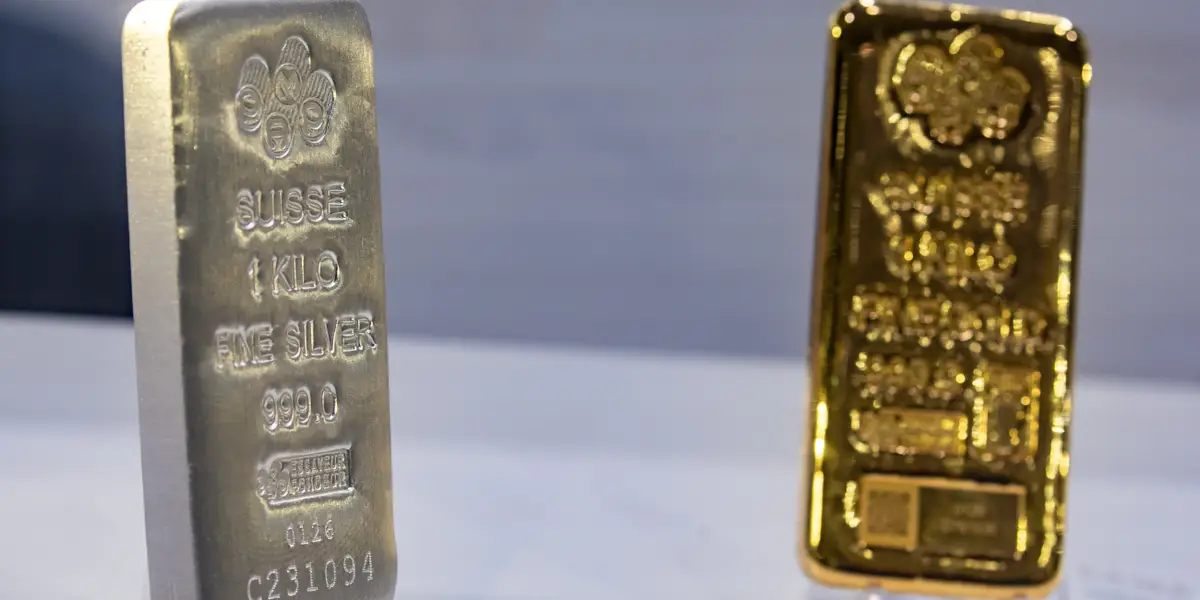
Global precious metals markets faced intense volatility as gold and silver prices tumbled from recent highs, driven by shifting U.S. monetary policy expectations, political appointments at the Federal Reserve, and rising Treasury yields.
Precious metals experienced a sharp correction as macroeconomic pressures reshaped investor sentiment across global trading desks. While gold and silver staged attempts to stabilize following the initial disruption, analysts noted that the intersection of shifting U.S. economic data, Treasury yield fluctuations, and monetary policy leadership changes created a turbulent environment for bullion.
Federal Reserve Shifts and the Impact on Bullion
The downward pressure on precious metals intensified following signals from the U.S. Federal Reserve regarding potential interest rate trajectories. Remarks by U.S. Federal Reserve Governor Kevin Warsh added to the selling pressure on precious metals. Furthermore, businessinsider.com reported that Donald Trump tapped Kevin Warsh to run the central bank, a selection viewed as more hawkish and more likely to preserve institutional independence than other candidates.
This leadership outlook strengthened the U.S. dollar and weighed heavily on dollar-denominated commodities. Vishnu Varathan, Mizuho’s Asia head of research excluding Japan, observed that Warsh supports shrinking the Fed’s balance sheet, a policy position that eased fears of a weaker dollar and helped account for the downward movement in gold and silver valuations.
Treasury Yields and Economic Data Drive Trading Volatility
Market participants closely monitored debt markets as yields fluctuated across key maturities. The yield on 2-year Treasuries declined toward the 4.20% level, while 10-year Treasury yields pulled back below 4.63%. Because bullion does not pay interest, declining yields provided some underlying support, even as broader macro pressures pushed prices downward.
Additional market direction came from the labor sector. The U.S. dollar moved lower against a broad basket of currencies as traders focused on the weaker-than-expected JOLTs Job Openings report. That official release showed job openings decreased from 7.537 million in May to 7.359 million in June, falling short of the analyst consensus forecast of 7.4 million.
Comparing the Trajectories of Gold and Silver
The scale of the sell-off varied significantly between the two primary precious metals. Over a three-month period leading up to the decline, gold prices dropped by 12%, moving away from their record highs. The contraction accelerated sharply over a three-day period, during which gold prices fell by about $400 per ounce to reach around $3,300 per ounce.
Silver experienced an even steeper retracement. Silver prices fell nearly 20% from their January peak. In January, gold had reached a record high of about $3,500 per ounce, while gold is now about $500 lower per ounce, while silver is about $5 lower per ounce.

Despite the sharp pullbacks, longer-term fundamental drivers remained intact. Daniel Hynes, a senior commodities analyst at ANZ, addressed the market resilience during an interview with Bloomberg TV, noting that ongoing macroeconomic pressures continue to underpin safe-haven demand.
Hynes added that broader geopolitical tensions remain central to haven buying.:
Daniel Hynes of ANZ stated that the general unbending of the global order that is constantly discussed, along with the role of the U.S. within it, has truly been at the core of this safe-haven buying, and he does not see that trend coming to an end anytime soon.
Technical Outlook and Sector Pressures Ahead
Market strategists cautioned that silver may face distinct headwinds compared to gold due to its heavy reliance on industrial end-users. Ole Hansen, head of commodity strategy at Saxo Bank, wrote that silver’s industrial exposure could present challenges as participants seek alternative materials to protect operating margins, particularly within the solar sector.

Hansen also highlighted that scrap supply is expected to increase in the coming months as owners liquidate long-held bars, cutlery, and jewelry following substantial price appreciation over the past decade. On the charts, technical levels continued to define trading ranges. From a technical perspective, gold maintained consolidation above the support level at $4,020 to $4,040. A sustained move above the $4,100 threshold could clear a path toward resistance levels at $4,180 to $4,200, while a breach of support would expose lower targets near $3,930 to $3,950.
Keep reading