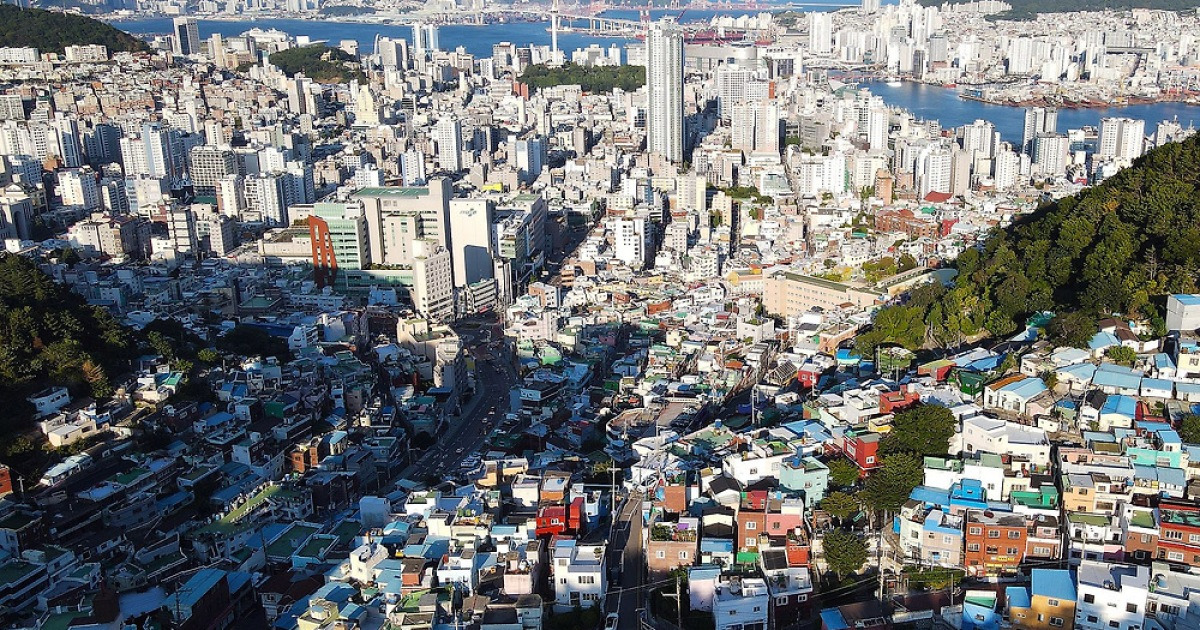
Busan served as the wartime capital of South Korea for 1,023 days during the Korean War, a tumultuous period whose physical remnants are now being prepared for international recognition, according to South Korea’s National Heritage Administration. The agency selected 11 historical sites representing this era for its tentative list of World Heritage properties, with an eye toward official UNESCO inscription by 2030. While many associate wartime capitals solely with government offices, these heritage locations also include the stark living quarters of refugees who fled south as the conflict unfolded.
Among these locations, four primary sites trace the harrowing realities of the wartime administration and the civilian population. According to historical records, the South Korean government operated in Busan across two distinct periods: the first from August 18 to October 26, 1950, and the second from January 3, 1951, to August 14, 1953. During these 1,023 days, the conflict shifted drastically, marked by the rapid fall of Seoul, the subsequent recapture of the capital, the intervention of Chinese forces, and the eventual signing of the armistice on July 27, 1953.
Gyeongmudae: The Wartime Presidential Residence
Travelers exploring Busan’s wartime history typically begin at the former presidential residence, known during the conflict as Gyeongmudae. President Syngman Rhee utilized a century-old red brick building originally constructed during the Japanese colonial period as the South Gyeongsang Provincial Governor’s residence to serve as his executive office and home. Today, the structure functions as the Temporary Capital Memorial Hall, displaying exhibits on the era alongside a replicated presidential office featuring a wax figure of Rhee, according to local cultural accounts.
Directly below the former presidential compound, the broad expanse of Daechong Road leads down toward the Busan Port through what was historically a Japanese residential district. This concentration of administrative architecture illustrates the sudden centralization of government functions in a southern port city.
Ami-dong Gravestone Village and Its Unexpected Global Following
As refugees overwhelmed Busan’s initial seaside shantytowns, and as city authorities subsequently moved to clear those informal settlements, displaced families were forced up into the surrounding mountainsides. One of the most poignant settlements emerged at Ami-dong Mountain District 19, an area originally established as a Japanese communal cemetery during the colonial era, according to historical documentation.
With nowhere else to go, refugees dismantled headstones to build retaining walls, laid foundations matching the cramped dimensions of Japanese burial plots—typically measuring just two to three pyeong, or 7 to 10 square meters—and covered grave markers with concrete. For decades, local folklore held that Japanese ghosts wearing traditional kimonos and geta sandals haunted the narrow, winding alleys and top-heavy houses of the village. In recent years, however, Ami-dong has attracted a steady stream of international visitors for an entirely different reason: its name matches the official fan club of the South Korean pop group BTS, known as ARMY. To welcome these overseas travelers, purple decorations have been installed throughout the neighborhood, blending a tragic historical landscape with contemporary pop culture tourism.
Uam-dong Cattle Barn Village and Historic Milmyeon
While Ami-dong residents built homes atop a cemetery, refugees in the Uam-dong district took shelter inside former cattle barns, earning the area the nickname “Somak Village,” which translates to cattle barn village. During the Japanese colonial period, livestock gathered from across the Korean Peninsula were shipped out of the now-defunct Dong Port in Busan. Large cattle sheds capable of holding up to 10,000 animals were constructed in Uam-dong to facilitate these shipments.
When the war created an acute housing shortage, refugees moved into the 19 large cattle sheds, partitioning the spaces and building makeshift lofts beneath the high roofs. Uam-dong is also home to Naeho Naengmyeon, a restaurant operating for over a century that traces its roots to Heungnam, South Hamgyong Province. The proprietors, descendants of refugees who arrived during the Heungnam evacuation, are credited with creating Busan’s signature wheat noodle dish, milmyeon, in 1959 after receiving flour supplies from a local Catholic priest.
Yeongdo Bridge: A Landmark of Separation and Reunion
Yeongdo Bridge stands as another major emblem of wartime Busan, serving as a designated meeting place for families separated during the chaotic flight south. Constructed by the Japanese colonial government in 1934, the span was South Korea’s first land-connecting bridge and bascule bridge, engineered with a lifting leaf to allow maritime traffic to pass. Its iconic status was cemented by contemporary popular songs such as singer Hyun-in’s “Cheer Up, Geum-sun,” which romanticized the desperate survival struggles of refugees searching for lost relatives.
When the bridge first opened, its lifting mechanism operated up to seven times a day. The daily raising of the span was suspended in 1966 before resuming on November 27, 2013, transforming the site into a destination for elderly displaced persons seeking to reconnect with pre-war memories. While the bridge once lifted daily at noon, the operation now occurs once a week on Saturdays at 2:00 p.m., according to municipal tourism schedules.
The National Heritage Administration plans to submit its preliminary evaluation application for the 11 designated “Refugee Capital Busan” heritage sites to UNESCO, with domestic authorities targeting final World Heritage inscription by 2030. Travelers planning to visit these historical locations can access the Temporary Capital Memorial Hall and the Uam-dong Somak Village Exhibition Hall free of charge, though operating hours and weekly closing days vary by site. Share your thoughts on Busan’s preservation efforts or join the discussion in the comments below.
Related reading