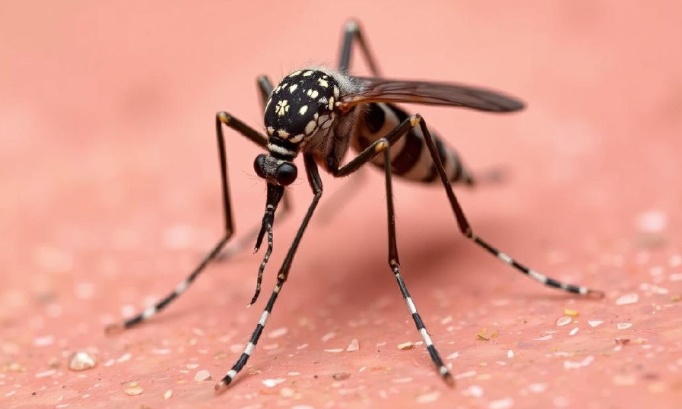
Residents in Clermont-Ferrand and surrounding areas are urging municipal authorities to evaluate the sterile insect technique (SIT) to curb the escalating proliferation of the Asian tiger mosquito (Aedes albopictus). Driven by mounting daily nuisances and public health concerns regarding vector-borne diseases such as dengue, chikungunya, and Zika, local communities have called for innovative, complementary vector control methods alongside traditional larval habitat elimination.
The push in Clermont-Ferrand mirrors growing interest across France in biological control mechanisms designed to lower wild mosquito densities. According to information published by the Entente Interdépartementale pour la Démoustication du Littoral Méditerranéen (EID Méditerranée), municipalities including Montpellier, Toulouse, Mions, and La Verpillière have engaged with or announced deployments related to SIT technology. Public health operators emphasize that while source reduction remains a cornerstone of vector control, community participation in removing standing water often falls short, necessitating supplementary approaches.
The sterile insect technique relies on mass releases of laboratory-reared male tiger mosquitoes sterilized via irradiation. Because male mosquitoes do not bite humans, releases remain harmless to the public. When sterile males mate with wild females, their reproduction yields no viable offspring, gradually suppressing the wild population below an acceptable nuisance threshold. Authorities note that irradiated sterile mosquitoes are not classified as genetically modified organisms (GMOs), holding an explicit evaluation from the Haut Conseil des Biotechnologies (HCB) issued in 2017, as documented by EID Méditerranée.
Understanding the Sterile Insect Technique in Practice
Biological control methods against mosquitoes require stringent regulatory frameworks and careful operational scaling. Historical applications of SIT target agricultural pests, but recent European trials have adapted the technology for urban disease vectors. According to operational summaries from EID Méditerranée, countries including Italy, Greece, Spain, and Germany have pursued field trials. In France, the technique has undergone multi-year evaluation on Réunion Island following extensive biological, technological, and legal preparations overseen by the local prefecture and national ministries. Additionally, a small-scale pilot project was conducted by CIRAD and EID Méditerranée in a neighborhood of Prades-le-Lez during the summer of 2021.
Despite its promise, public health bodies caution that SIT is not an absolute eradication tool. As outlined by EID Méditerranée, the method aims to lower population density rather than eliminate the species entirely, meaning it cannot single-handedly remove the risk of arbovirus transmission. Consequently, local operators continue to rely primarily on physical anti-vector measures, such as eliminating intra-domestic breeding sites, while reserving chemical adulticides strictly for official vector-control operations authorized by Agences Régionales de Santé (ARS) upon the detection of clinical arboviral cases.
Citizen Appeals and Municipal Responsibilities
Local petitioners in the Clermont-Ferrand area have formally requested that the municipality take specific steps to address the tiger mosquito threat. Their proposals ask city leadership to evaluate the technical, regulatory, and financial feasibility of a localized, time-limited SIT pilot project. Specifically, supporters want the city to identify heavily affected urban sectors, engage with specialized scientific institutions, and transparently communicate trial conditions to residents.
Standard vector control protocols across French municipalities continue to focus on public awareness campaigns, biological larvicides like Bti in specific wetland habitats, and community-led removal of standing water.