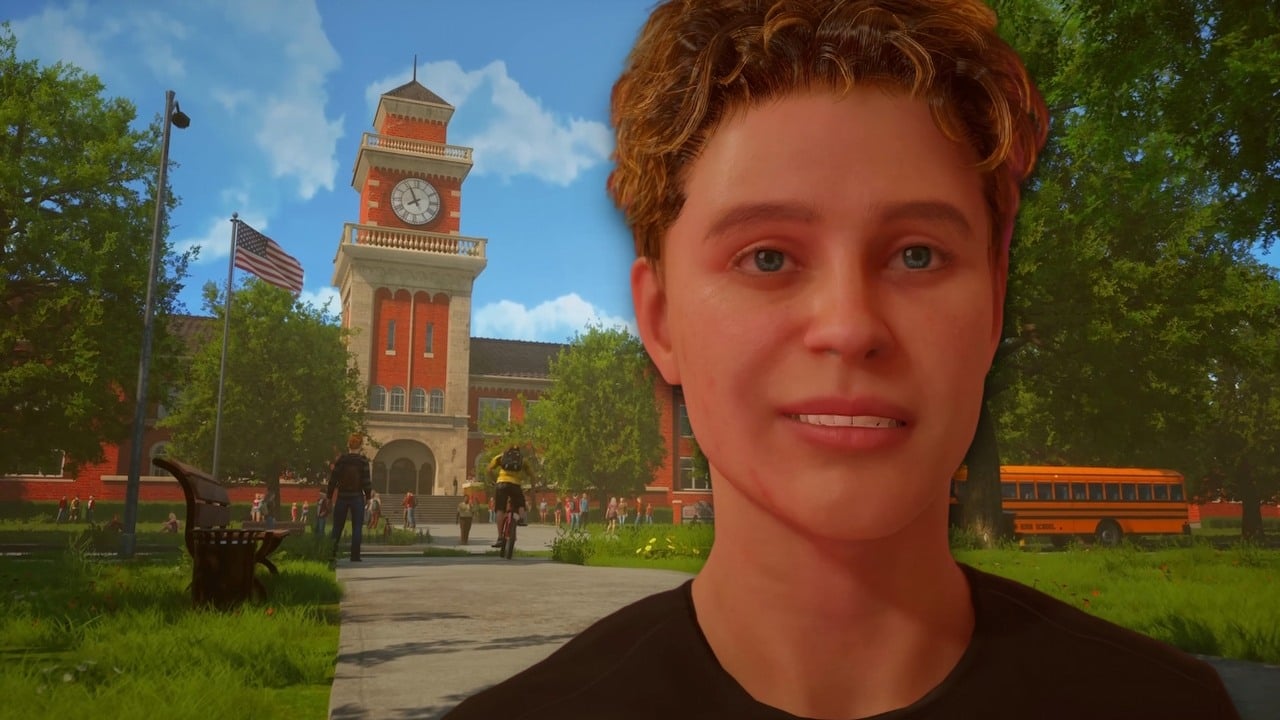
Agefield High: Rock the School launched on Steam on August 12, drawing severe backlash from players over technical instability and performance issues, according to user reviews tracked on Valve’s platform. Developed by Refugium Games, the open-world high school adventure title has struggled to capture the anticipated spiritual successor status to Rockstar Games’ classic Bully, sitting at a low approval rating shortly after its release.
For fans hoping for a polished sandbox experience reminiscent of the 2006 Rockstar title, the initial rollout of Agefield High: Rock the School has proved rocky. While players generally praise the core concept of a 2000s-era American high school simulation, the execution has drawn widespread complaints regarding optimization flaws, frequent crashes, and substandard facial animations.
According to user feedback collected on Steam, critics have described the software as requiring significant reconstruction. Some purchasers voiced strong dissatisfaction despite buying the title at a discounted rate. Conversely, a portion of the player base remains optimistic, suggesting that the underlying framework holds potential if the development team implements substantive patches to address major technical hurdles.
Technical Shortcomings and Player Engagement
The technical instability immediately impacted user retention following launch day. Data from SteamDB indicates that Agefield High: Rock the School peaked at over 2,400 concurrent players shortly after release, but that figure dropped sharply to 733 active users as technical complaints mounted.
Ahead of the release, developers at Refugium Games appeared to anticipate a bumpy rollout. In a playful launch day statement addressed to students, parents, and community members, the studio remarked that the school’s paint was still fresh and asked players to treat the environment with care while maintenance addressed roof leaks and incoming inquiries.
Despite the reception, some users have indicated a willingness to return to the virtual campus once stability updates arrive. The game places players in the shoes of Sam, a senior with three months left until graduation, navigating a fictional American town alongside characters named Kale and Axel.
Gameplay, Setting, and System Requirements
Set in a small American town during the early 2000s, the gameplay loop combines structured missions with class attendance and open-world exploration. Players can roam across school grounds, residential neighborhoods, downtown areas, and rural sectors, choosing whether to attend lessons or skip classes to complete side activities such as purchasing clothing, changing hairstyles, or riding bicycles while avoiding authorities.
The core narrative spans roughly 8 to 10 hours of gameplay, comprising 32 main missions, 15 side quests, and two distinct endings. The academic schedule features five subjects: English, mathematics, geography, German, and music.
For players opting to test the title on PC, standard pricing is set at 129,99 zł following an initial promotional launch discount of 116,99 zł available through August 19, with the software featuring Polish cinematic subtitles. System requirements demand a 64-bit Windows 10 or 11 operating system, paired with either an Intel Core i7-7700K or AMD Ryzen 5 2600X processor, 16 GB of RAM, and an Nvidia GTX 1070 or AMD Radeon RX 580 graphics card with 8 GB of VRAM, alongside 15 GB of available SSD storage for minimum specs.
Recommended hardware specifications scale up to an Intel Core i7-12700K or AMD Ryzen 5 7600X processor, 32 GB of RAM, and an Nvidia RTX 3080 or AMD Radeon RX 6950 XT graphics card. Refugium Games has not yet detailed a comprehensive timeline for upcoming patches, though community feedback continues to guide developer responses on Valve’s platform.
What are your thoughts on the launch of Agefield High: Rock the School? Let us know in the comments below, and share this article with fellow gamers tracking open-world releases.