<>
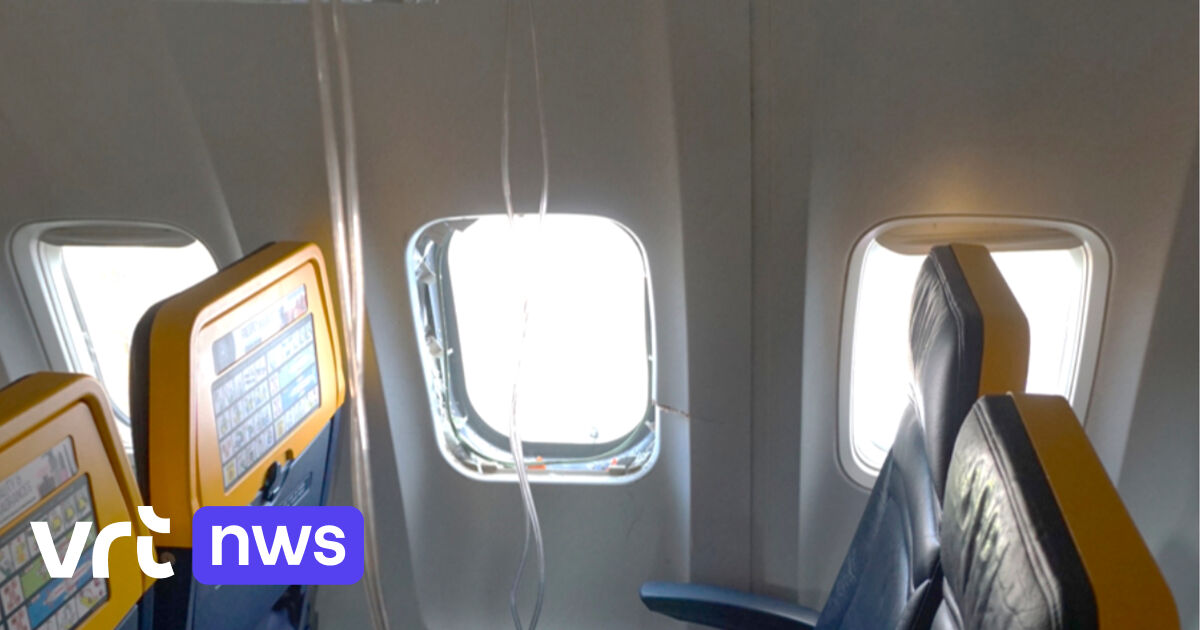
A detached engine fan blade shattered a passenger window on a Ryanair Boeing 737-800, leaving a 60-year-old Serbian passenger partially pulled out of the aircraft by cabin pressure drop on July 10, according to an investigation by the National Transportation Safety Board cited by VRT Nieuws.
High-Altitude Chaos Above North Macedonia
The hazardous incident occurred above North Macedonia shortly after the commercial airliner departed from Thessaloniki, Greece, en route to Germany. Rapid depressurization sucked the traveler halfway out of the window, exposing his head and shoulders to the slipstream.
He was wearing his seatbelt. Because of this, fellow passengers managed to pull him back into the cabin before the situation turned fatal. The flight immediately turned around and safely returned to the airport in Thessaloniki.
Engine Failure and Bird Strike Scrutiny
According to findings released by the National Transportation Safety Board, a fan blade inside the aircraft’s right engine fractured during the climb. The structural failure propelled high-energy engine fragments outward, with at least one piece striking and destroying the passenger cabin window.
Investigators examining the damaged engine discovered bird remains inside the machinery, prompting authorities to evaluate whether a bird strike during takeoff triggered the catastrophic blade failure. However, investigators noted that a direct causal link has not yet been proven.
Prior Bird Strike Reports and Clean Maintenance Logs
Maintenance and operational records show that flight crew members had reported four suspected bird strikes involving this specific aircraft over the preceding year, with bird remains recovered in two of those prior events.
Despite those operational reports, scheduled aircraft maintenance checks performed in November 2025 and May 2026 revealed no visible or documented damage to the engine’s fan blades, according to maintenance data cited by VRT Nieuws.
Pressure Mounts on Fleet Modification Timelines
Former National Transportation Safety Board investigator Jeff Guzzetti stated that the inflight window blowout could influence how aviation regulators plan mandatory safety upgrades.
The U.S. Federal Aviation Administration previously issued directives requiring airlines to strengthen specific components of Boeing 737 engine cowlings so that detached fan blades are contained and cause less structural damage to the fuselage.
Public maintenance records indicate that Ryanair had not yet performed those structural modifications on this particular Boeing 737-800 aircraft. Yet the carrier was not in violation of any active directives, as the regulatory compliance deadline for the modifications is set for July 2028. Aviation experts like Guzzetti suggest that federal regulators might consider accelerating that implementation timeline following the North Macedonia incident.
Silence and Clashes Among Leadership
Regulatory authorities and corporate leadership have maintained caution regarding public statements while the technical review continues. The Federal Aviation Administration declined to comment on ongoing investigative proceedings but stated that it will take all necessary safety actions. Ryanair similarly chose not to provide public comments regarding the incident or the ongoing engineering review.
The National Transportation Safety Board previously issued a reprimand to Ryanair Chief Executive Officer Michael O’Leary after he asserted that investigators were focusing primarily on foreign object damage. The safety agency clarified that its comprehensive review remained open and had not ruled out any potential failure mechanisms.
>
Related reading
- EFN: Addtech Stands Out Among Top Swedish Serial Acquirers
- Puerto Varas’ Paul Harris Library Ranks Among Top 10 Most Active in Chile
- Title Insurance Covers a Crime That Almost Never Happens (daybreakwire.com)
- NTSB Report: Engine Failure Caused Ryanair Window to Shatter as Passenger Was Partially Sucked Out (world-today-news.com)