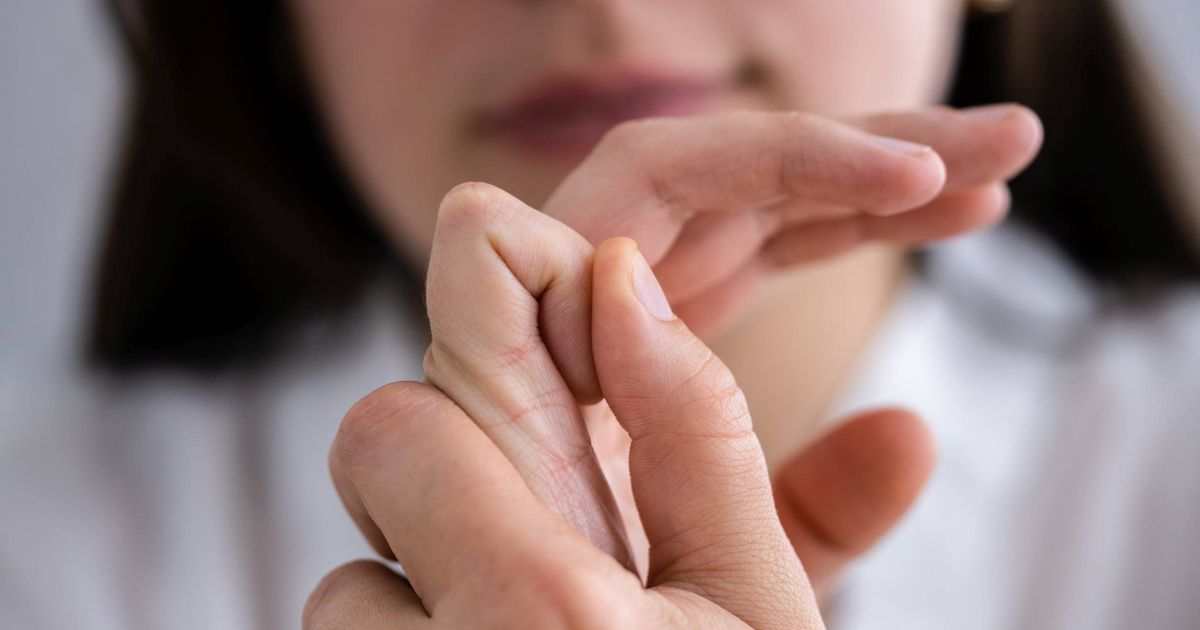
Does cracking your knuckles cause arthritis? For half a century, Donald Unger put that widespread childhood warning to an empirical, personal test to prove his mother and older relatives wrong. According to historical accounts of his self-experiment, Unger cracked the knuckles of his left hand at least twice a day for fifty years—totaling roughly 36,500 cracks—while leaving his right hand strictly alone as a control group. When he reached 72 years of age, he had X-rays taken of both hands. He concluded that neither hand showed any signs of arthritis, nor was there any noticeable difference between the two limbs.
While a single-subject trial does not constitute formal clinical proof, subsequent larger-scale medical studies have repeatedly arrived at the exact same conclusion. Medical experts say that knuckle cracking is a normal physiological process that does not lead to degenerative joint diseases like osteoarthritis. This research offers reassurance to the millions of people worldwide who habitually pop their fingers, knuckles, and other joints without knowing the biological reality behind the sound.
To understand why joints make that sharp pop, researchers look at the anatomy of human joints. A joint is the meeting point between two bones, encased in synovial fluid—a slippery, protein-rich lubricant that minimizes friction during movement. When a person bends, pulls, or twists a finger to crack a knuckle, they temporarily expand the space inside the joint capsule. That sudden expansion causes the fluid pressure to drop rapidly, allowing gases dissolved in the fluid to escape and form microscopic bubbles.
The distinctive cracking sound is not bone grinding against bone, but rather the acoustic wave created when those microscopic gas bubbles rapidly collapse back inward. According to data reported by researchers at the University of California, Davis, who examined kraking joints using ultrasound imaging, the moment of the physical snap looks remarkably like a microscopic fireworks explosion on a monitor. That sound can reach up to 83 decibels, a volume comparable to a heavy truck driving past at moderate speed.
What Scientific Research Reveals About Arthritis Risk
For decades, older generations have warned children that popping joints will ruin their hands. However, rheumatologists have consistently debunked the myth that knuckle cracking causes arthritis. According to Kimme Hyrich, a rheumatologist at the University of Manchester, joint cracking is a normal physiological process. In an interview with the BBC, Hyrich noted that the habit is frequently brought up in clinical examination rooms and family dinners alike, but confirmed that the simple answer is that it does not cause arthritis.
Historical and modern clinical studies support this consensus. As early as 1975, researchers surveyed 28 elderly residents in a care facility and found no correlation in osteoarthritis prevalence between those who cracked their knuckles regularly and those who did not. A later, larger study comparing the cracking histories of 215 osteoarthritis patients against a control group found that neither the frequency nor the duration of knuckle cracking influenced an individual’s risk of developing joint disease.
Furthermore, clinical investigations utilizing ultrasound technology have found no evidence supporting other persistent myths, such as claims that cracking enlarges knuckle joints or stretches out surrounding tendons. Doctors examining habitual crackers found no abnormal swelling, tissue degradation, or loss of hand function.
When Joint Manipulation Carries Real Risks
Although routine knuckle cracking of the fingers remains generally harmless, aggressive joint manipulation can occasionally lead to acute physical injuries. Jay Jagannathan, a neurosurgeon who has treated patients following forceful spinal and joint manipulations, points out that clear physiological warning signs like persistent pain or joint swelling should never be ignored. Overzealous pulling or wrenching of a finger can, in rare instances, cause localized sprains or joint dislocations.
Medical literature has documented isolated cases of finger sprains stemming purely from individuals forcing their joints to pop for satisfaction. However, routine, non-forced finger cracking rarely results in such trauma. The anatomical outlook changes drastically, however, when applied to the spine and neck.
The cervical spine houses delicate neural pathways, including the spinal cord and major vertebral arteries supplying blood directly to the brain. According to Jagannathan, any form of excessive or forceful manipulation in the neck area presents significant safety risks. Healthcare professionals generally advise against self-administered neck cracking. Academic evaluations, such as a 2012 review by researchers at Brunel University, have similarly cautioned that chiropractic neck treatments are “unnecessary and unwise” due to the underlying anatomical vulnerabilities of the region.
Regarding hand strength, earlier medical studies from 1990 suggested a potential link between long-term knuckle cracking, reduced grip strength, and soft-tissue swelling. Yet, subsequent investigations, including a more comprehensive 2017 evaluation of habitual crackers, failed to replicate those findings, identifying no verifiable connection between cracking fingers and diminished grip strength.
How to Break the Habit
Because popping one’s fingers is fundamentally benign, individuals who enjoy the habit do not need to worry about long-term joint degeneration. Nevertheless, those who wish to stop for personal reasons can use behavioral redirection strategies. Experts like Jagannathan suggest identifying the emotional or physical triggers behind the habit—such as boredom, anxiety, or absentmindedness—and keeping the hands engaged with alternative tactile tools like stress balls or fidget toys.
As ongoing medical research continues to clarify the mechanical nature of joint sounds, patients and clinicians alike can rely on established empirical data rather than generational folklore. Share your thoughts or experiences with joint cracking in the comments below.
Keep reading
- Faster Diagnostics: How Diagnostic Image Exchange Benefits Clinicians and Patients
- DR Congo Ebola Outbreak: Deaths Surpass 2,000 in Fastest-Growing Crisis Ever Recorded
- What Holds Matter Together? Physicists Find Breakthrough Evidence After 50 Years (archyworldys.com)
- Does Sulfur Boost Soybean Yields? Illinois Research Findings (archynewsy.com)