
Should Democrats win back control of Congress following the midterms, taking on the U.S. Supreme Court stands as a high priority. Members of the Democratic National Committee meeting in Austin, Texas, unanimously advanced a resolution to denounce how the high court uses its so-called “shadow” docket, targeting conservative rulings on voting rights, abortion, and executive power that have slowed down the party’s political agenda, according to The New York Ledger.
The Democratic National Committee resolution comes as public scrutiny intensifies over the court’s fast-tracked emergency orders.
Democratic National Committee Resolution Targets Emergency Rulings
Meeting for their summer gathering, Democratic National Committee members agreed to advance a proposal that pushes for greater transparency and curbs on interim decisions. Party organizers and lawmakers argue that conservative justices rely too frequently on the emergency docket to issue “incredibly consequential decisions” without full briefings or oral arguments, according to reporting by The New York Ledger.
Democratic leaders point to several consequential outcomes delivered through the emergency process. These include decisions upholding immigration stops that critics decry as biased policing, backing the president’s authority to terminate members of independent agencies, upholding mass firing of federal workers, and permitting the deportation of illegal criminal aliens to countries with which they maintain no connection, according to The New York Ledger.
“We need to pull back the curtain hiding major changes in the law and promote transparency in Supreme Court decisions,” a Democratic National Committee member said during the panel, as reported by The New York Ledger. Lawmakers like Rep. Greg Casar of Texas told crowds at the party’s youth council that future Democratic majorities must be willing to confront the court directly over decisions stifling minimum wage increases and abortion protections.
Congressional Scrutiny and Justice Testimony on Docket Volume
The push for legislative guardrails follows direct testimony from Supreme Court Justices Elena Kagan and Amy Coney Barrett before the House Appropriations Committee in Washington. Appearing before lawmakers, the justices addressed the climb in emergency petitions, which bypass the traditional timeline of merits briefs and oral advocacy.
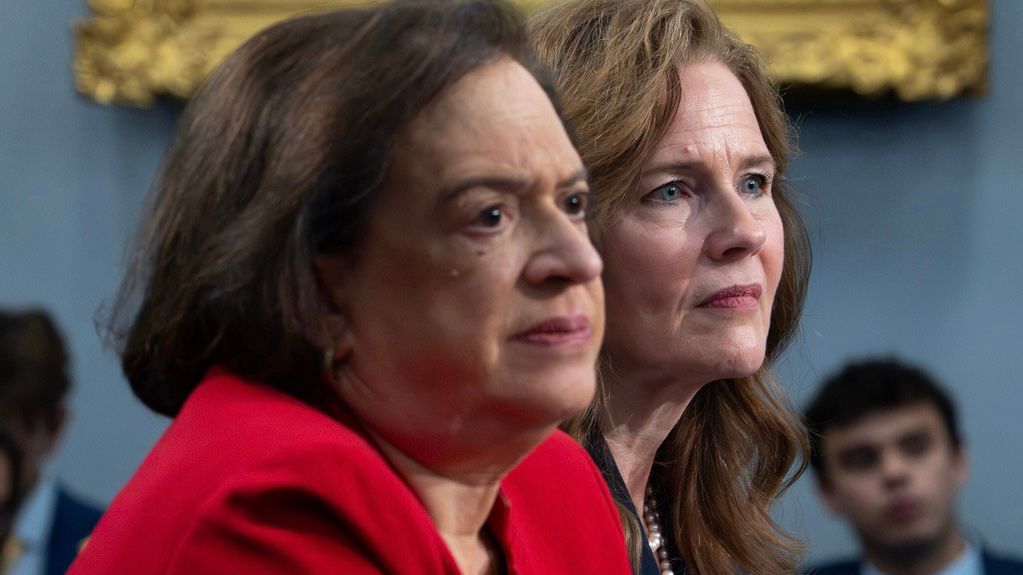
Justice Barrett explained the structural reality of the emergency process to members of Congress, noting that the court possesses mandatory jurisdiction over these filings. “You just take all comers, and you have to grant or deny these motions as they’re filed,” Barrett stated, according to Spectrum Local News. She added that the bench must take action on every single emergency application by either granting or denying relief.
Justice Kagan similarly acknowledged the workload, telling the committee that the court manages a “more-than-ordinary emergency case load.” Kagan attributed part of the volume surge to a feedback loop where petitioners, observing past relief granted by the high court, file additional emergency applications in lower-court disputes. Kagan also noted the inherent drawbacks of the practice, stating that justices miss out on standard briefing cycles and formal oral arguments when deciding emergency matters.
Historical Shift in Emergency Relief Applications
Research from the Brennan Center for Justice cited during the congressional hearings highlights a historical departure in how emergency relief is sought and applied. During the combined administrations of Presidents George W. Bush and Barack Obama, the emergency docket was utilized eight times across 16 years.

By contrast, data shows that the Trump administration sought emergency relief from the high court 41 times during its first term, filing 32 emergency cases in 2025 alone. According to Brennan Center figures reported by Spectrum Local News, the administration has prevailed in approximately 75 percent of its emergency cases considered since January 20, 2025, winning favorable rulings—at least partially—in 21 out of 28 tracked matters.
Judicial experts trace the transformation of the shadow docket back to 2016, when the Supreme Court issued an emergency ruling halting President Barack Obama’s Clean Power Plan. Historically, emergency applications were largely restricted to narrow requests, such as stays of execution on death row or immediate injunctions to prevent serious or irreparable harm. Today, the mechanism frequently acts as a vehicle for temporarily pausing a lower court’s ruling without hearing oral argument or providing much, if any, explanation, according to Spectrum Local News.