
Engineered geologic hydrogen startups are testing electrical reservoir stimulation to fracture iron-rich subterranean rocks, injecting water to trigger underground chemical reactions that yield zero-carbon energy. Led by companies like Massachusetts-based Eden GeoPower, researchers are deploying custom high-voltage pulse generators to bypass the economic limits of surface electrolyzers and traditional hydraulic fracturing.
The global race to find clean, commercially viable energy has taken an unconventional turn beneath a quiet horse farm outside Boston. There, a crane hovers over a borehole, lowering a half-meter-long cylinder equipped with copper-tipped arms. Descending hundreds of meters through layers of spongy sandstone into the hard, ancient roots of the earth, this proprietary electrode acts as the vanguard for a new category of industrial technology: engineered geologic hydrogen.
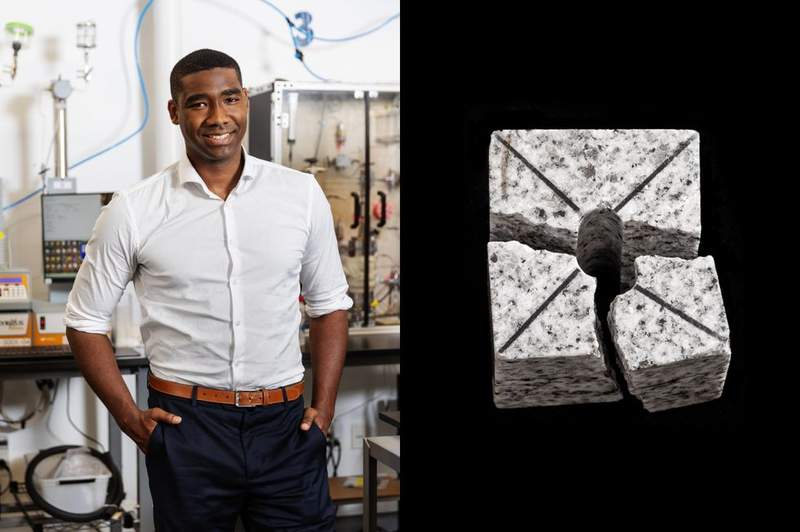
When paired with a twin electrode in a parallel borehole, the setup fires a rapid series of high-voltage electrical discharges. Sounding like miniature underground lightning strikes, these pulses heat the rock and build intense pressure until the solid formation fractures into a dense, spiderweb network. According to Eden GeoPower, which terms the process electrical reservoir stimulation, the goal is to create underground pathways where water can react directly with iron-bearing minerals, oxidizing the iron and releasing hydrogen gas as a clean-burning byproduct.
The Push Beyond Surface Electrolyzers
For decades, the pursuit of a hydrogen-powered economy has stumbled against severe economic bottlenecks. While hydrogen emits only water and heat when consumed in fuel cells or burned, manufacturing it via traditional steam-methane reforming generates greenhouse gases. Meanwhile, splitting water with renewable-powered electrolyzers has proven too expensive to achieve widespread commercial parity, a reality that cooled the global hydrogen boom in the early 2020s. According to industry data, global demand for hydrogen reached approximately 100 million tonnes in 2024, equating to roughly 3 percent of annual global energy consumption, with the vast majority utilized as chemical feedstock for petroleum refining, fertilizers, and plastics.
Fustrated by these manufacturing hurdles, researchers and entrepreneurs have pivoted underground. Natural geologic hydrogen has been documented globally—symbolized famously by a 1987 water-well drilling in Bourakébougou, Mali, where escaping gas accidentally ignited in a brilliant blue flame and eventually powered a local electrical plant built by Hydroma. Yet, despite hundreds of exploratory wells drilled worldwide by petroleum and mining firms, explorers have yet to locate commercial-scale subterranean gushers that produce gas at necessary industrial rates.
That realization inspired a shift toward artificial generation. Douglas Wicks, a former program director at the United States Advanced Research Projects Agency—Energy (ARPA-E) who now advises companies in the sector, recalls being an ultimate skeptic before realizing that underground hydrogen is not merely a static accumulation, but an ongoing chemical reaction. “If it’s a chemical reaction, then it can be stimulated,” Wicks explains. In 2024, under Wicks’s leadership, ARPA-E awarded US $20 million across 16 teams to advance underground hydrogen research, with Eden’s electrical rock-breaking initiative securing $900,000.
Pulsed Power and the Engineering Challenge
Paris Smalls founded Eden GeoPower in 2017 as an MIT graduate student studying how electricity alters rock strength for enhanced geothermal systems. Traditional hydraulic fracturing, or fracking, relies on high-pressure fluids that create large, uncontrollable fractures and carry well-documented environmental risks such as groundwater contamination and induced earthquakes. By contrast, electricity permits finely tuned fracture networks. Initial tests in Oman using direct current successfully boosted oil production in soft carbonate rock by 30 percent, but hard rocks required an entirely different approach.
To shatter dense subterranean rock, Eden adopted pulsed power—a concept tracing back to Soviet-era physicist Lev Yutkin, who described the electrohydraulic effect in his 1955 book. By discharging short, concentrated bursts of electrical energy between electrodes, the system instantly ionizes moisture in tiny mineral gaps into a rapidly expanding plasma channel, generating a shock wave that fractures the surrounding stone.
Despite these engineering milestones, scaling the technology remains an uphill climb.
Alternative Approaches to Engineered Hydrogen
Other startups are pursuing entirely different pathways to unlock subterranean hydrogen without relying solely on electrical fracturing.
As startups prepare for commercial-scale field pilots, fundamental questions remain regarding gas purification, pipeline transport, regulatory frameworks, and environmental mitigation. Whether electrical reservoir stimulation or competing thermal and chemical techniques will dominate the emerging geologic hydrogen economy depends entirely on upcoming field trials.
Readers interested in tracking ongoing energy technology grants and federal research initiatives can monitor updates through the Advanced Research Projects Agency–Energy portal. Share your thoughts or join the discussion in the comments below.
Keep reading