
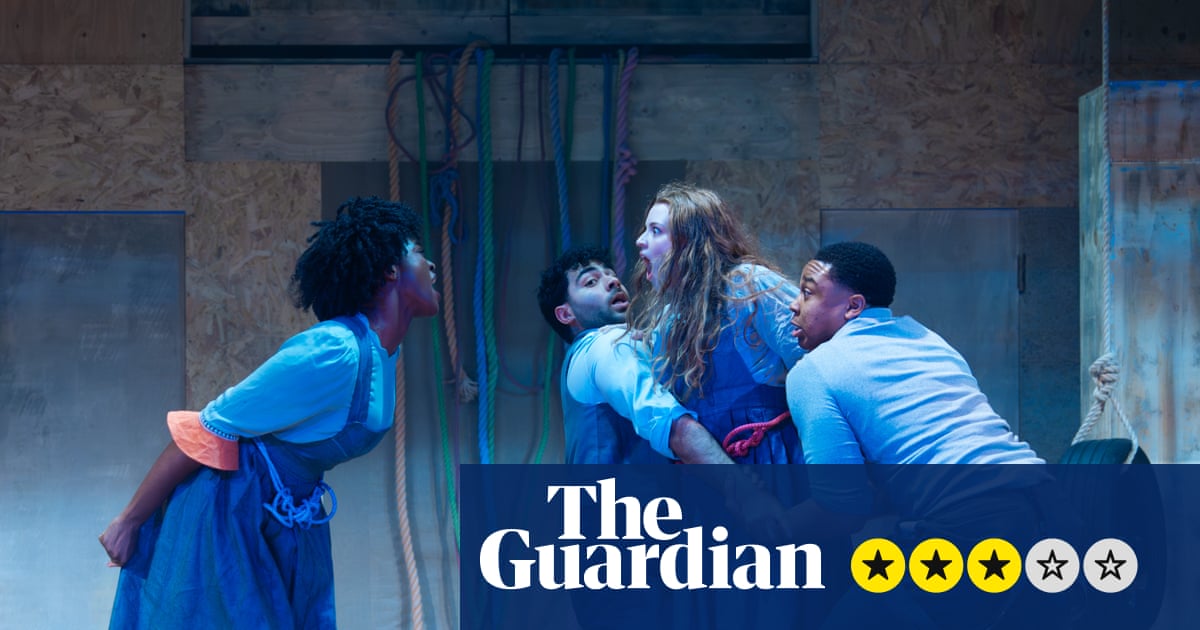
London – A fresh and accessible take on William Shakespeare’s beloved comedy, A Midsummer Night’s Dream, is currently enchanting audiences at the Unicorn Theatre in Southwark, London, in a co-production with the Royal Shakespeare Company (RSC). The production, running through May 10, 2026, marks the first major collaboration between the two esteemed theatre companies and is garnering attention for its innovative approach to making Shakespeare engaging for younger audiences. This Midsummer Night’s Dream isn’t about dumbing down the Bard, but rather about unlocking his magic for a new generation.
The production, directed by Unicorn’s Artistic Director Rachel Bagshaw and Associate Director Robin Belfield, strikes a delicate balance between honoring Shakespeare’s original language and incorporating elements designed to resonate with a contemporary, youthful viewership. The play follows the intertwined fates of four young lovers – Demetrius, Lysander, Helena, and Hermia – as they flee Athens for the enchanted woods, where they become entangled in the mischievous schemes of the fairy world, particularly the playful Puck. The enduring themes of unrequited love, self-discovery, and the transformative power of imagination are central to this reimagining of the classic tale.
The co-production is particularly noteworthy for its commitment to inclusivity, and accessibility. Creative captions are fully integrated into the set design, ensuring that the performance is enjoyable for all audience members, including those with hearing impairments. This thoughtful addition, developed with feedback from children at St John’s & St Clement’s primary school’s Hearing Resource Base, demonstrates a dedication to making theatre a truly universal experience. The production is supported by Charles Holloway OBE, Weston Theatre Season Partner, and Molecule Theatre, highlighting the collaborative spirit behind this ambitious undertaking.
A Tightened Tale with Enduring Magic
Reviewers have noted that Belfield’s editing of the play is “smart,” though some suggest it could have been even more radical in streamlining the narrative. The framing story set in Athens, involving dukes and betrothals, has been condensed but remains present, potentially creating some confusion for younger viewers unfamiliar with the play’s original structure. Though, the core comedic elements and the enchanting atmosphere of the fairy world are effectively conveyed. The production skillfully weaves slapstick comedy throughout, complementing the original text and providing moments of lighthearted fun.

The design of the production, led by designer Lily Arnold, leans towards an “arts-and-crafts-like” aesthetic, creating a visually appealing and whimsical world. Lighting designer Sally Ferguson and composer/sound designer Holly Khan contribute to the magical atmosphere with delicate soundscapes and entrancing word projections. Movement director Laura Cubitt’s choreography adds another layer of dynamism to the performance, while fight director Bethan Clark ensures the safety and effectiveness of any staged combat. The creative team’s combined efforts result in a visually and aurally rich experience that captivates the imagination.
A Stellar Cast Brings Shakespeare to Life
The cast of A Midsummer Night’s Dream features a talented ensemble of actors bringing Shakespeare’s characters to life. Boni Adeliyi portrays Helena and Starveling, while Joséphine‑Fransilja Brookman embodies the mischievous spirit of Puck. Kaireece Denton takes on the roles of Lysander and Snug, and Amelia Donkor shines as Titania and Hippolyta. Chris Jared delivers a compelling performance as Oberon and Theseus, and Shahin Rezvani embodies Demetrius and Flute. Emmy Stonelake is captivating as Bottom and Egeus, and Scout Worsley portrays Hermia and Quince. The ensemble’s versatility and energy contribute significantly to the production’s overall success.
The production’s approach to the fairy world is particularly imaginative. Titania’s fairies are brought to life through childlike voiceovers, Khan’s delicate soundscape, and Monks’ captivating word projections, which dance across Arnold’s set. Brookman’s portrayal of Puck is described as impish and playful, with the actor embracing the character’s mischievous nature by climbing balconies and swinging from tires. This playful interpretation of Puck embodies the spirit of the production – a celebration of imagination and wonder.
The RSC and Unicorn Theatre: A Promising Partnership
This co-production between the Unicorn Theatre and the Royal Shakespeare Company represents a significant moment for both organizations. The Unicorn Theatre, the UK’s leading children’s theatre, is known for its innovative and engaging productions for young audiences. The RSC, renowned for its commitment to Shakespearean performance, brings its expertise and resources to the collaboration. The partnership signals a shared dedication to expanding access to Shakespeare and fostering a love of theatre in future generations. The venture is still in its early stages, but it holds immense promise for future collaborations.
The RSC’s involvement extends beyond the co-production itself. Following its run at the Unicorn Theatre, the production is scheduled to tour to The Other Place, Stratford-upon-Avon, in the summer of 2026, with specific dates to be announced. This will allow a wider audience to experience Bagshaw and Belfield’s reimagining of A Midsummer Night’s Dream. The RSC’s commitment to touring ensures that Shakespeare’s work remains accessible to communities across the UK.
Accessibility at the Forefront
The production’s commitment to accessibility extends beyond the integrated creative captions. The creative team actively sought feedback from children with hearing impairments to ensure the captions were effective and engaging. This collaborative approach demonstrates a genuine desire to create a welcoming and inclusive theatrical experience for all. The production serves as a model for other theatre companies seeking to improve accessibility for audiences with disabilities.
The success of this production hinges on its ability to balance fidelity to Shakespeare’s text with a contemporary sensibility. By retaining the original language while incorporating playful elements and prioritizing accessibility, Bagshaw and Belfield have created a Midsummer Night’s Dream that is both faithful to the source material and engaging for a modern audience. The production’s emphasis on visual spectacle, comedic timing, and inclusive design ensures that this classic tale will continue to enchant audiences for years to reach.
As the production prepares to move to Stratford-upon-Avon, anticipation is building for its next chapter. The collaboration between the Unicorn Theatre and the RSC has proven to be a fruitful one, and audiences eagerly await future projects from this dynamic partnership. The future of Shakespearean theatre may well be shaped by such innovative and inclusive productions.
The next confirmed date regarding this production is the announcement of specific performance dates for its run at The Other Place in Stratford-upon-Avon, expected in the coming weeks. For more information about A Midsummer Night’s Dream and the Unicorn Theatre’s upcoming productions, visit www.unicorntheatre.com. We encourage readers to share their thoughts on this exciting production in the comments below.