
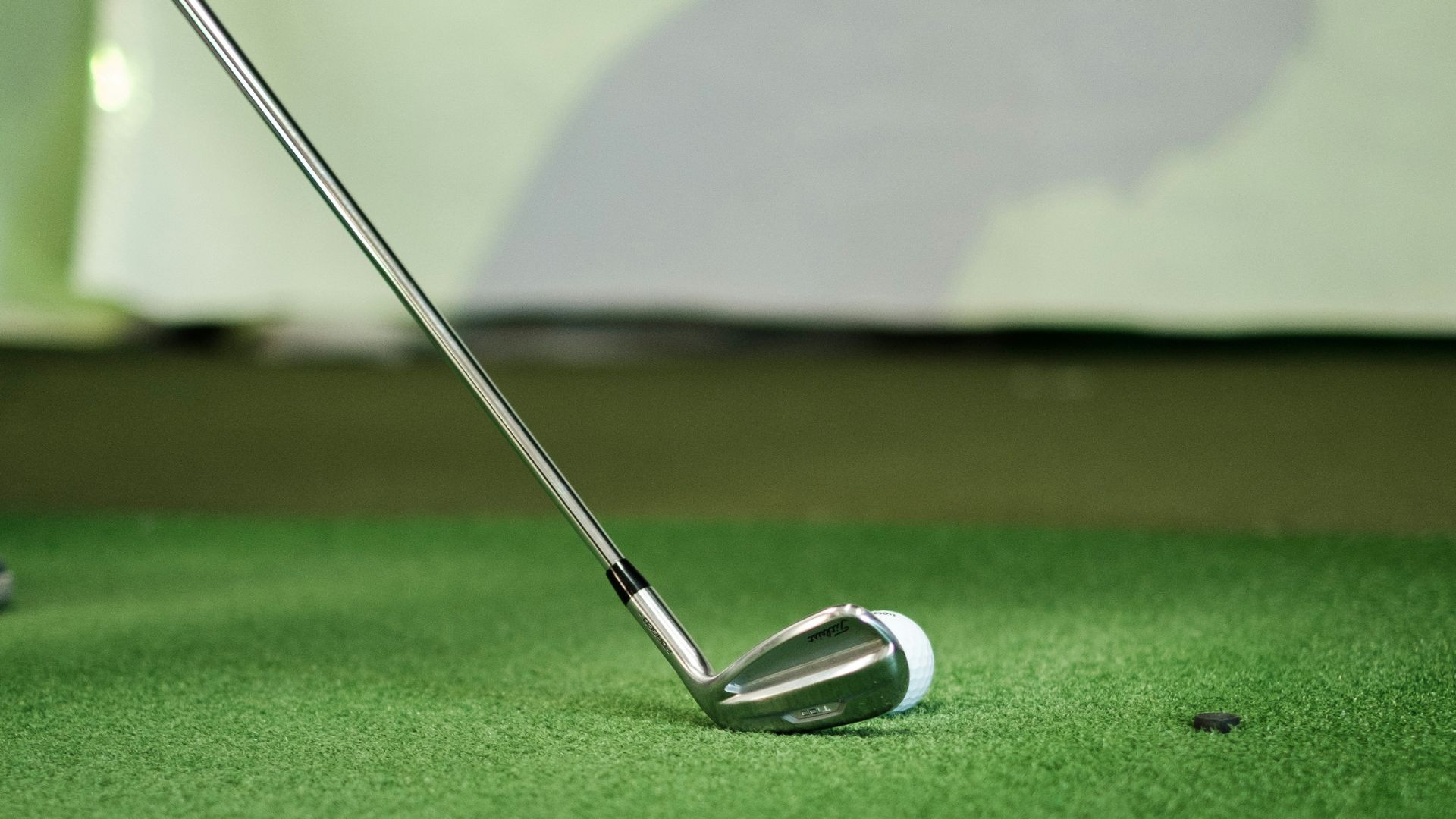
For decades, the high-precision data used by professional golfers to refine their swing—metrics like spin rate, launch angle, and smash factor—was locked behind the paywalls of expensive, stationary launch monitors found only at elite academies or high-end fitting centers. This barrier to entry meant that the average amateur relied largely on feel and visual cues, often guessing why a shot sliced or fell short.
The landscape of amateur practice is shifting as portable golf launch monitor technology becomes increasingly accessible. By shrinking sophisticated sensors into handheld devices, manufacturers are enabling golfers to bring professional-grade analytics to the driving range or their own living rooms. This democratization of data allows players to identify flaws in their swing consistency in real-time, transforming how the game is practiced outside of the traditional course.
Among the most prominent examples of this trend is the Garmin Approach R10, a device designed to bridge the gap between expensive professional equipment and the needs of the everyday golfer. By utilizing radar-based measurement technology, the R10 provides a comprehensive suite of metrics that were previously unavailable to the casual consumer, effectively turning any open space into a data-driven training ground.
The Mechanics of Portable Launch Monitoring
At the core of the Garmin Approach R10 is radar technology, which tracks the movement of the club and the ball to calculate a wide array of performance indicators. Unlike some systems that require expensive screens or complex setups, this portable unit pairs with a compatible smartphone via the Garmin Golf app to deliver immediate feedback between swings.
The device tracks more than a dozen key golf metrics, providing a holistic view of the shot’s physics. These include:
- Ball and Club Metrics: Ball speed, club head speed, and smash factor.
- Launch Dynamics: Launch angle, launch direction, and angle of attack.
- Club Path Data: Club path angle and club face angle.
- Flight Characteristics: Spin rate, spin axis, apex height, carry distance, total distance, and deviation distance.
By analyzing these variables, golfers can move beyond simply knowing where the ball landed to understanding why it landed there. For instance, a player struggling with a slice can examine their club path angle and club face angle to determine if the issue is a path problem or a face-control problem.
Virtual Course Play and Ecosystem Integration
Beyond raw data, modern portable launch monitors are evolving into gateways for virtual golf. The Approach R10 allows users to play virtual rounds on any of 43,000 courses, with more than 15 enhanced courses featuring high-resolution lidar data for every green to increase realism . This capability transforms a home setup into a year-round training facility, removing the limitations of weather or travel.
To expand its utility, Garmin has ensured the R10 is compatible with a variety of third-party simulation software. The device integrates with several industry-standard platforms, including:
- E6 Connect and E6 Apex
- GSPro
- Awesome Golf
- TGC2019
- Creative Golf
This openness allows users to choose the simulation experience that best fits their needs, whether they prefer a gamified experience or a strict training environment. Features like “Home Tee Hero” (available with an active subscription) further personalize the virtual experience.
Hardware Design for the Mobile Golfer
The utility of a portable monitor is only as good as its reliability in the field. The Garmin Approach R10 is engineered for mobility, weighing only 5.22 oz (148 g) without its tripod, and 7.79 oz (220.8 g) when the tripod is attached . Its compact dimensions of 3.5″ x 2.8″ x 1″ produce it easy to transport in the provided carry case.

Durability is a key consideration for outdoor use. The device carries an IPX7 water rating, meaning it can withstand accidental exposure to moisture, which is critical for those practicing in damp conditions or on dew-covered ranges. Power is managed by an internal rechargeable lithium-ion battery that provides up to 10 hours of battery life on a single charge .
For users setting up the device for the first time, the package includes the necessary hardware to get started immediately: the Approach R10 unit, a tripod stand, a phone mount, a carry case, a microUSB cable, and documentation.
Impact on Amateur Performance
The transition from “guessing” to “knowing” has a tangible impact on player development. When golfers have access to precise numbers, they can set specific goals for their practice sessions—such as increasing their smash factor or narrowing their launch direction—rather than simply hitting balls into a field.
The value proposition of these devices is often reflected in the results seen by amateur players. Some users have reported significant handicap improvements through the use of this data; for example, one golfer noted a drop from a ~25 handicap to a ~12 handicap after utilizing the data provided by the R10 . This suggests that for many, the primary barrier to improvement is not a lack of effort, but a lack of accurate feedback.
| Feature | Specification |
|---|---|
| Measurement Technology | Radar |
| Battery Life | Up to 10 hours |
| Water Rating | IPX7 |
| Weight (with tripod) | 7.79 oz (220.8 g) |
| Course Database | 43,000 courses |
As portable launch monitors continue to drop in price and increase in accuracy, the gap between professional training and amateur practice will continue to shrink. The ability to track club path, ball speed, and spin from a device that fits in a golf bag is fundamentally changing the accessibility of the sport’s most technical aspects.
For those looking to integrate this technology into their routine, the next step is typically evaluating compatible simulation software or exploring the Garmin Golf app to determine which metrics are most critical for their specific game improvements.
Do you use a launch monitor for your practice, or do you prefer the traditional “feel” of the game? Share your experiences in the comments below.