
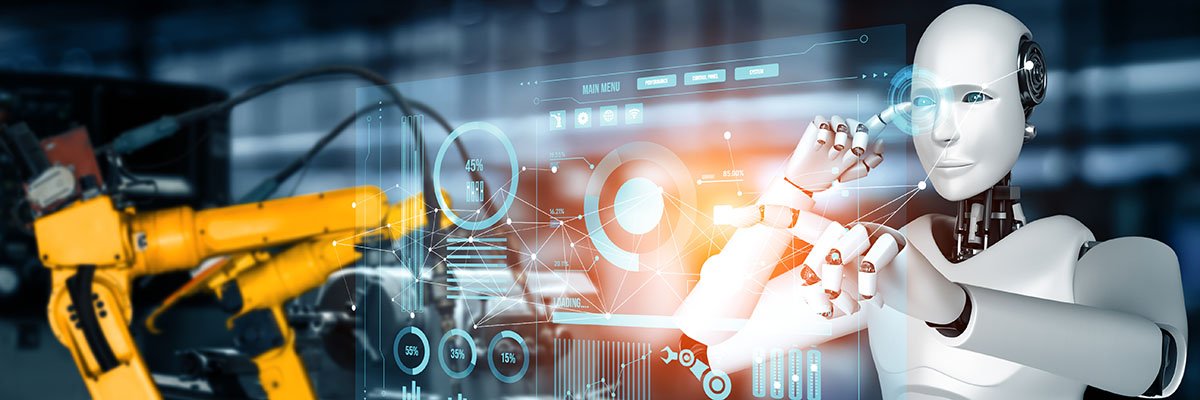
The Convergence of Robotics, XR, and AI: Building the Future of Human-Machine Interaction
The future of robotics isn’t just about building more sophisticated machines; it’s about seamlessly integrating them into our lives, and that integration is being powerfully driven by the convergence of Artificial Intelligence (AI) and Extended Reality (XR). We are on the cusp of a new computing paradigm where the digital and physical worlds blur, creating opportunities for innovation across industries and fundamentally changing how we interact with technology.
The Rise of Advanced Robotics: From Bionic Muscles to Self-Healing Skin
Recent breakthroughs demonstrate the rapid advancements in robotics. Researchers are pushing the boundaries of what’s possible, developing increasingly lifelike and capable machines. At MIT, engineers are pioneering flexible skeletons designed to support robots powered by advanced bionic muscles (see https://news.mit.edu/2024/mit-engineers-design-flexible-skeletons-muscle-powered-robots-0408). This work is complemented by innovations in biomimicry, such as the tactile-sensor-equipped prosthetic hand developed at Johns Hopkins University, enabling more natural and intuitive grasping. Even the very material of robots is evolving,with University of Tokyo researchers creating self-healing “living skin” – a testament to the potential for bio-integrated robotics.
However, thes advancements aren’t without challenges. Early iterations often fall into the uncanny valley, eliciting feelings of unease and discomfort in human observers. This is a familiar pattern, mirroring the initial reception of generative AI images and videos. Just as those technologies have rapidly improved, so too will the realism and acceptance of advanced robotics. AI will be crucial in overcoming this hurdle,enabling the creation of more natural movements and emotionally intelligent responses in robotic systems.
XR and AI: A Symbiotic Relationship for Robotic progress and deployment
The true power of these robotic advancements will be unlocked through their integration with XR technologies.AI will serve as the engine, providing the data and intelligence needed to fuel immersive virtual environments and powerful simulations. This is where digital twins come into play – virtual replicas of physical systems that allow for testing, optimization, and remote control.
Cathy Hackl, futurist and founder of Future Dynamics, highlights this shift: “AI’s next great leap will be powered by hardware. As the digital and physical worlds merge, frontier technologies like spatial computing, extended reality and AI-powered wearables are ushering in a new computing paradigm.”
We are already seeing evidence of this convergence. AI firms are increasingly investing in wearables and robotics, expanding their reach beyond software and into the physical world. This expansion necessitates the integration of massive datasets to enable spatial computing – the ability to understand and interact with the physical world in a digital context. Nvidia‘s CEO, Jensen Huang, envisions a “multitrillion-dollar industry” built around agentic AI embedded in devices like smartglasses, humanoid robots, and wearables, capable of observing, adapting, and collaborating with humans.
Virtual First: Accelerating Robotics Innovation Through Simulation
The most effective approach to developing and deploying advanced robotics isn’t simply building and testing in the real world. It’s putting robots in virtual ones first. AI-powered digital twins and XR applications allow engineers to simulate complex scenarios, refine algorithms, and identify potential issues before deploying robots into real-world environments.
This “virtual first” approach offers significant benefits:
* Reduced Development Costs: Simulation minimizes the need for expensive physical prototyping and testing.
* Accelerated Iteration: Rapid iteration and experimentation are possible in a virtual surroundings.
* Enhanced safety: Testing in simulation eliminates the risk of damage or injury during development.
* Optimized performance: AI can analyze simulation data to optimize robot performance in various conditions.
While not every robotics submission will require AI, digital twin, or XR integration, the combination of these technologies will become increasingly common, and consumers and professionals will expect advanced capabilities.
Navigating the Integration Challenge
The path to widespread adoption won’t be without its hurdles. Integrating these technologies requires significant redesign of existing systems and overcoming challenges related to data compatibility and interoperability. Crucially,designers,managers,and end-users need to develop a complete understanding of all involved technologies to create truly synergistic applications. the benefits – a more efficient, adaptable, and human-centric future – are well worth the effort.
About the Author:
Martin Schwirn is the author of *Small data,big disruptions: How




