
From space to Ground Truth: AI Successfully Maps Bramble Distribution
The quest to understand our surroundings is constantly evolving,and a recent experiment from a Cambridge research team demonstrates a surprisingly effective new tool: artificial intelligence capable of identifying bramble patches from satellite imagery. This isn’t about futuristic landscape design; it’s a proof-of-concept with perhaps important implications for ecological monitoring, invasive species tracking, and habitat preservation.
The team’s model, dubbed TESSERA, initially showed strong confidence in predicting bramble locations near a local car park. To validate these predictions,researchers took a systematic approach,visiting areas flagged with varying confidence levels. What they found was encouraging, to say the least.
validating the Predictions: Brambles Everywhere
At Milton Contry Park,every area identified as high-confidence by the model proved to be teeming with bramble growth. A residential hotspot led them to an abandoned plot wholly overtaken by the thorny plant. And perhaps most amusingly,a major prediction in north Cambridge pinpointed… Bramblefields Local Nature Reserve.
As the name suggests, the reserve boasts extensive bramble coverage, confirming the model’s accuracy in this instance. This initial success highlights the potential of using AI to efficiently map vegetation types over large areas.
The research suggests TESSERA performs best when detecting large, unobstructed bramble patches visible from above. Predictably, smaller brambles hidden under tree cover generated lower confidence scores. “as TESSERA learns from remote sensing data, it makes sense that brambles partially obscured from above would be harder to spot,” explains Sadiq Jaffer, a member of the research team.
Beyond brambles: A Proof-of-Concept with Broad Applications
while the results are promising, it’s crucial to understand this is an early experiment. The model hasn’t yet undergone peer review for publication, and the field validation was an informal test rather than a rigorous scientific study. The Cambridge team acknowledges these limitations and is planning more comprehensive validation efforts.
However, this work is a valuable reminder that artificial intelligence extends far beyond the current hype surrounding generative AI like ChatGPT. It demonstrates the power of neural networks for practical environmental applications.
Here’s why this research is significant:
* Efficiency: AI can rapidly scan vast areas,considerably reducing the time and resources needed for customary ground surveys.
* Scalability: The model’s potential to run on mobile devices opens the door to real-time field validation and data collection.
* Accessibility: Unlike complex deep learning models, this system could be more accessible for use in various settings.
The team even envisions a future phone-based active learning system.This would allow field researchers to refine the model’s accuracy while simultaneously verifying its predictions – a powerful feedback loop for continuous betterment.
The Future of AI-Powered Ecological Monitoring
The potential applications extend far beyond simply mapping brambles. Similar AI-driven approaches could be used to:
* Map the spread of invasive species.
* Track agricultural pests and diseases.
* Monitor changes in ecosystems over time.
* Identify critical habitat features for threatened species.
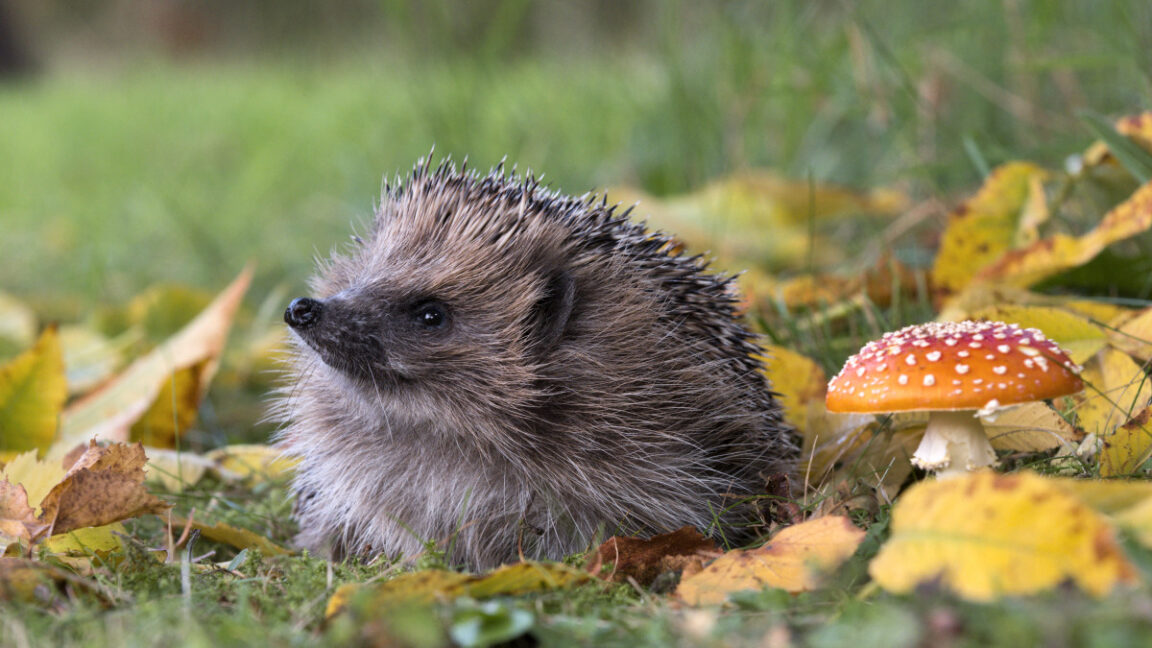
For vulnerable animals like hedgehogs, rapidly mapping essential habitat elements is increasingly vital as climate change and urbanization reshape their environments.
This research represents a significant step toward leveraging the power of AI for environmental stewardship. It’s a compelling example of how technology can empower us to better understand and protect the natural world around us.
Image Credit: Sadiq Jaffer (https://toao.com/blog/can-we-really-see-brambles-from-space) – The research team locating their first bramble patch.





