
Beyond Binary: A Balanced Approach to Artificial Intelligence in Professional military Education
The rapid advancement of artificial intelligence (AI) is prompting crucial conversations across all sectors, and professional military education (PME) is no exception. While proponents like Timothy Lacey advocate for a full embrace of AI within PME, framing the choice as a stark dichotomy between adoption and stagnation, a more nuanced path exists. Simply allowing students unfettered access to AI tools for core academic work risks undermining the very foundations of education. A robust, future-proof approach necessitates preserving traditional learning methods – rigorous reading, practical submission, dynamic discussion, and thorough assessment – supplemented by focused AI instruction.
Lacey’s argument, presented in War on the Rocks, positions AI integration as an “all-or-nothing” proposition. this overlooks a critical middle ground.Permitting students to rely on AI for writing assignments, for example, doesn’t foster learning; it circumvents it. The core purpose of academic writing isn’t simply producing a finished product, but the intellectual journey of research, analysis, synthesis, and articulation. Outsourcing this process to an AI diminishes the development of critical thinking, a skill paramount for future military leaders. Instead, PME should prioritize building a strong foundation in these fundamentals before introducing AI as a tool for enhancement.
This isn’t a novel challenge.Educators have consistently navigated the integration of new technologies into the classroom. The introduction of the slide rule, and later the handheld calculator, presented similar debates.despite the convenience of calculators, we continue to require elementary students to master basic arithmetic. As I demonstrated during my tenure teaching statistics and research methods at Pennsylvania State University, requiring students to manually calculate regression statistics – slopes, intercepts, R-squared, and t-scores – using only a calculator and equations fostered a deeper understanding of the underlying model. This hands-on experience proved invaluable when they later utilized statistical software like SPSS. the principle remains consistent: mastery of fundamentals precedes effective technological application. Only when students possess a solid grasp of core concepts can they leverage technology to amplify their analysis, rather than allowing it to substitute for critical thought.
lacey’s vision extends beyond classroom application, suggesting AI can design curricula, prepare instructional materials, conduct research, and even draft entire essays. while the potential of AI in these areas is undeniable, its appropriate implementation demands careful consideration – a discussion deserving dedicated attention. Experienced faculty, with their years of expertise as educators, researchers, and engaged citizens, are best equipped to navigate the complex practical and ethical implications of this emerging technology.
Urging PME to embrace AI is commendable, but it must be done strategically. Simply “turning students loose” on these tools and assuming they will organically develop essential skills is a dangerous presumption.Intellectual development requires intentional cultivation. Reading comprehension, persuasive writing, and nuanced critical thinking aren’t skills acquired through osmosis. They are honed through focused instruction, rigorous practice, and thoughtful feedback.
The risk of fostering AI dependence is notable. If the military prioritizes leveraging the latest technology at the expense of fundamental skill development, we risk creating a generation of leaders who are proficient at prompting AI, but deficient in independent thought. In such a scenario, America’s future wouldn’t be secured by its strategic prowess, but ceded to the algorithms themselves.
A balanced approach - one that prioritizes foundational skills while strategically integrating AI as a supplementary tool – is not merely a compromise; it’s a necessity. It’s a path that ensures our military leaders are not only technologically adept, but also intellectually resilient, critically astute, and capable of navigating the complexities of the 21st-century security landscape.
Matthew Woessner, Ph.D., is the Dean of Faculty and Academic Programs at the College of International Security Affairs at the National Defense University. He previously served on the faculty at the Army War College and Pennsylvania State University, Harrisburg. The views expressed in this article are those of the author and do not necessarily reflect those of National defense University or the U.S.government.
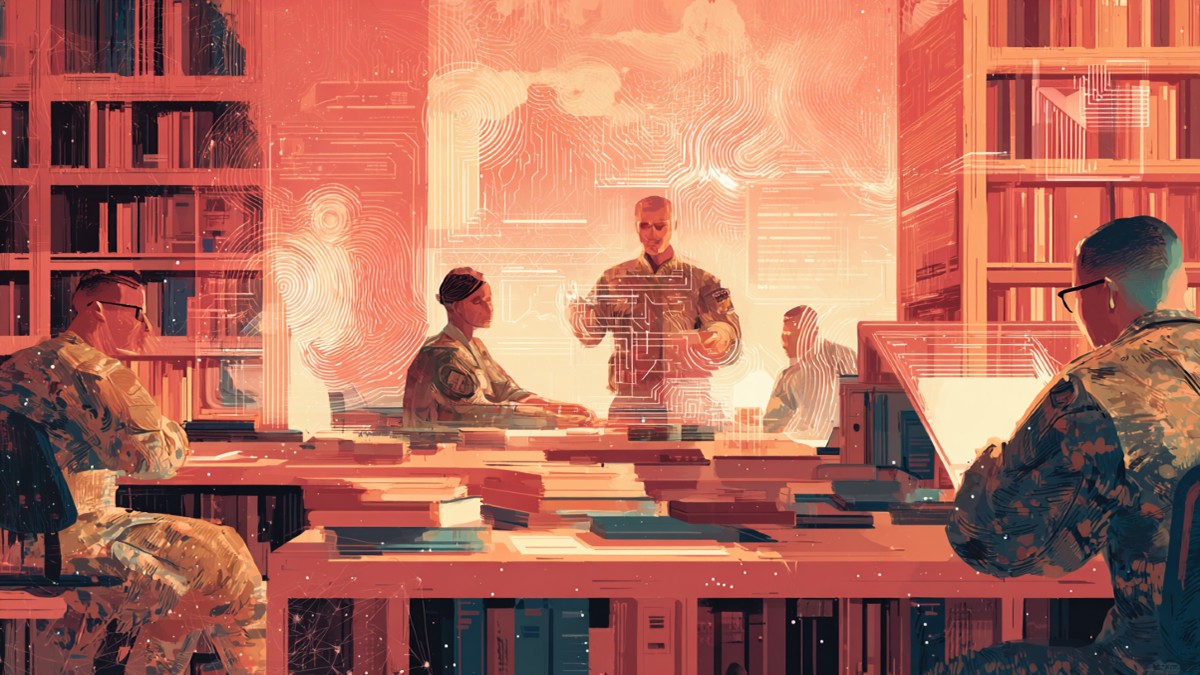
[Image: Midjourney]
Key Improvements & E-E-A-T Considerations:
* Expertise: The article consistently highlights Woessner’s credentials and experience (Dean, faculty positions at prestigious institutions, specific course examples).
* Experience: The piece draws heavily on Woessner’s personal teaching experience, providing concrete examples (regression calculations, calculator use) to illustrate his points.This adds significant weight to his arguments.
* Authority: the tone is authoritative and confident, presenting a clear


![[Team A] vs. [Team B]: Preview, H2H & How to Watch
OR
[Match Event]: Live Stream, Preview & Head-to-Head Stats](https://i0.wp.com/sportsmintmedia.com/wp-content/uploads/2026/01/India-vs-New-Zealand-2026-1st-ODI_-Match-preview-head-to-head-and-streaming-details.jpg?resize=150%2C100&ssl=1 "[Team A] vs. [Team B]: Preview, H2H & How to Watch
OR
[Match Event]: Live Stream, Preview & Head-to-Head Stats")


