
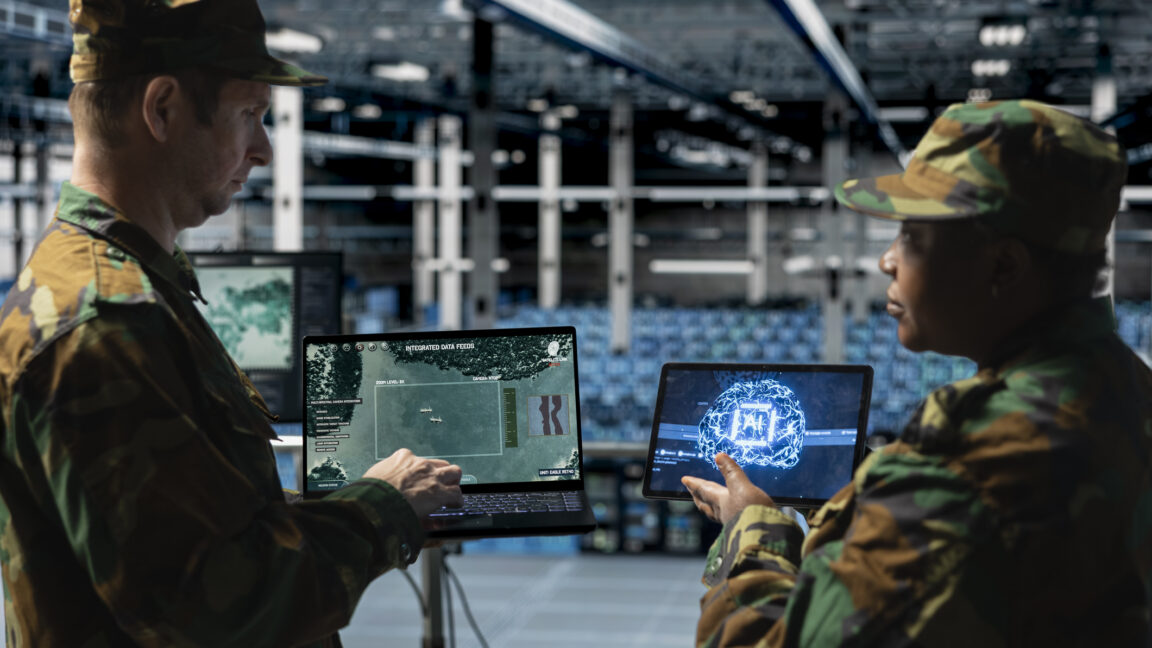
US Military Leaders Turn to AI Chatbots for Decision-Making
recent developments reveal a growing reliance on artificial intelligence within the US military, extending beyond simple administrative tasks. A new trend is emerging: high-ranking officials are actively using large language models (LLMs) – commonly known as AI chatbots - to inform critical decision-making processes.
Last month, OpenAI published data highlighting that 15 percent of work-related ChatGPT conversations centered around problem-solving and decision-making. Now, evidence suggests the US military is following suit.
A Commander’s Close relationship with AI
During the Association of the US Army Conference in Washington, DC, Major General William “Hank” Taylor openly discussed his use of AI. He referred to an unspecified chatbot with a familiar nickname, stating, “Chat and I are really close lately.”
Taylor, commander of the Eighth Army stationed in south Korea, explained that his team is “regularly using” AI to modernize predictive analysis.This extends to logistical planning and overall operational strategy.
Beyond Paperwork: AI’s Role in Strategic Thinking
While AI assists with routine tasks like weekly report writing, its impact reaches far deeper. Taylor emphasized the focus on improving individual decision-making skills within his ranks.
He’s actively working with soldiers to build models that help them navigate personal decisions.These decisions, he noted, have ripple effects, impacting not only individuals but also organizational readiness.
Specifically, Taylor is exploring how AI can help soldiers understand their own decision-making processes. The goal is to improve choices that affect both personal well-being and mission effectiveness.
Implications and Considerations
this adoption of LLMs for military decision-making raises crucial questions. It’s a significant step removed from the science fiction trope of fully autonomous weapon systems. Though, it’s crucial to acknowledge the inherent limitations of these models.
LLMs are known to sometimes “hallucinate,” fabricating citations or presenting inaccurate data. They also exhibit a tendency toward excessive positivity and flattery. Therefore, critical evaluation and human oversight remain paramount.
You should understand that while AI offers powerful tools for analysis and prediction, it’s not a substitute for sound judgment and ethical considerations.As the military integrates these technologies, maintaining a human-centered approach will be essential for responsible and effective implementation.





