
Alex Albon’s Evolution: Why F1 Success Isn’t Always About Raw Speed
Alex Albon’s career has been anything but linear.From a childhood spent battling Max Verstappen,George Russell,and Charles Leclerc in karting,to a somewhat unexpected lifeline with Williams in 2022,his Formula 1 journey is a compelling case study in how driver performance is inextricably linked to the machine. But his recent success alongside Carlos Sainz Jr. begs a crucial question: how can a driver struggle against one teammate, yet outperform another? Let’s delve into the factors at play.
A Circuitous Path to the Grid
Albon’s route to F1 wasn’t straightforward. He finally secured a seat with Red Bull‘s junior team, Toro Rosso, in 2019. His strong performances quickly earned him a promotion to the senior Red Bull team alongside Verstappen.
However, replicating that success proved arduous. Like others before and after him – notably Pierre Gasly – Albon found himself unable to consistently match Verstappen’s pace and was released at the end of 2020.A year on the sidelines as Red Bull’s reserve followed, before a seat at Williams opened up, partially thanks to a recommendation from russell.
the Sainz Partnership: A Turning Point
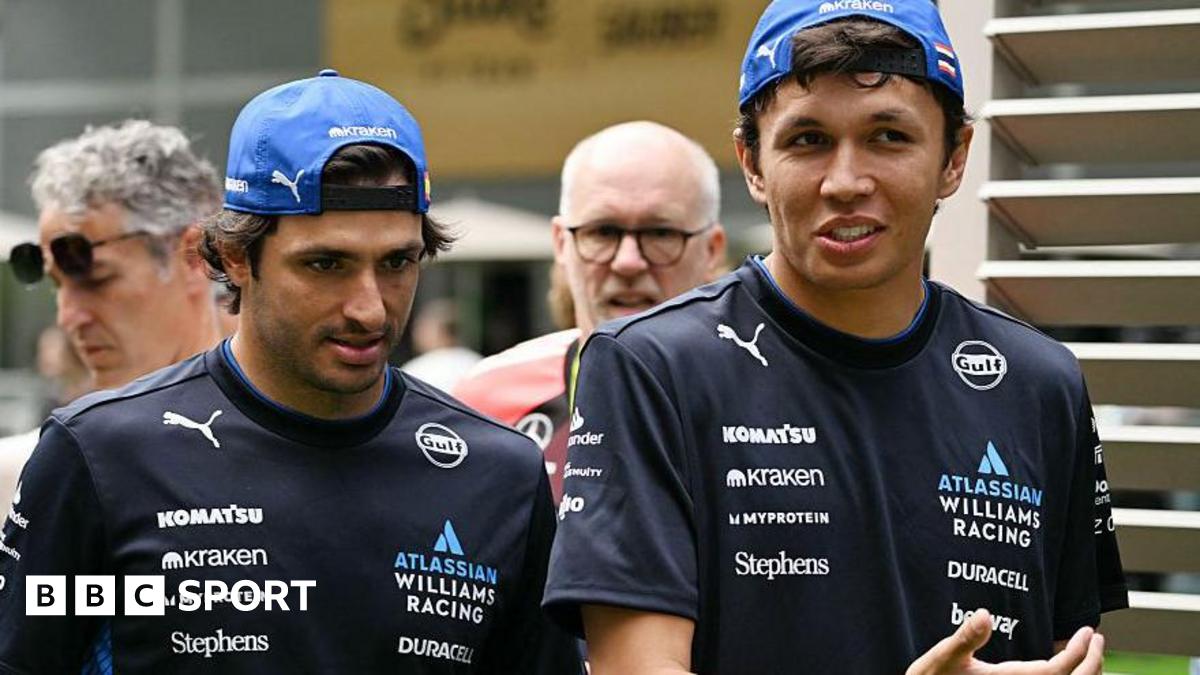
For years, Albon raced alongside drivers considered less competitive than himself. The arrival of Carlos Sainz Jr. at Williams in 2024 presented a genuine chance to demonstrate his capabilities – and he’s seized it. Currently, Albon is consistently outperforming Sainz, raising eyebrows and prompting analysis.
This disparity fuels the central question: what explains the difference between his struggles alongside Verstappen and his current dominance over Sainz?
The car Factor: It’s Not Just About the Driver
Albon himself offers a compelling explanation. He argues that F1 often falls into the trap of assuming all drivers are equally capable at all times, irrespective of the car.
“What it means is that in F1 it is easy for everyone to fall into the trap of: ‘All the drivers are at the same level all the time, and there is no such thing as suiting a car or not suiting a car,'” Albon explained. He believes that even Verstappen, arguably the sport’s most dominant driver, would experience a shift in performance if placed in a different car.
Here’s a breakdown of the key takeaways:
Car Suitability: A driver’s style and strengths must align with the characteristics of the car. Some drivers simply “click” with a particular chassis, while others don’t.
Confidence is Key: Albon draws parallels to other sports like golf and MotoGP, where athletes constantly adjust equipment to find what feels right. This pursuit of confidence and feel is crucial. F1’s Unique Pressure: racing frequently enough overlooks this crucial element, expecting drivers to adapt instantly to any machine.
Remembering toro Rosso & The Early Days
Albon recalls his initial success at Toro Rosso,noting that even with less downforce than he was accustomed to,the car felt right from the start. This immediate connection is vital. It highlights that raw talent isn’t enough; a driver needs to feel comfortable and confident in the car to unlock their full potential.
Why Verstappen’s Dominance Can Be Misleading
The immense gap Verstappen consistently puts into his teammates can overshadow the importance of car suitability. While Verstappen is undoubtedly exceptional, the current Red Bull car appears uniquely tailored to his driving style.
Consider this:
Verstappen’s Adaptability: he’s a phenomenal driver who can extract maximum performance from any car.
*Red Bull





