
[email protected] (Democracy Now!)
2026-01-16 13:47:00
This is a rush transcript. Copy may not be in its final form.
AMY GOODMAN: This is Democracy Now!, democracynow.org. I’m Amy Goodman, with Juan González.
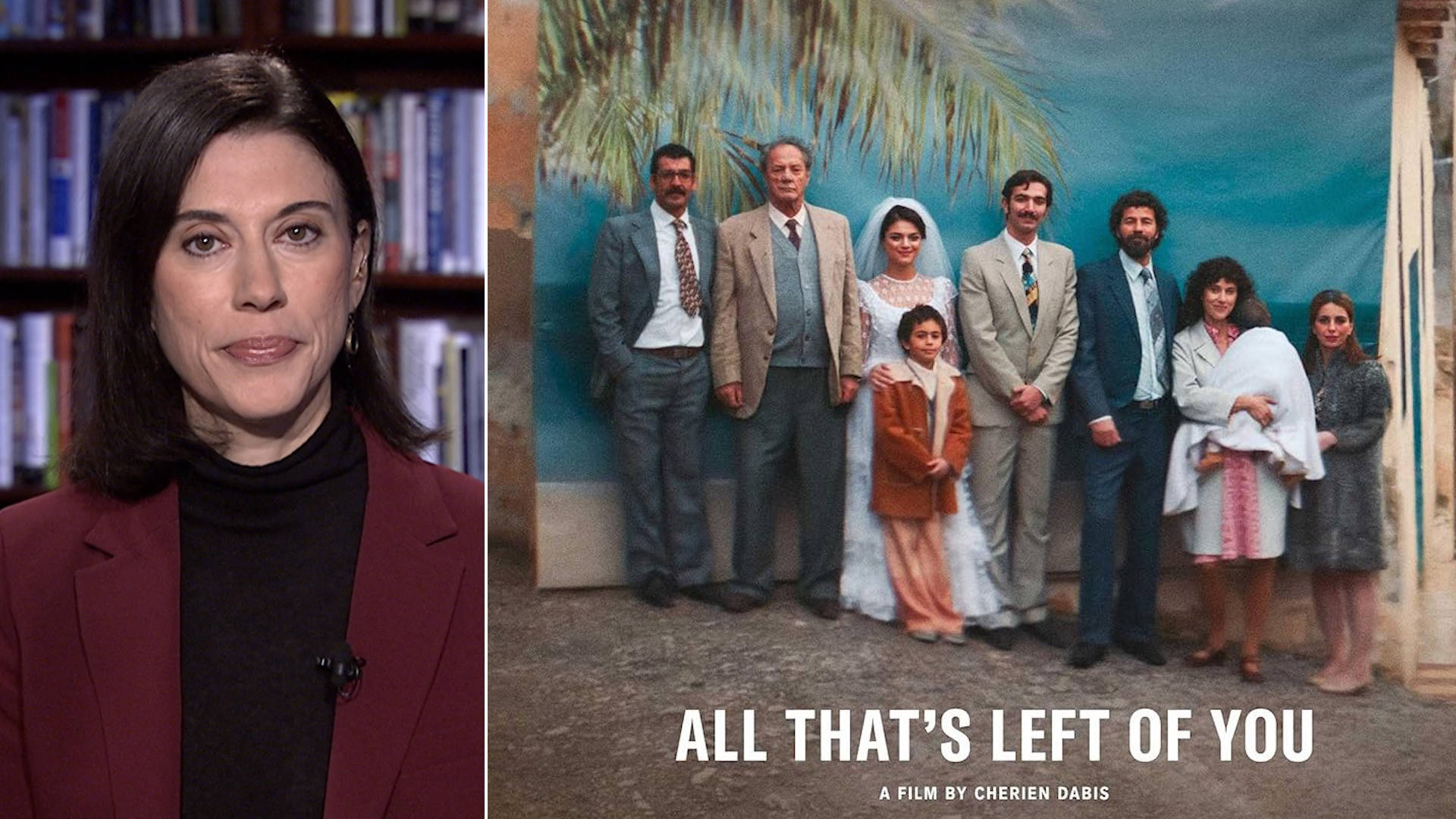
We turn now to a feature film that looks at seven decades of Palestinian history through the lens of one family’s experience over three generations, beginning in 1948. The film is All That’s Left of You by the Palestinian American director and actress Cherien Dabis. The film is Jordan’s official entry for the international feature Oscar. It’s been shortlisted. This is the trailer.
MALEK: [played by Rida Suleiman] [translated] We should go home.
NOOR: [played by Muhammad Abed Elrahman] [translated] Why? You scared?
HANAN: [played by Cherien Dabis] No one ever thought any of this would happen. I’m here to tell you how it started.
YOUNG SALIM: [played by Saleh El Din] [translated] I am the sea / In my depths all treasures dwell.
OLDER SHARIF: [played by Mohammad Bakri] [translated] [translated] They take your land, your money. Call this a life? Don’t be foolish, son.
SOLDIER: [played by Adam Khattar] [translated] Get on the ground. Get on the ground!
SALIM: [played by Saleh Bakri] [translated] I wanted to protect you. I was afraid for you.
SHARIF: [played by Adam Bakri] [translated] As long as Dad is here, you don’t have to be scared.
HANAN: [translated] What use are we as parents if we can’t protect our kids?
IMAM: [translated] Your humanity is also resistance. Don’t forget the power of your humanity. It’s the one thing no one can take away from you.
HANAN: I wanted to explain why we are here, what my family went through.
AMY GOODMAN: That was the trailer for the film All That’s Left of You. Appearing in the film as the renowned Palestinian actor and director Mohammad Bakri, who died in December at the age of 72. Bakri appears in the film alongside his sons Adam and Saleh, who are also actors.
This is a clip from the film depicting a loving and playful interaction between a grandfather, Mohammad, and a grandson, played by Sanad Alkabareti.
VOICE ON TV: [translated] This military invasion of Lebanon, known as Operation Litani, and the following massacres…
OLDER SHARIF: [played by Mohammad Bakri] [translated] What’s the rush? Can’t even greet your grandpa, your sweetheart, your best friend? Who else do you have?
What a crazy family!
I smell the scent of a human.
GRANDSON: [played by Sanad Alkabareti] [translated] Grandpa.
OLDER SHARIF: [translated] I smell —
GRANDSON: [translated] Grandpa, I’m too old for that game.
OLDER SHARIF: [translated] Too old? You? With Grandpa, you can never grow up, especially not with this game. Take it back. Take it back. Take it back.
GRANDSON: [translated] No!
OLDER SHARIF: [translated] Take it back!
GRANDSON: [translated] OK, OK, I take it back.
OLDER SHARIF: [translated] How was school?
GRANDSON: [translated] Boring.
OLDER SHARIF: [translated] I had the feeling you’d say that. That’s why I have a surprise for you.
OLDER SHARIF and GRANDSON: [translated] [singing] My homeland, my homeland / Glory and beauty / Sublimity and splendor / Are in your hills, are in your hills.
AMY GOODMAN: A clip from the film All That’s Left of You, featuring the late, great actor, Mohammad Bakri, who passed away in December.
We’re joined now in the studio by the film’s director and star, Cherien Dabis.
It’s great to have you with us, Cherien. What a powerful film! It’s opening in New York in three theaters. It’s now there. You’re doing the Q&As in all these theaters, at the Angelika and New Plaza, as well as Kips Bay, and Los Angeles and San Francisco and opening all over the country. Tell us the story, this multigenerational narrative, that is so critical to understand today.
CHERIEN DABIS: Well, the story follows one Palestinian family and traces, really, love and loss over three generations, from 1948 until almost the present day. And really, it’s the story about how history shapes us. It’s about how political events shape people and change relationships within family and really change the fates of families. That’s really, you know, the story. But I think at its heart, it’s really about the extraordinary will that it takes to survive political turmoil and personal loss. And, you know, if you want to probe even deeper, I think it’s really about choosing our humanity, you know, looking for meaning in grief and choosing humanity even in the most difficult of circumstances, which Palestinians have done and do every single day, but, you know, for some reason, the world just never gets to see that.
JUAN GONZÁLEZ: And, Cherien, you began shooting this film in the occupied West Bank before October 7, 2023. But then, after the Hamas attack and Israel’s genocidal — launching of a genocidal war on Gaza, you continued to film in the West Bank, even as Israeli attacks on Palestinians in the West Bank escalated. Could you talk about the impact on your crew as you were doing this filming and the war was continuing to expand in Gaza?
CHERIEN DABIS: Well, we actually evacuated shortly after the events of October the 7th. We were based in Ramallah at that time. We had prepped the entire film. We spent months working with a huge crew on the ground in Palestine. I had foreign crew who had arrived in Palestine in early October of 2023. And really, within days of October the 7th, things became extremely tense. West Bank cities and towns were being sealed off. Checkpoints were closing. And it was clear that we weren’t going to be able to move around. My foreign crew wanted to evacuate. Their families were worried. They were scared. And so, by October the 10th, we were forced to evacuate.
At that point, we went to Cyprus, where we had always planned to shoot a small part of the film, and we decided to start with that small part, and, you know, thinking perhaps we can then return to Palestine. But, you know, the situation continued to escalate and escalate, which forced us to make a decision. You know, we either delay the film and wait to return to Palestine, or we continue making it. And, you know, we go to Jordan, and we decided to continue. We had a lot of momentum, and we didn’t want to delay in getting this important story out, knowing everything that was happening.
You know, one of the most challenging things, I think, was really making a movie about what was happening as it was happening. You know, we found ourselves making this film about the ongoing Nakba as we’re witnessing an even bigger Nakba. And it was like life and art were merging, and we were suddenly shooting scenes that we were witnessing come out of Gaza. And that took a huge emotional toll on all of us. It was extremely challenging and painful, but in many ways, the film became a container for our love, for our compassion, for our grief, and we just poured ourselves into it. And in that way, the film was really such a gift to be able to create at a time of such devastating destruction.
AMY GOODMAN: And can you talk about — I mean, this film was released as Mohammad Bakri dies, one of the stars in your film, a man you have worked with, his whole family — Saleh, we’ve had on Democracy Now!, as well, his son who stars in this, Adam, his son — what it meant for this to come out in the aftermath of his death, but also the moral dilemma at the heart of the film? It’s a spoiler alert, so I won’t say what it is.
CHERIEN DABIS: Well, I mean, you know, I will say, working with Mohammad was such an honor for me. I had been a huge fan for so long. He’s a giant of Palestinian cinema. You know, his five-decade-spanning career really happened alongside the creation of Palestinian cinema, the rise of Palestinian cinema. And he’s sort of one of the founders of that. And I had been just a longtime admirer, had always wanted to work with him, such a fan of his kids, as well. Five out of six of them are actors. And so, there’s this, you know, Palestinian family acting dynasty. And as I was casting this intergenerational portrait, it was my dream to really cast an actual family in these roles.
Working with Mohammad was just amazing. I mean, he’s so disciplined. He’s so rigorous. He’s so committed. He has more integrity than anyone I’ve ever met. And he just was so there and present and, you know, the kind of actor who — you know, I would call “Cut,” and he would say, “No, let’s do it again. Let’s do it again. I can do better,” just always really striving to kind of be his best. And you can see that in his work and the immense depth and nuance and humanity and humor that he brings to the film. You know, I’m so happy that he actually got to tap into that, that talent of his, because, you know, he hadn’t gotten to do a lot of comedy. He did come to our European premiere, where he saw the film for the very first time —
AMY GOODMAN: Ten seconds.
CHERIEN DABIS: — this summer, and he just was so proud of the film.
AMY GOODMAN: Well, we’re going to continue this conversation. We want folks to go to democracynow.org to see it. Cherien Dabis, Palestinian American director, producer, screenwriter, actress. Her feature film, All That’s Left of You, has been shortlisted for an Oscar. It’s opening around the country. It’s in New York, Los Angeles and San Francisco now. I’m Amy Goodman, with Juan González.






